
Complete Project History, Concept Development, Research, Production, and Current Progress
Student: Celina Kuehne
Discipline: Photography and Media Art
Project Development: August 2026 – November 17, 2026
Working Project Title: At the Crossroads
Current Production Status: 3 of 5 elemental looks completed
1. PROJECT OVERVIEW
Current Project Direction
My Senior Studio project is a fine-art photography and mixed-media project exploring identity, transformation, symbolism, and the relationship between the human figure and the natural world.
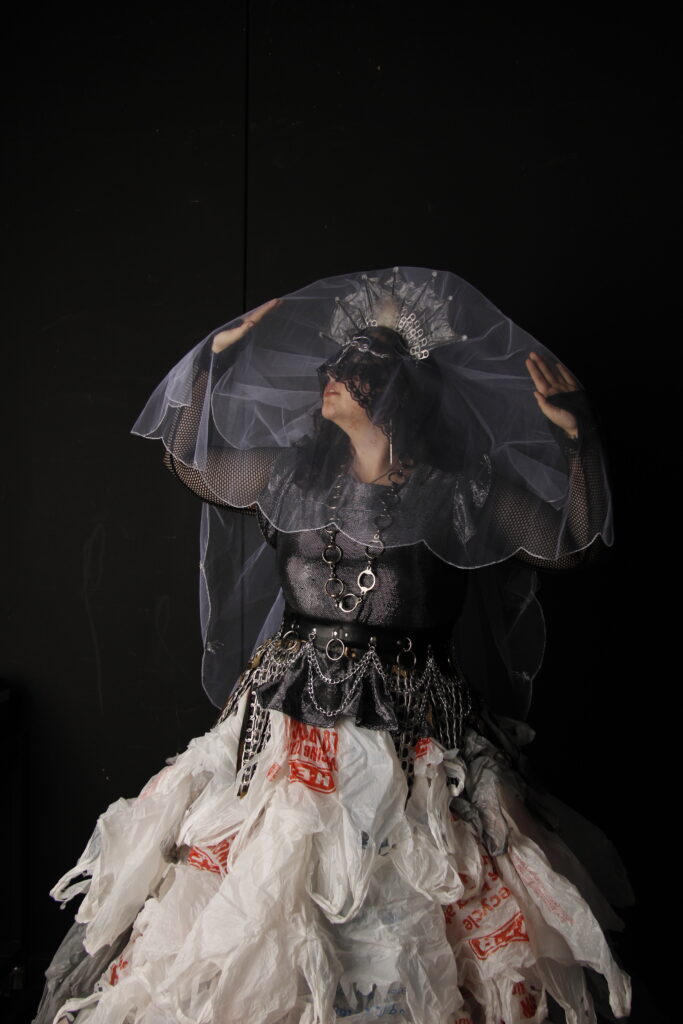
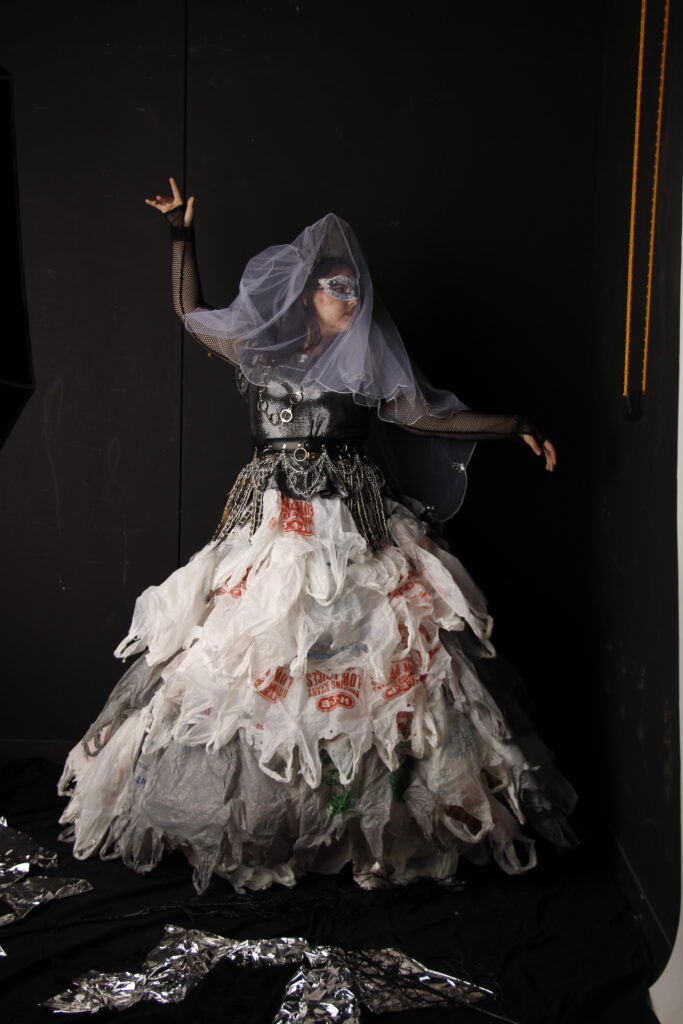
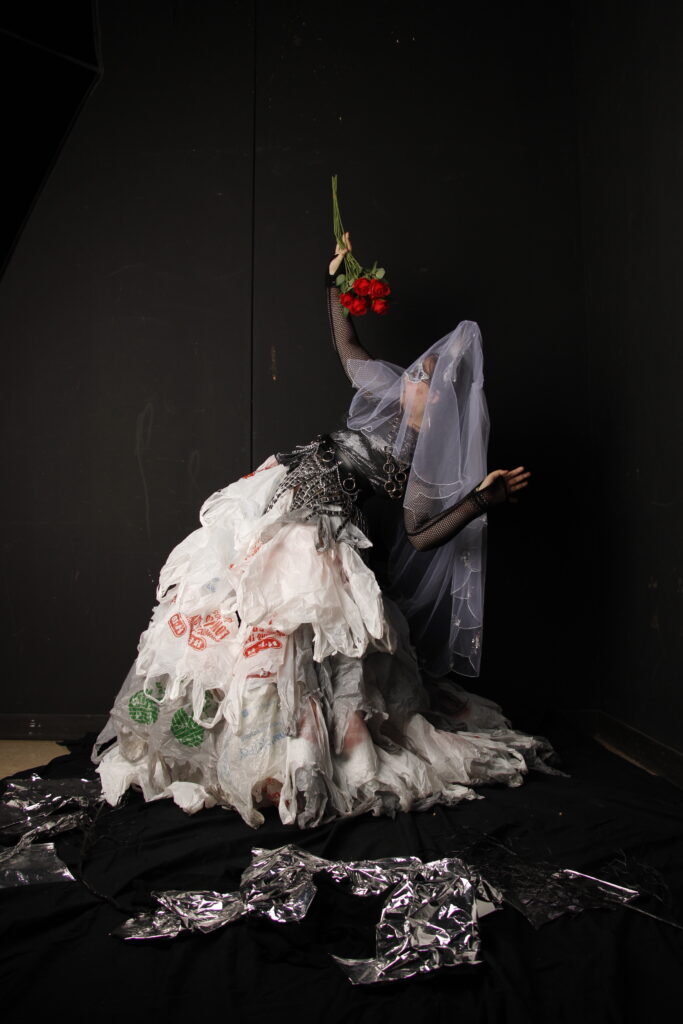
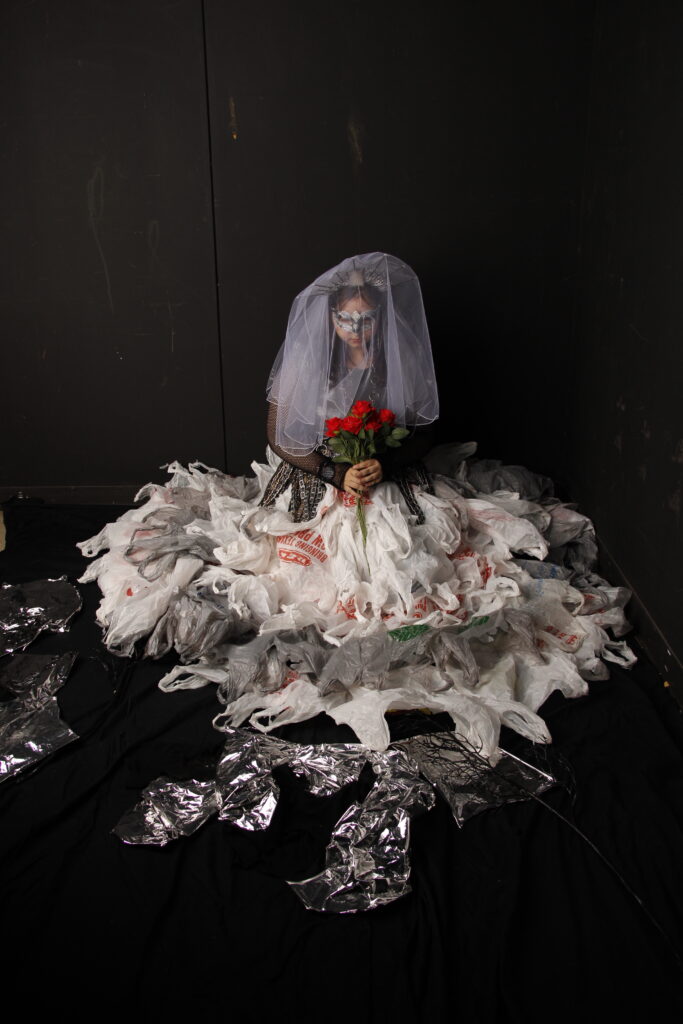
The project originally began with an interest in recycled fashion and transforming unconventional materials into wearable art. I wanted to experiment with materials such as plastic trash bags, newspapers, fabric scraps, and other discarded materials to create clothing that could become part of an artistic photographic composition.
As the project developed, I became more interested in the conceptual possibilities of the clothing and the photographs themselves.
The project gradually evolved into a five-part photographic series inspired by the five elements:
- Earth
- Water
- Fire
- Air
- Spirit
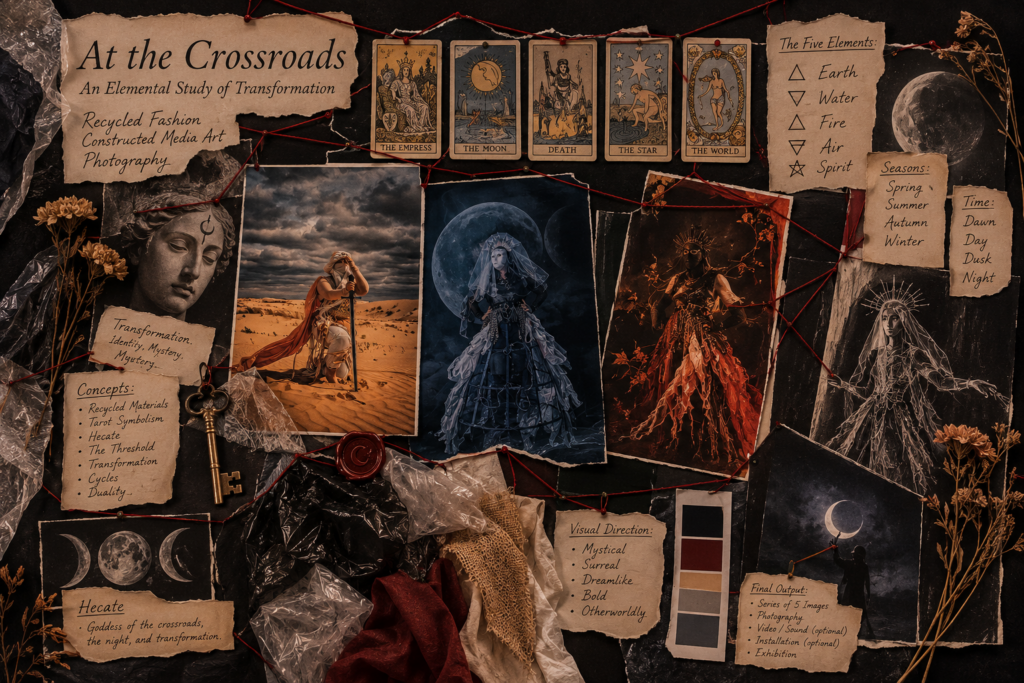
Each element represents a different visual and conceptual direction. The elements influence the clothing, materials, colors, styling, environment, and symbolism used in each look.
The project also incorporates ideas associated with Hecate, tarot, crossroads, thresholds, transformation, and identity.
I am using constructed costumes, masks, self-portraiture, unconventional materials, and carefully arranged environments to create fine-art photographs.
The current working title is At the Crossroads.
The central idea is transformation. This can be expressed through the transformation of discarded materials into clothing, the transformation of personal identity through costume and masks, and the symbolic relationship between the five elements.
Project Goals
The main goals of the project are:
- Create five individual looks inspired by the five elements.
- Construct clothing and accessories using unconventional, recycled, thrifted, and mixed-media materials.
- Use photography to turn the constructed looks into fine-art images.
- Explore identity through masks, costume, and self-portraiture.
- Incorporate symbolism and visual storytelling.
- Create a cohesive photographic series with a recognizable visual identity.
- Connect physical material experimentation with the Media Art side of my major.
2. THE VERY BEGINNING: INITIAL IDEAS AND BRAINSTORMING
August 2026: Finding a Senior Studio Topic
At the beginning of Senior Studio, I explored several possible directions before settling on the project I wanted to develop.
I knew that I was interested in photography, fashion, and mixed media. I also knew that I enjoyed creating visual stories through art.
I wanted to develop something that involved more than traditional photography. I was interested in constructing images with intentional compositions, atmosphere, styling, and storytelling.
My initial brainstorming included several different concepts.
Idea 1: Fashion Photography and Recycling
One of my earliest ideas involved combining fashion photography with recycling.
I considered creating clothing from unconventional and discarded materials, including:
- Plastic trash bags.
- Newspapers.
- Recycled paper.
- Fabric scraps.
- Other discarded materials.
One specific idea was a trash and newspaper dress.
I was interested in the contrast between materials people normally throw away and the possibility of transforming those materials into something fashionable and artistic.
This idea allowed me to combine several interests:
- Fashion and styling.
- Constructed clothing.
- Photography.
- Recycling and reuse.
- Mixed media.
- Fine-art presentation.
I wanted to explore how ordinary materials could change their meaning when transformed into clothing and photographed intentionally.
Idea 2: The Evolution of Photography
Another early direction involved exploring the history and evolution of photography.
I considered a project about the transition from traditional film photography to modern digital photography.
Ideas included:
- Exploring approximately 100 years of photographic development.
- Comparing historical and contemporary photographic styles.
- Pairing photographs from different periods with the cameras used to create them.
- Exploring how photographic technology has changed the way people create images.
Although this connected with my Photography and Media Art background, I eventually became more interested in constructing physical objects, styling images, and creating fine-art photographs.
Idea 3: Fine-Art and Fantasy Photography
I also considered a fine-art photography project inspired by paintings, fantasy, and constructed scenes.
I wanted to create photographs that looked like carefully composed paintings rather than ordinary snapshots.
Some of the visual characteristics I was interested in included:
- Dramatic lighting.
- Intentional composition.
- Costume and styling.
- Symbolism.
- Atmospheric backgrounds.
- Nature and landscapes.
- Portraiture.
- Weather and environmental elements.
- A sense of mystery or another world.
Fantasy was one possible direction, but it was not a requirement. I wanted the freedom to explore different visual approaches.
What Connected the Initial Ideas?
Although the ideas were different, they shared several interests.
I consistently wanted to:
- Create intentional photographic compositions.
- Combine photography with physical materials.
- Use clothing and styling to communicate identity.
- Explore atmosphere, symbolism, and storytelling.
- Create constructed images rather than ordinary snapshots.
These interests eventually became the foundation of my Senior Studio project.
3. THE ORIGINAL INSPIRATION: TRASH BAG DRESS
Connection to the 2021 Film Cruella
One of the most important starting points for my recycled-fashion concept was the 2021 film Cruella.
The film included a trash-inspired dress that demonstrated how unconventional materials could become part of expressive fashion design.
This visual influenced my interest in creating a dress from trash bags.
I became interested in transforming an everyday disposable material into something wearable and visually striking.
This developed into my own Trash Bag Dress project.
The goal was not simply to recreate the film’s costume. I wanted to experiment with the material and discover how something ordinary could become an artistic object.

https://i.pinimg.com/736x/b8/c6/a0/b8c6a056dff5b04b1c3865ef3f4123c8.jpg
Development of the Trash Bag Dress
The Trash Bag Dress introduced the idea that clothing could be constructed from materials not traditionally associated with fashion.
It established a connection between:
- Recycling.
- Fashion construction.
- Material experimentation.
- Photography.
- Visual transformation.
This became an important starting point for my later work.
4. PREVIOUS ARTWORK: THE 4X5 ANALOG FILM PROJECT
Several semesters before Senior Studio, I completed a personal final project for my 4×5 analog film class.
That project grew out of my original Trash Bag Dress idea.
I had already experimented with unconventional materials, constructed clothing, and photographing the results.
When I began developing my Senior Studio topic, I realized that I could revisit this work and expand it rather than start from an entirely new concept.
The previous project provided:
- An existing artistic foundation.
- Experience working with unconventional materials.
- Previous photographic experiments.
- A starting point for further material experimentation.
- An opportunity to improve and expand earlier work.
The Senior Studio project therefore became an extension of an existing artistic interest.
5. DEVELOPING THE FINE-ART PHOTOGRAPHY DIRECTION
As I continued developing the project, I became increasingly interested in the photographs themselves.
I did not want the final work to function only as fashion photography or documentation of recycled clothing.
I wanted to create fine-art images in which the clothing, model, environment, lighting, and composition worked together.
The photographs needed to feel intentional and communicate an atmosphere.
My Artistic Interests
Composition
I enjoy arranging subjects and objects within an image to create a specific visual balance.
Lighting
I am interested in dramatic lighting and how it changes the atmosphere of a photograph.
Costume and Styling
Clothing can communicate personality, identity, historical references, and character.
Nature and Landscapes
Nature, animals, landscapes, and environmental elements have always interested me photographically.
Symbolism
I became more interested in using objects, clothing, materials, and poses to communicate ideas beyond their literal appearance.
Atmosphere
I want my photographs to create a particular feeling. Mystery, transformation, and the sense of entering another environment became increasingly important.
6. ARTISTIC AND PHOTOGRAPHIC REFERENCES
During the early research stage, I identified several photographers and artists whose work connected with my interests.
Candice Ghai
Candice Ghai was one of the photographers I considered during the early development of my fine-art direction.
Her work and my experience observing professional photography helped me think more about constructed images, styling, lighting, and presentation.
However, my project is not intended to imitate one photographer or center on one person’s style.
I want to develop my own visual language.
Natalia Le Fay
Natalia Le Fay was another photographer I identified as a reference because of my interest in artistic and stylized photographic imagery.
Dani Venen
Dani Venen was also included in my early list of photographic references.
Suzanne Jongmans
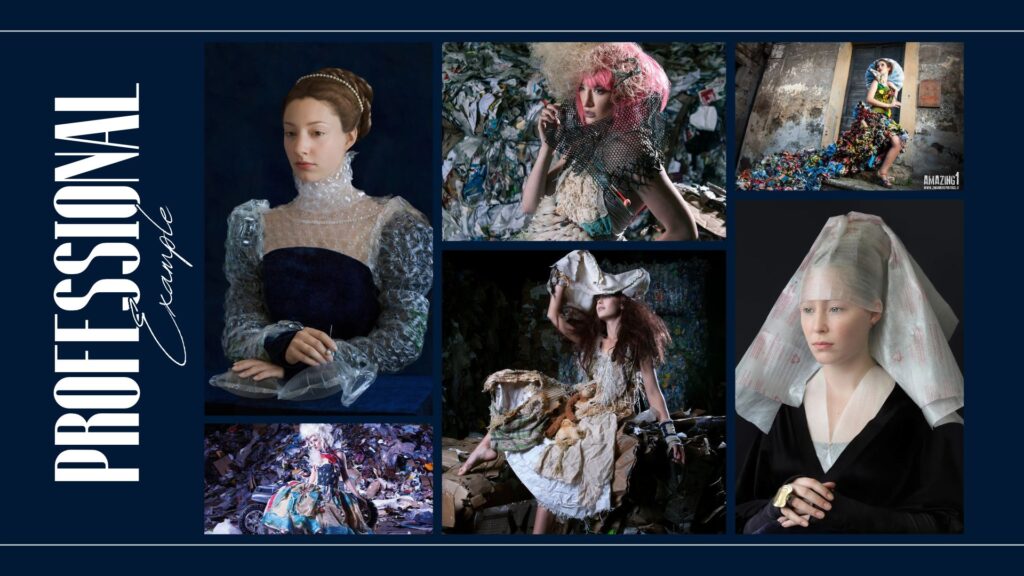
Suzanne Jongmans became an especially relevant reference for the recycled-fashion aspect of the project.
Her work explores historical portraiture, costume, and unconventional materials.
I collected references to her work, including:
- CNN coverage.
- This Is Colossal’s article, “Recycling Renaissance Portraits.”
Her work demonstrated how unconventional materials could become visually sophisticated costumes incorporated into fine-art portraiture.
Other Recycled-Fashion References
I also collected references from:
- Prazzle Arts, featuring work about transforming trash into wearable artistry.
- Nina Syc Artwear.
- Alessandro Zingone and his upcycled artwear.
These artists and resources expanded my understanding of recycled fashion as an artistic practice.
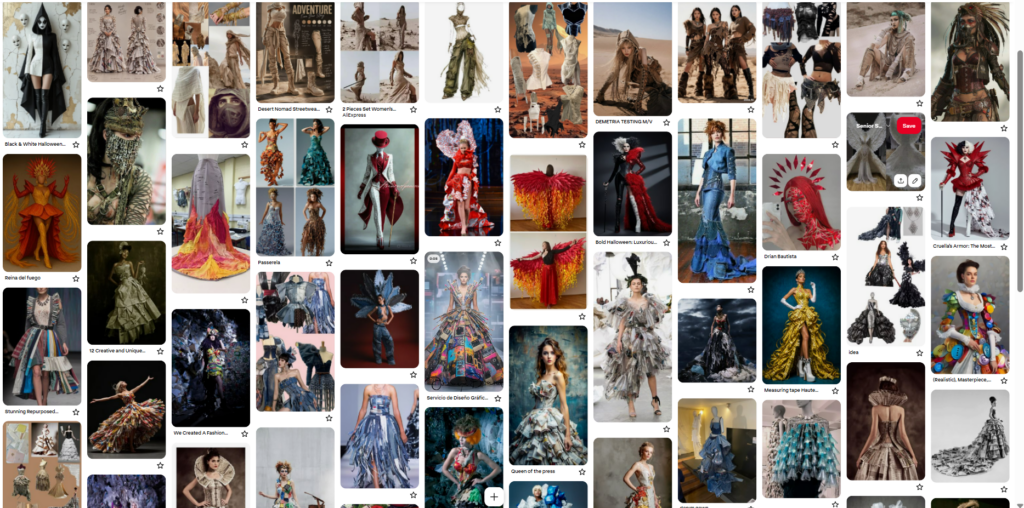
What These References Contributed
Together, these references helped me explore:
- Transforming unconventional materials into clothing.
- Using costume and styling in fine-art photography.
- Connecting fashion, artistic identity, and visual storytelling.
7. FORMALIZING THE PROJECT FOR SENIOR STUDIO
August 31, 2026: Topic Identification Draft
The first formal assignment was the Topic Identification Draft.
At this stage, I was still identifying the direction I wanted to pursue.
The main areas of exploration were:
- Recycled fashion.
- Fine-art photography.
- Mixed media.
- Fashion and visual storytelling.
- Experimental materials.
The recycled-fashion concept was becoming the strongest direction.
September 2026: Phase 1 Research
The first research phase involved two main areas.
A. Making and Primary Research
This focused on physically experimenting with the project.
Relevant activities included:
- Creating material tests.
- Experimenting with recycled materials.
- Developing prototypes.
- Testing how clothing could be constructed.
- Photographing experiments.
- Conducting lighting tests.
- Creating moodboards.
- Documenting the creative process.
B. Looking and Secondary Research
This involved researching existing artists, photographers, and artistic practices.
Research areas included:
- Recycled-fashion artists.
- Fine-art photographers.
- Wearable art.
- Costume design.
- Experimental materials.
- Contemporary photography and mixed media.
The goal was to understand how other artists approached similar concepts and identify what I wanted to contribute through my own work.
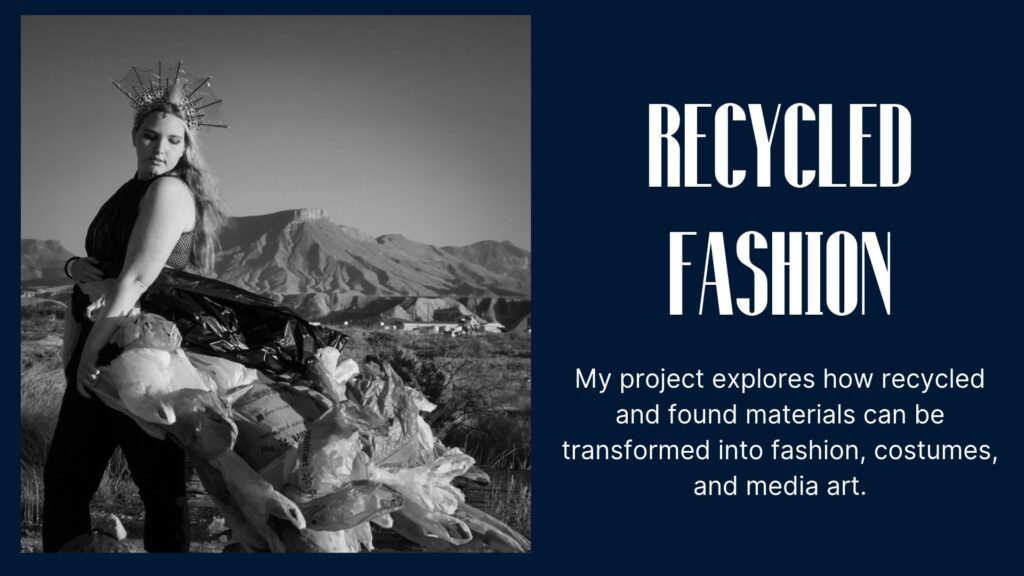
September 16, 2026: “What Are You Doing?” Presentation
This assignment required five slides.
The required content included:
- Information about the project.
- The identified topic.
- Professional examples and references.
- My own existing work.
- My intended contribution.
This assignment required me to connect my previous artwork with my proposed Senior Studio project.

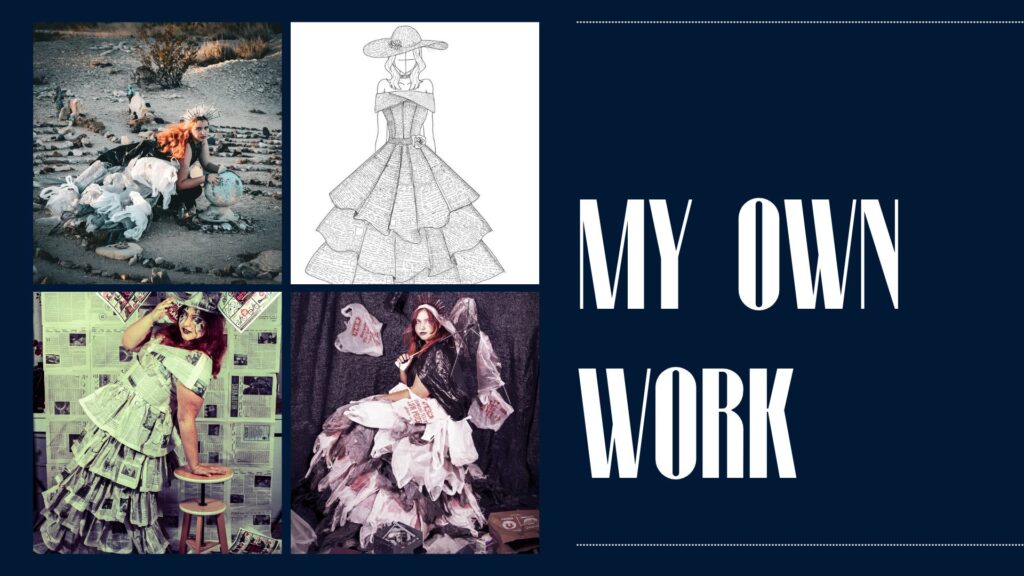

September 16, 2026: Project Brief Draft
The project brief had a maximum length of two pages and needed to be submitted as a PDF.
It required five sections.
Subject: What the project is about.
Context: The artistic background and research informing the project.
Critique: The questions and issues explored through the work.
Trajectory: The direction in which the project was expected to develop.
Dissemination: How the final project would be presented or shared.
At this stage, the project was primarily focused on recycled fashion and fine-art photography.
8. THE MEDIA ART CONNECTION
One important question I explored was how to connect the project more strongly with the Media Art side of my major.
I wanted to maintain the Photography and Media Art identity of my discipline.
I also questioned whether media had to mean digital media.
For this project, the materials themselves became an important part of the artistic medium.
Plastic, paper, fabric, textiles, photographs, and constructed garments all contribute to the final artwork.
The project combines:
- Photography.
- Fashion and costume.
- Material experimentation.
- Textile manipulation.
- Mixed media.
- Sculpture and constructed objects.
- Visual storytelling.
The clothing is physically constructed, while photography becomes the way the objects and figures are presented to the viewer.
The final photograph becomes the result of several artistic decisions.
The clothing, materials, subject, environment, lighting, and composition all contribute to the finished image.
9. OCTOBER 2026: A CHANGE IN CONCEPTUAL DIRECTION
By October, my project was becoming more conceptual.
I still wanted to maintain the original recycled-fashion foundation, but I began exploring what the clothing and photographs could represent.
I became interested in:
- Identity.
- Transformation.
- Mystery.
- Nature.
- The human figure.
- Symbolism.
- Different stages of life.
- Seasonal changes.
- Time of day.
The project was no longer only about transforming discarded materials into clothing.
It was becoming an exploration of how a constructed appearance could communicate a larger idea.
Existing Photographs
Two existing images became important to the developing series.
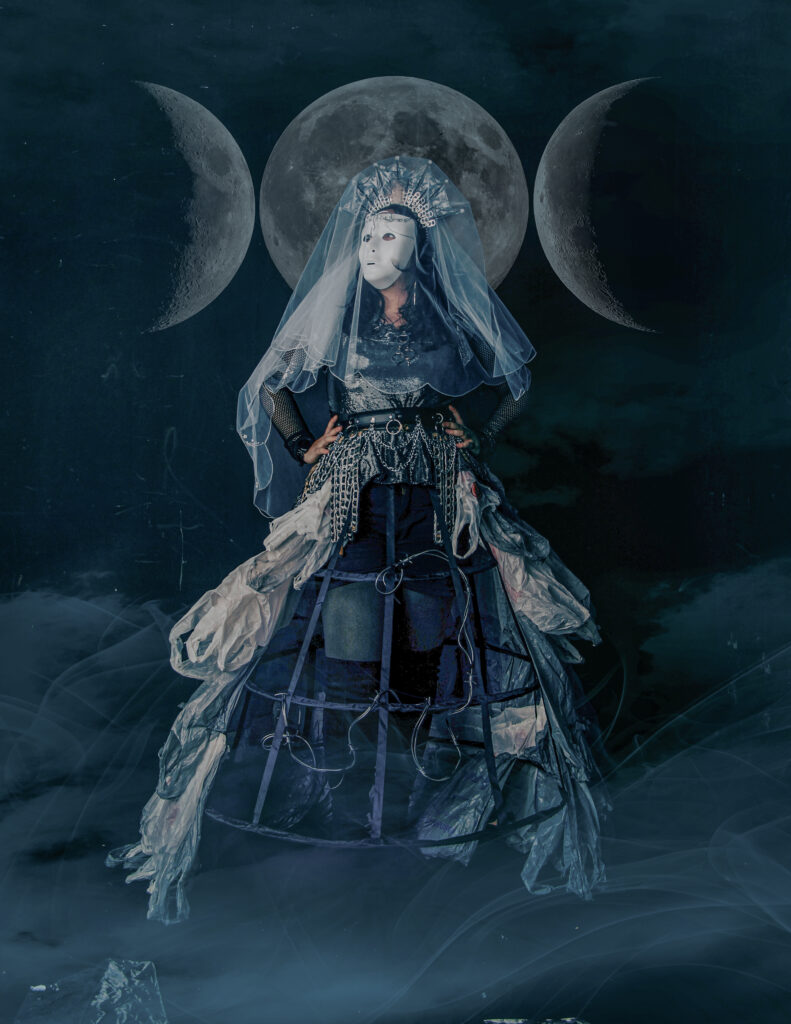
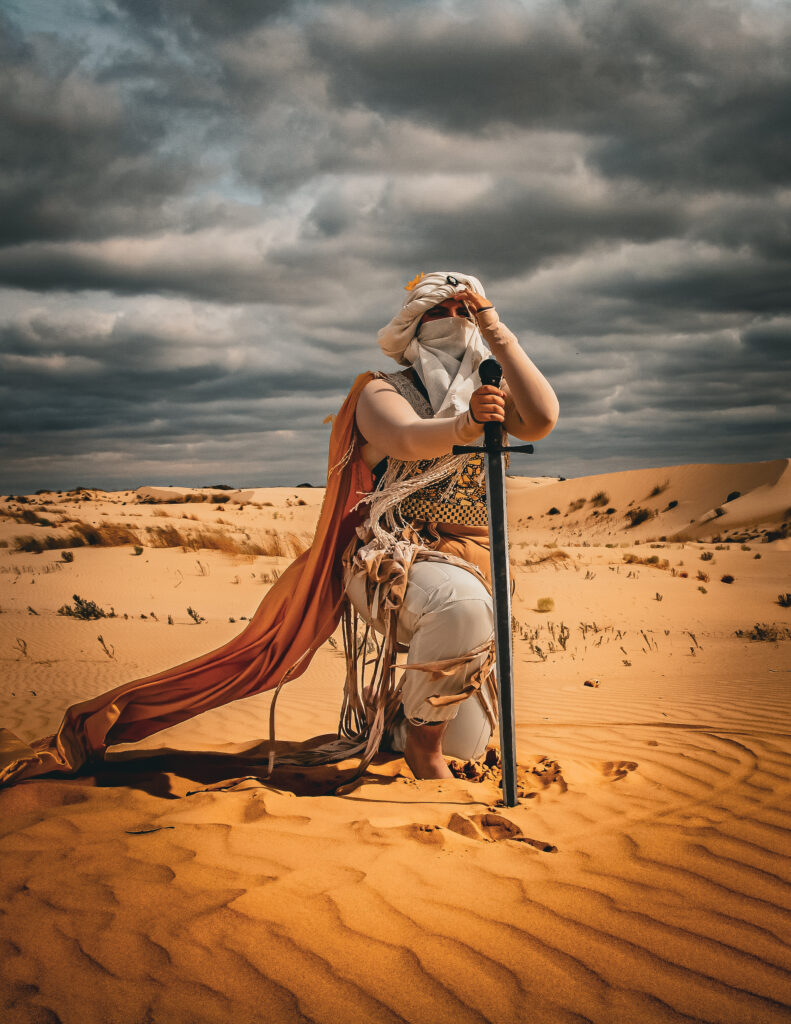
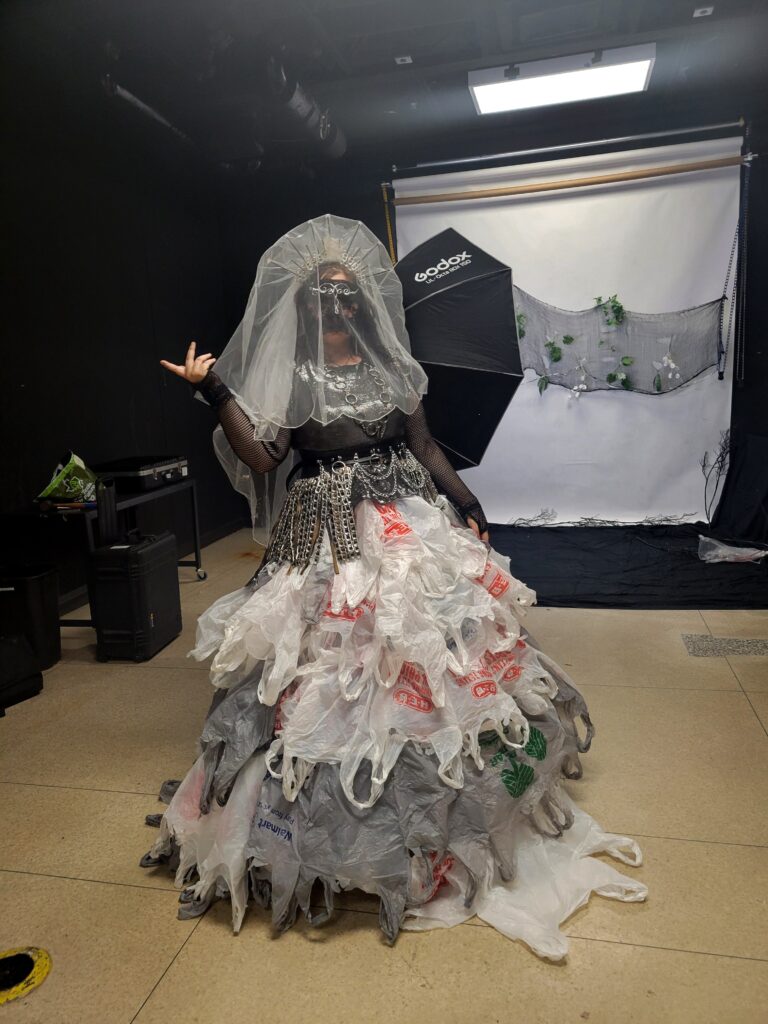
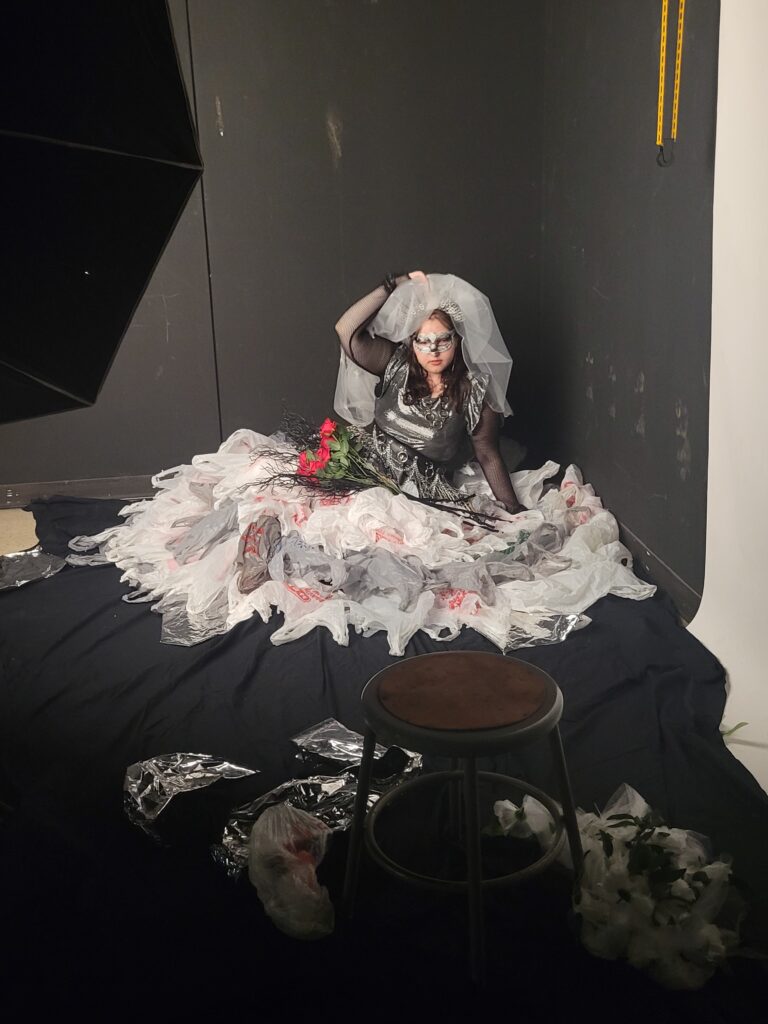
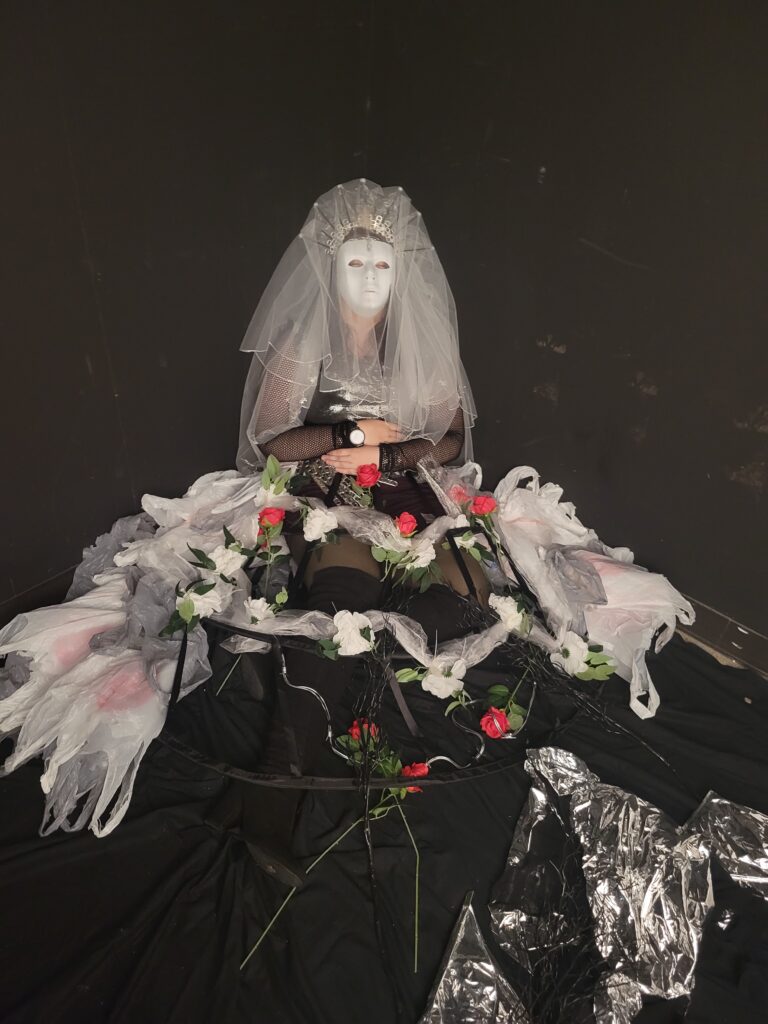
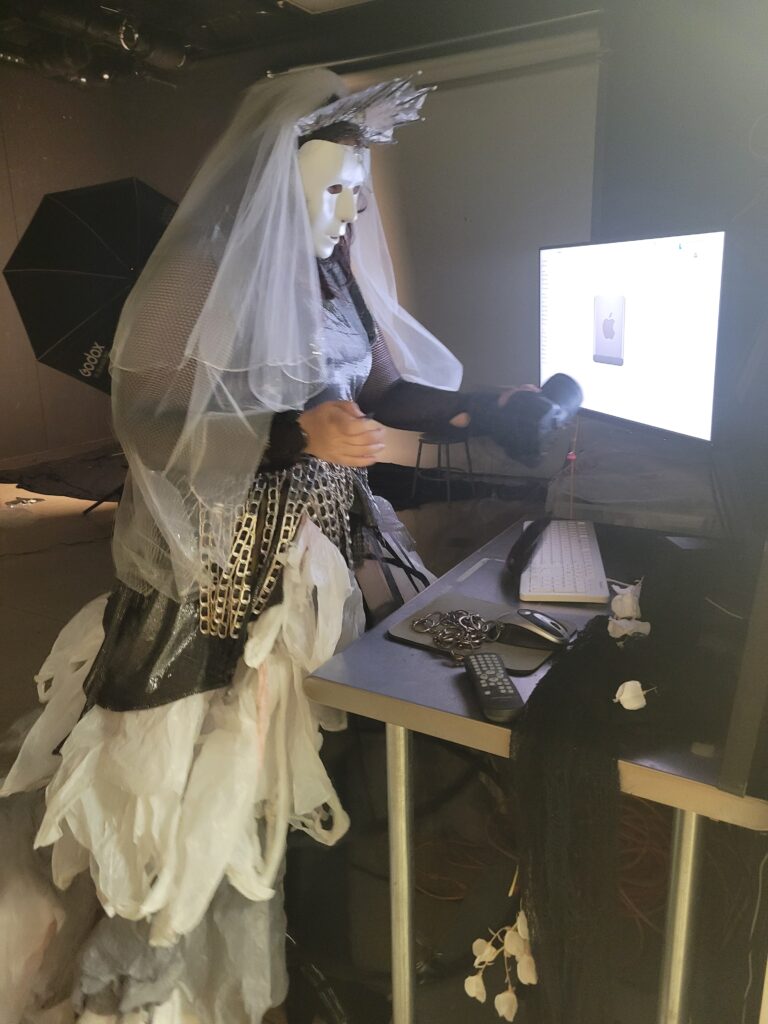
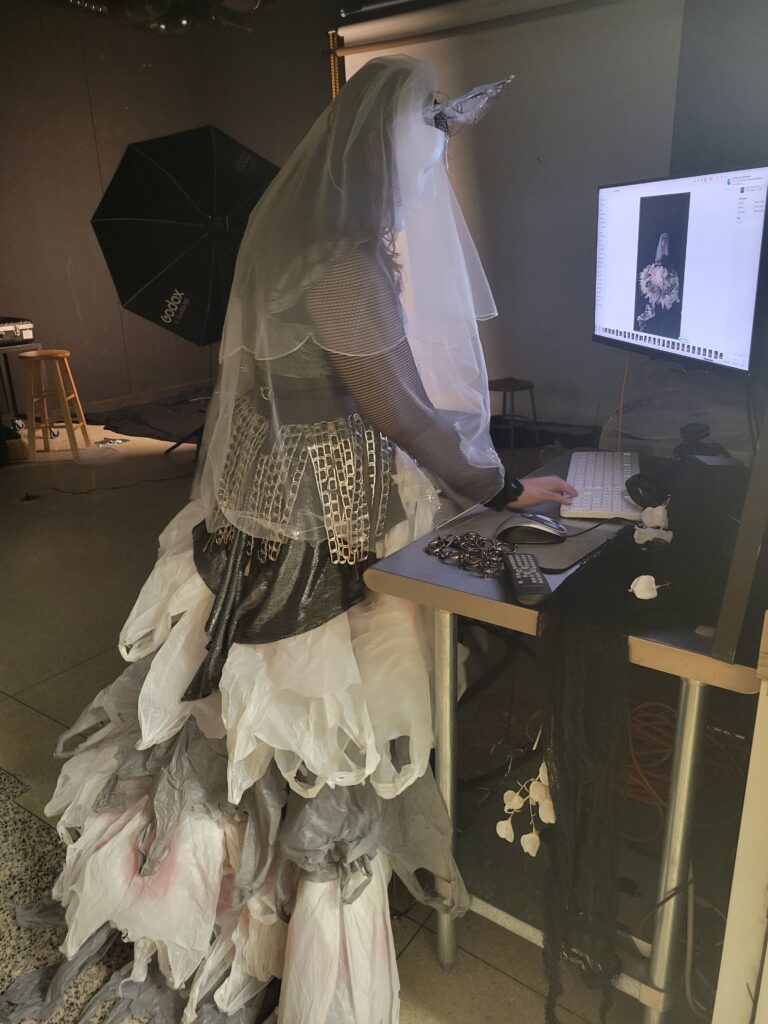
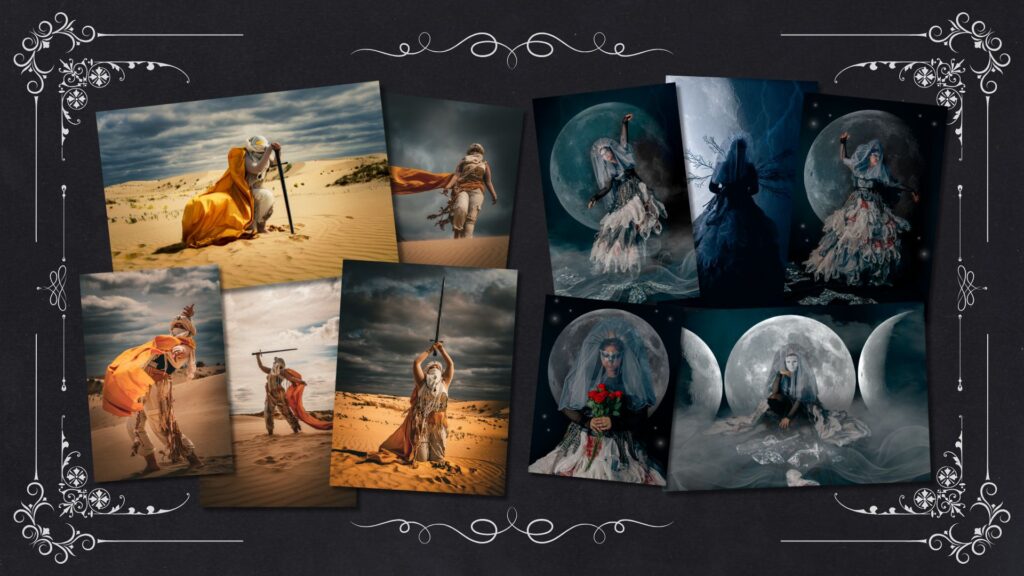
Image 1: Blue Trash-Bag Fashion Portrait
This photograph connects directly to the original recycled-fashion concept.
It uses a blue trash-bag garment as part of the visual styling.
It represents the earlier stages of my experimentation with unconventional materials.
I wanted to preserve this photograph rather than replace it.
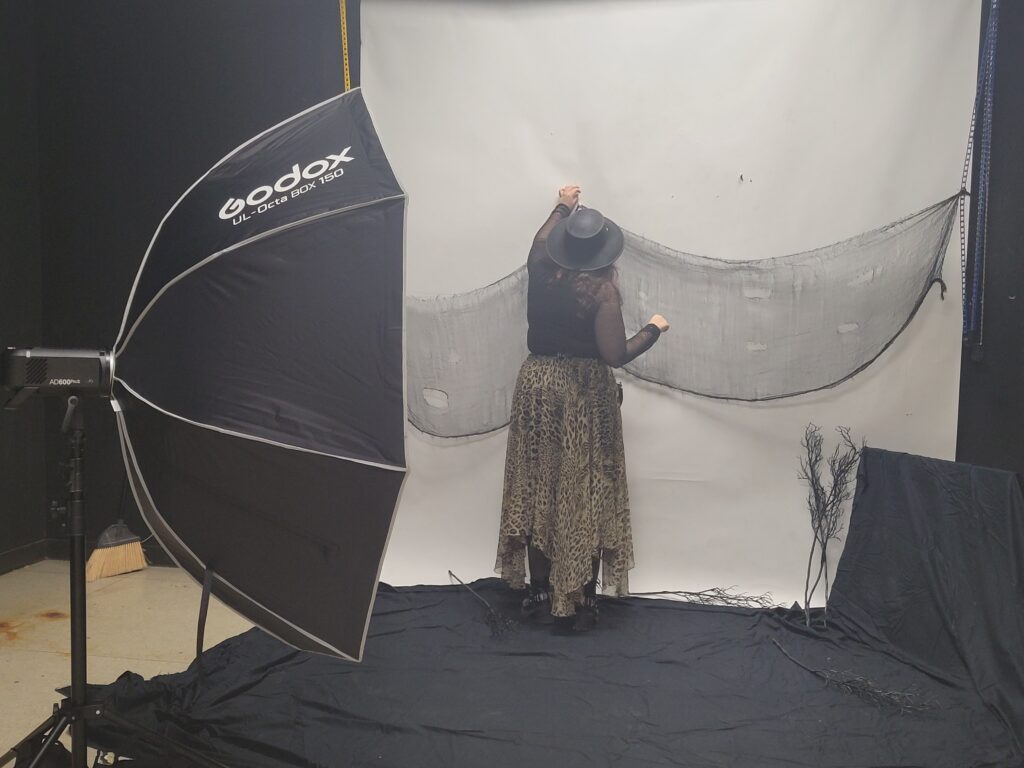
Total of Images shot: 178
Original image version #1
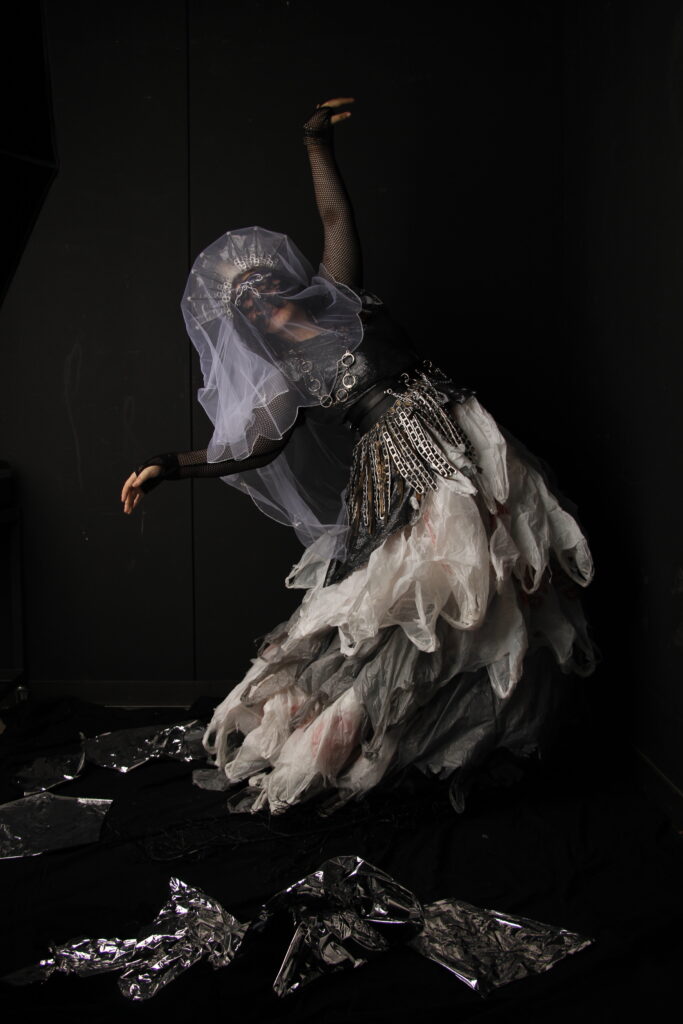
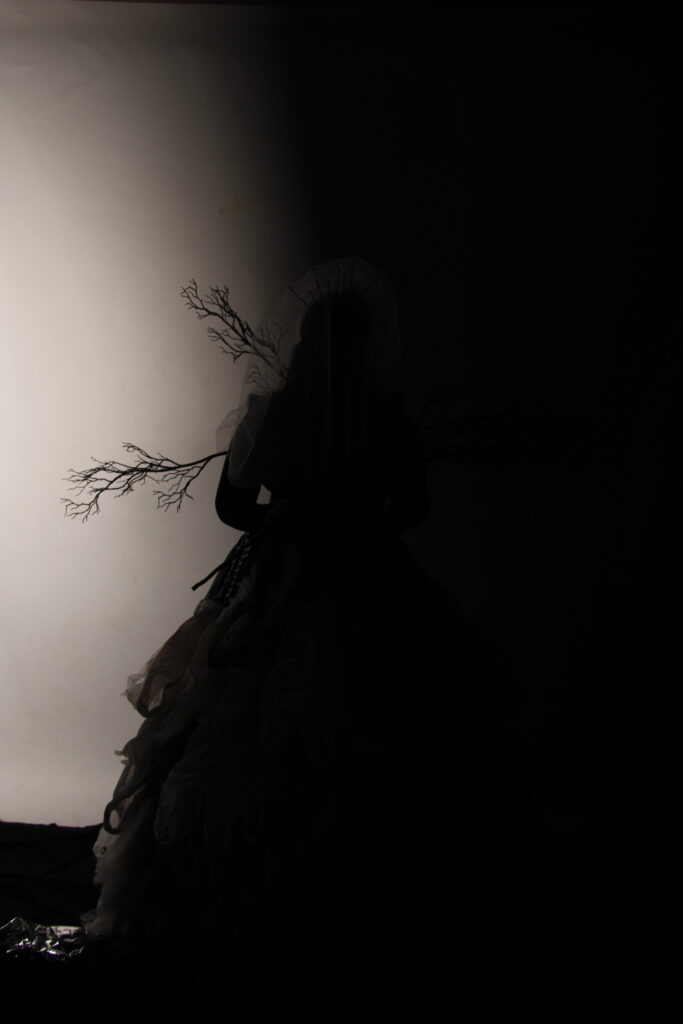
Original image version #2
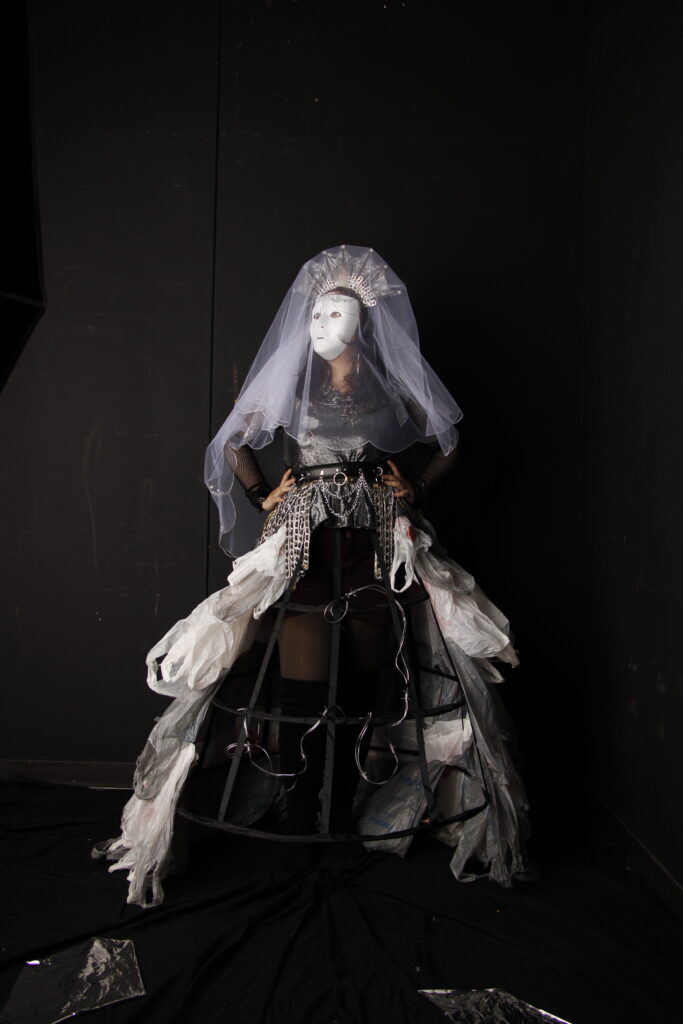
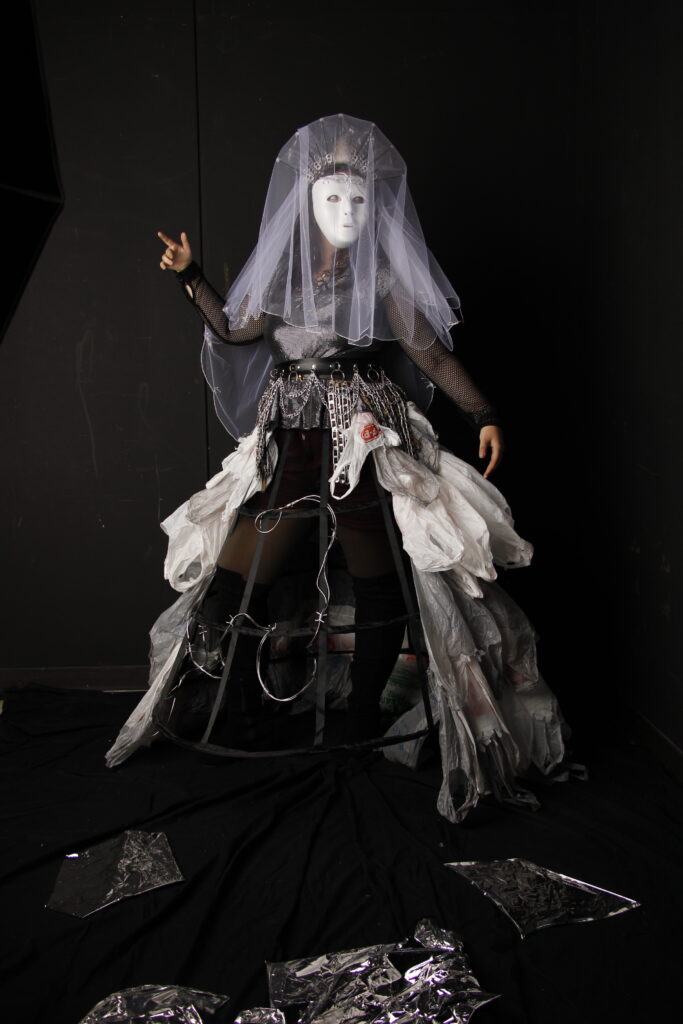
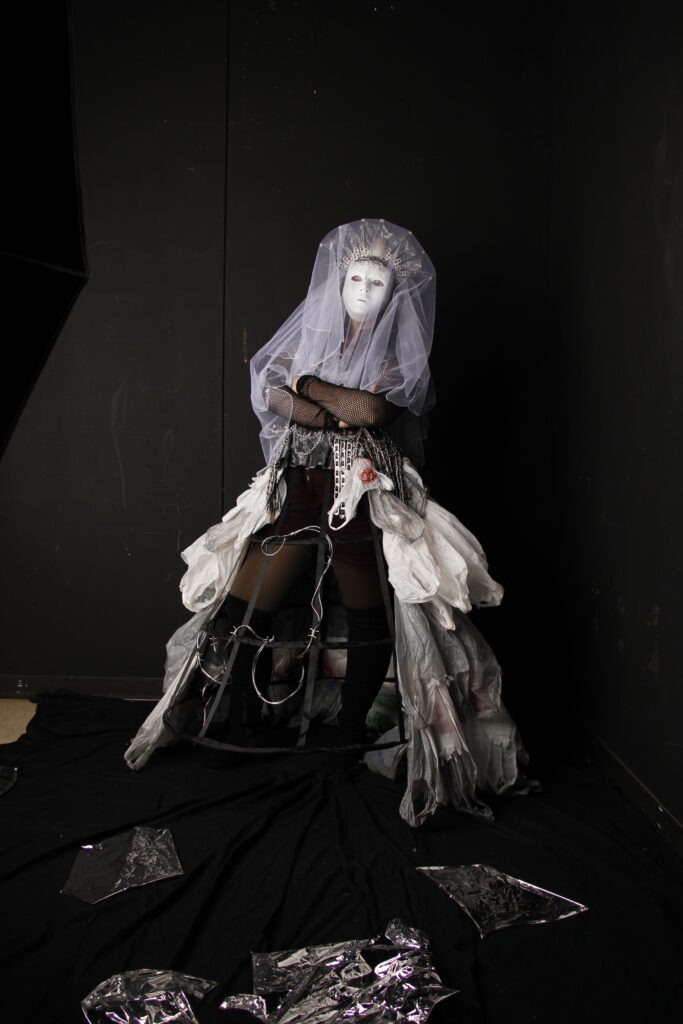
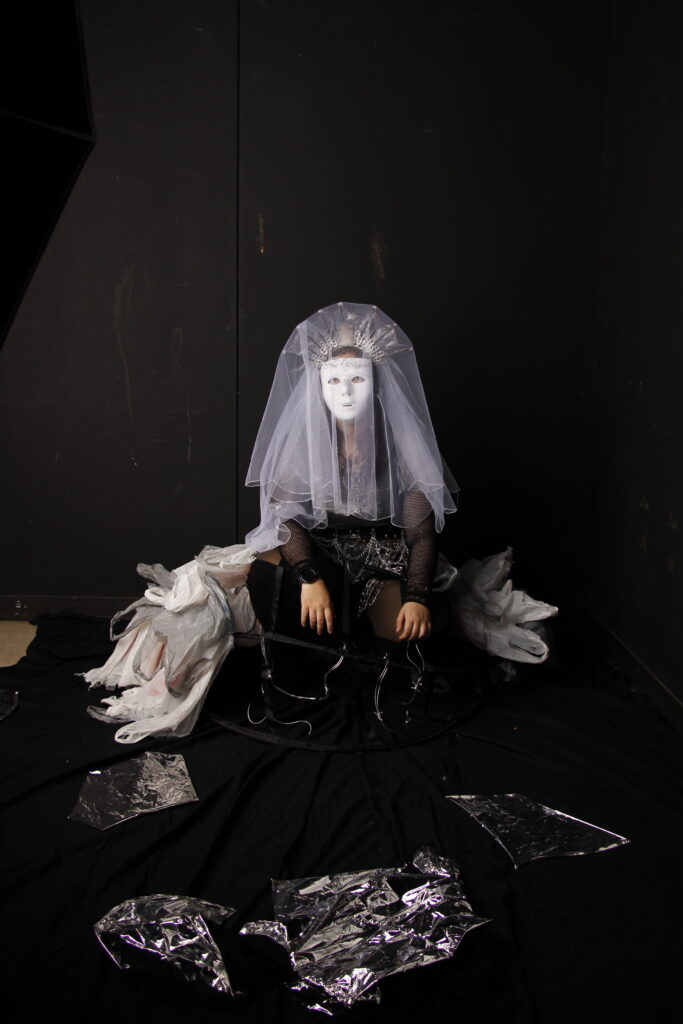
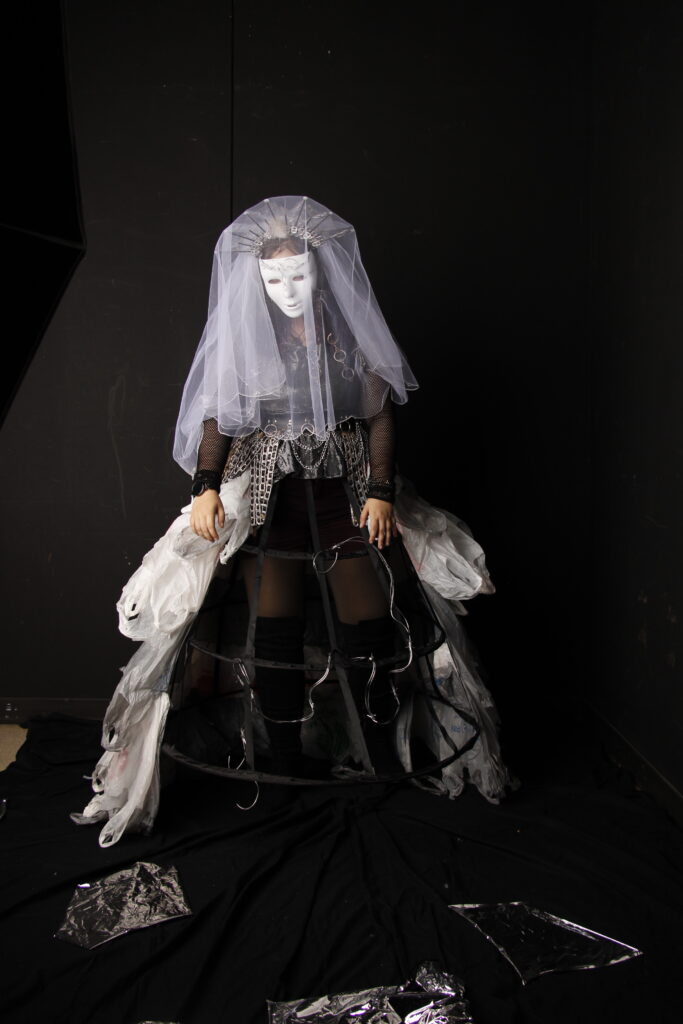
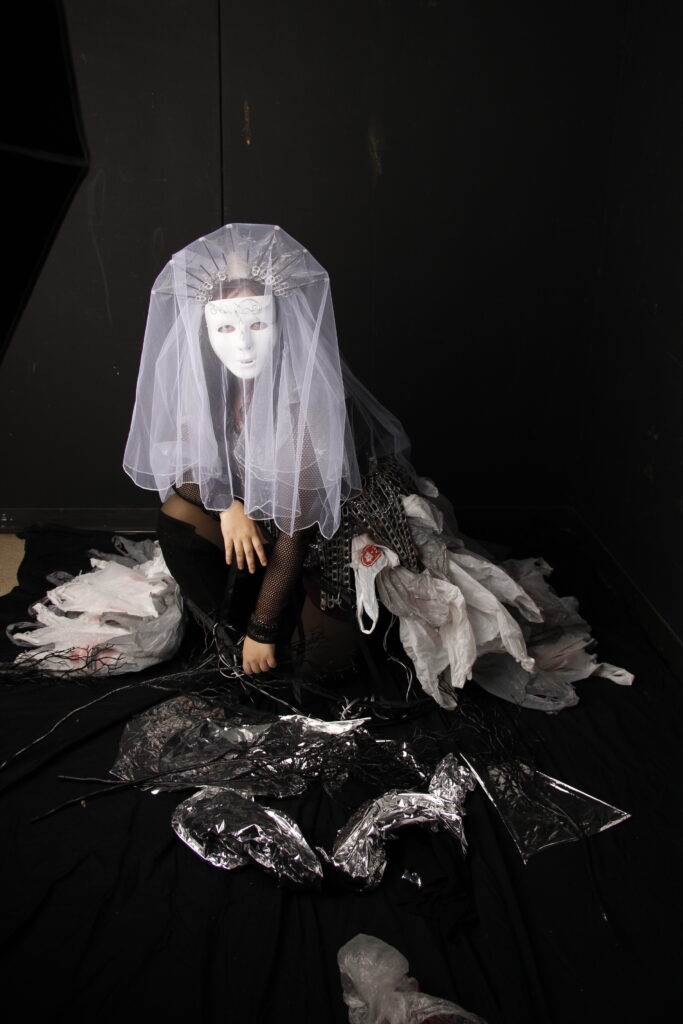
Behind the Scenes
Edited Version
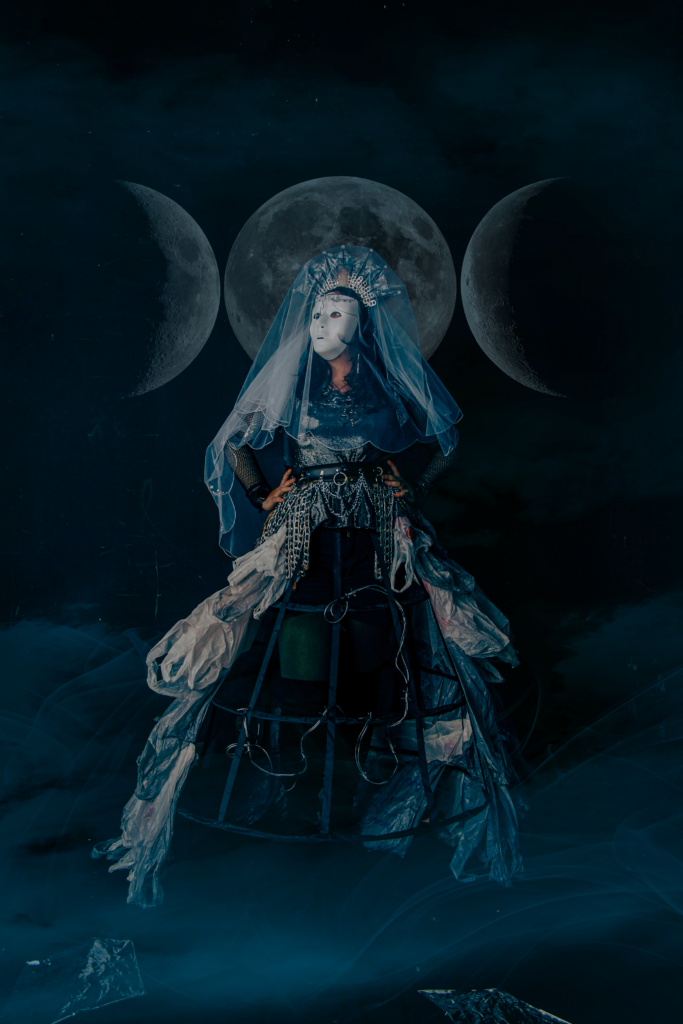
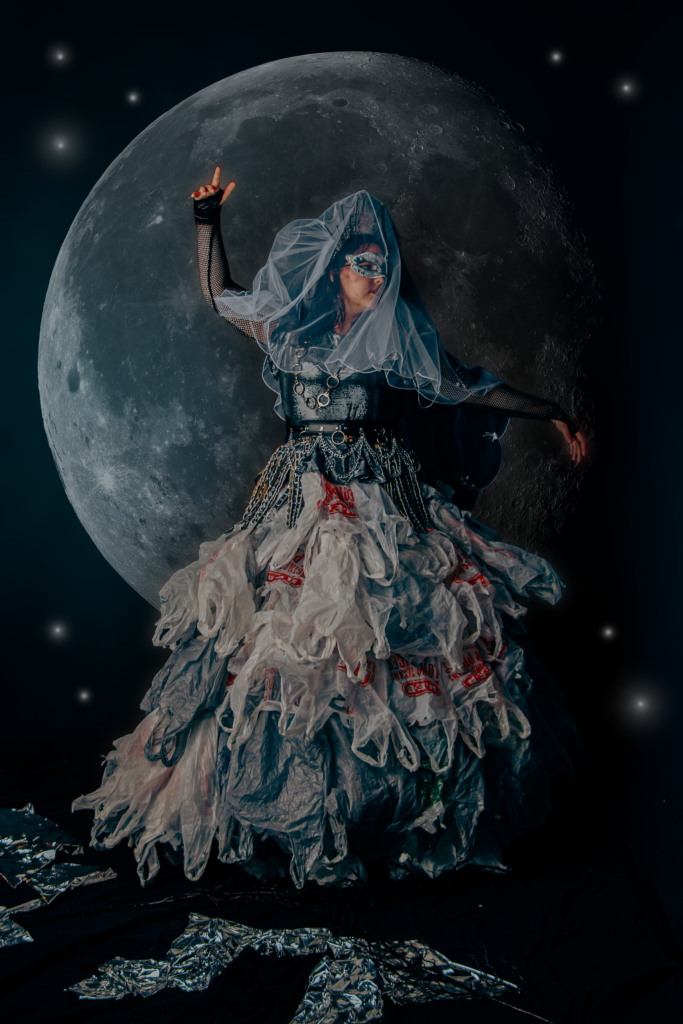
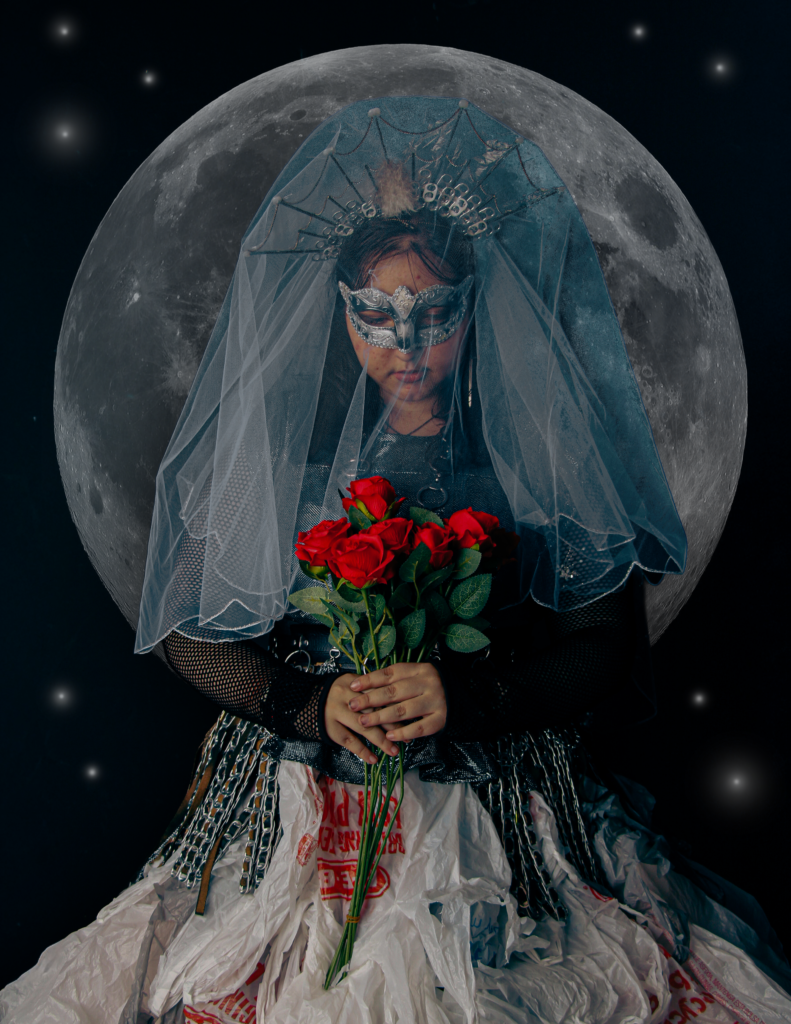
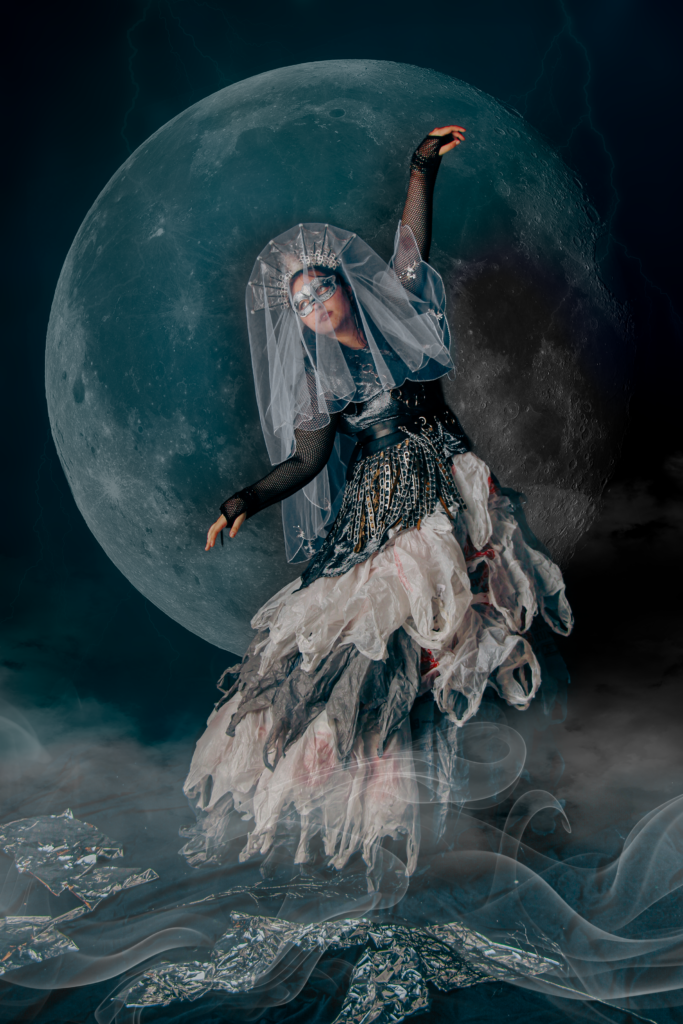
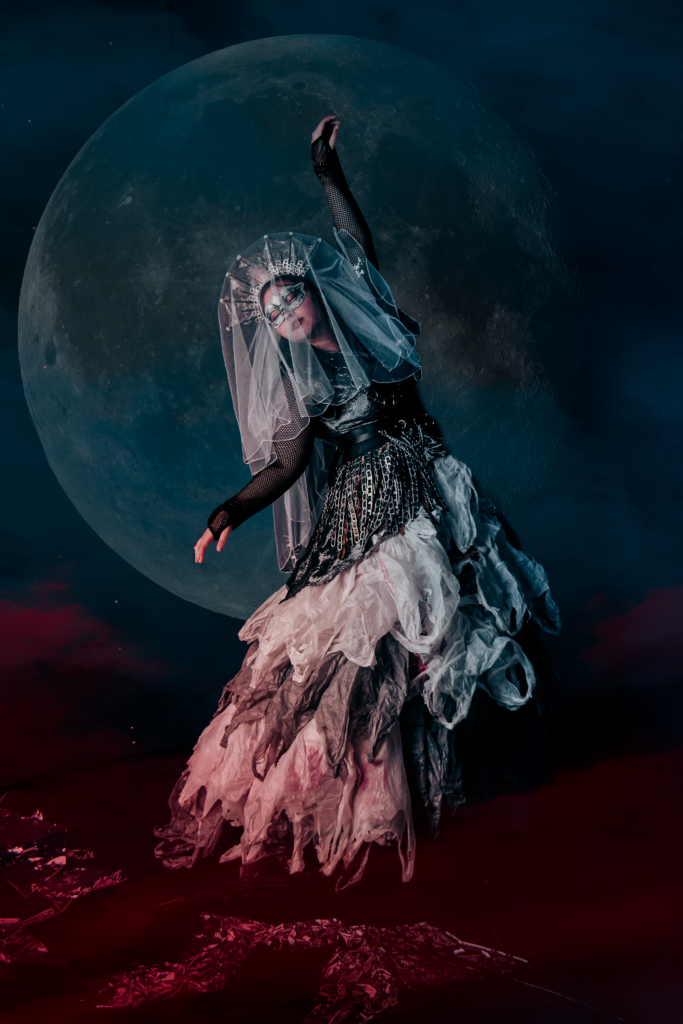


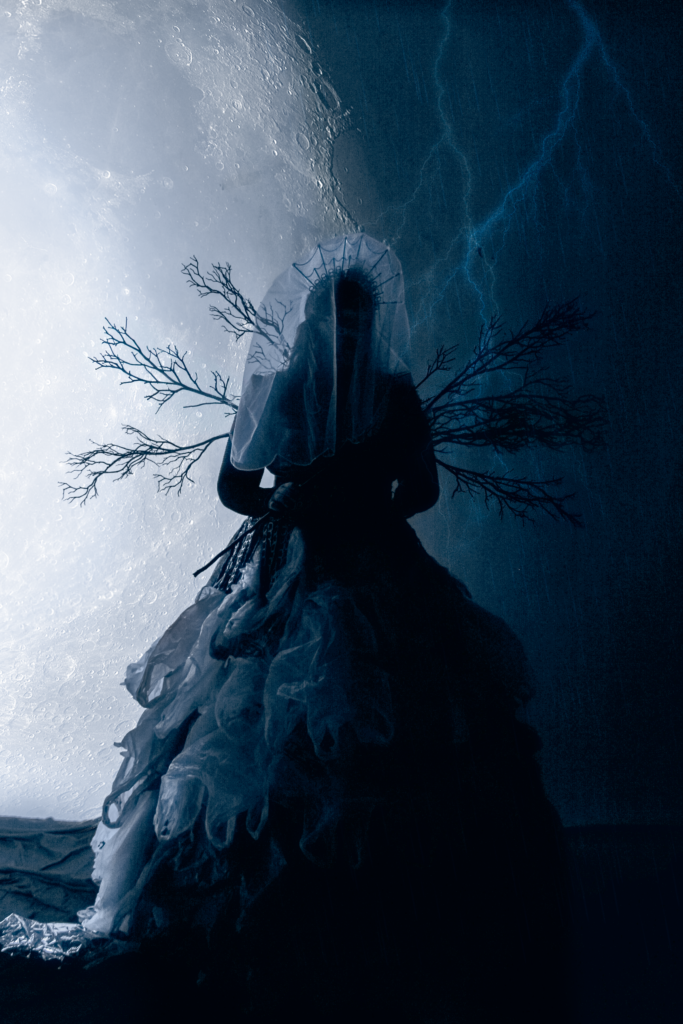
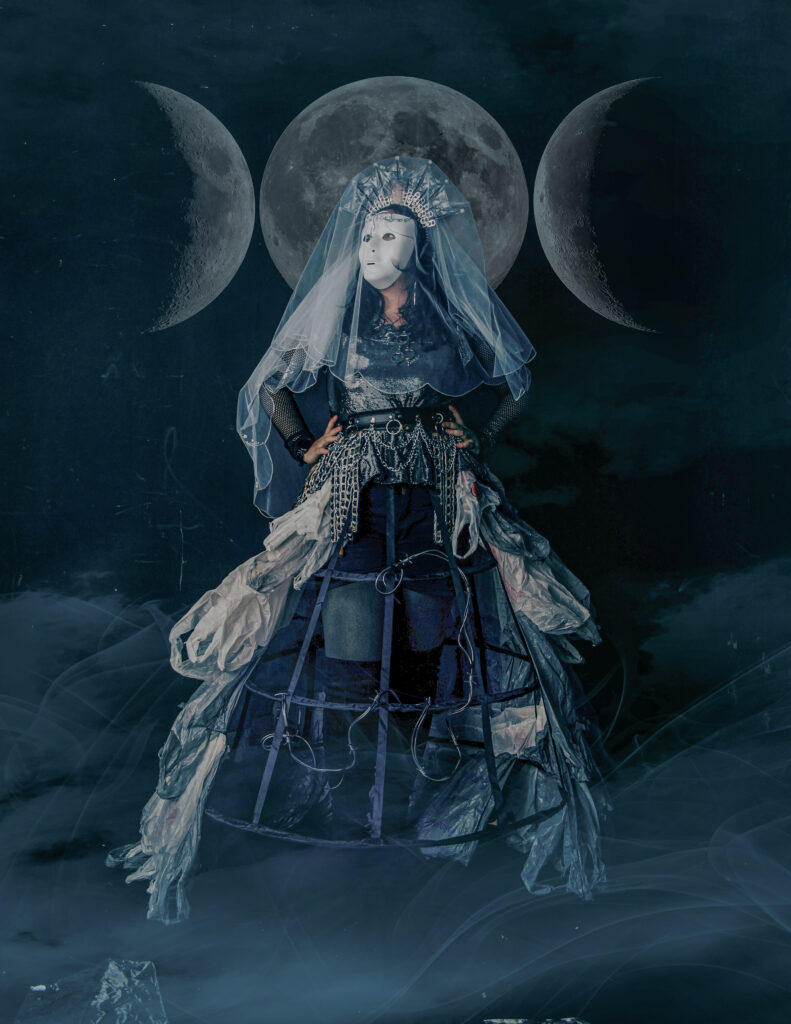
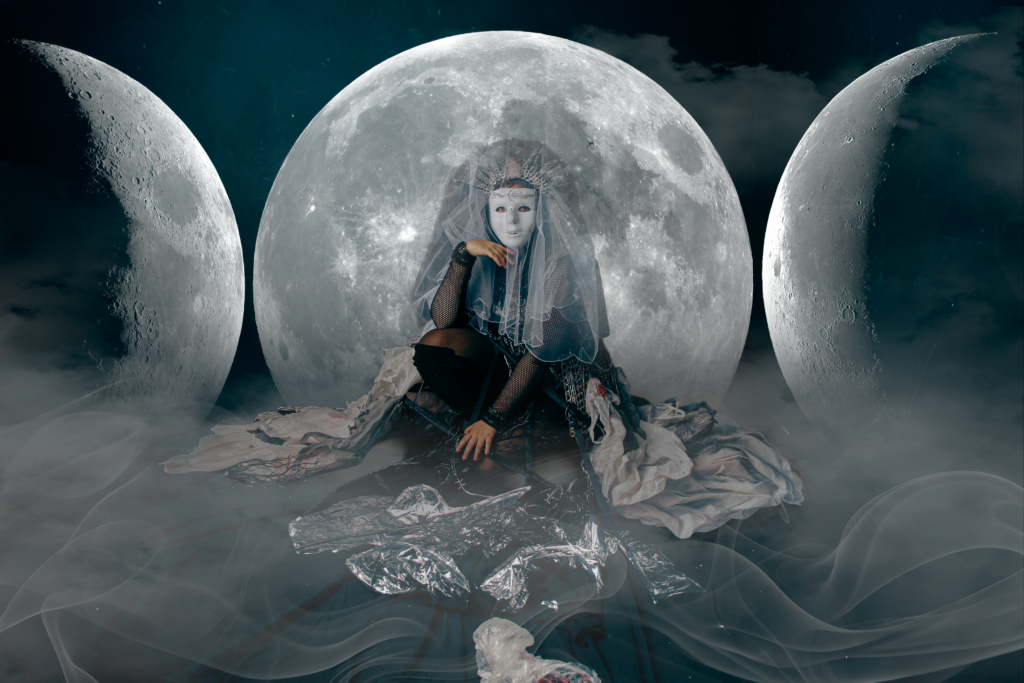
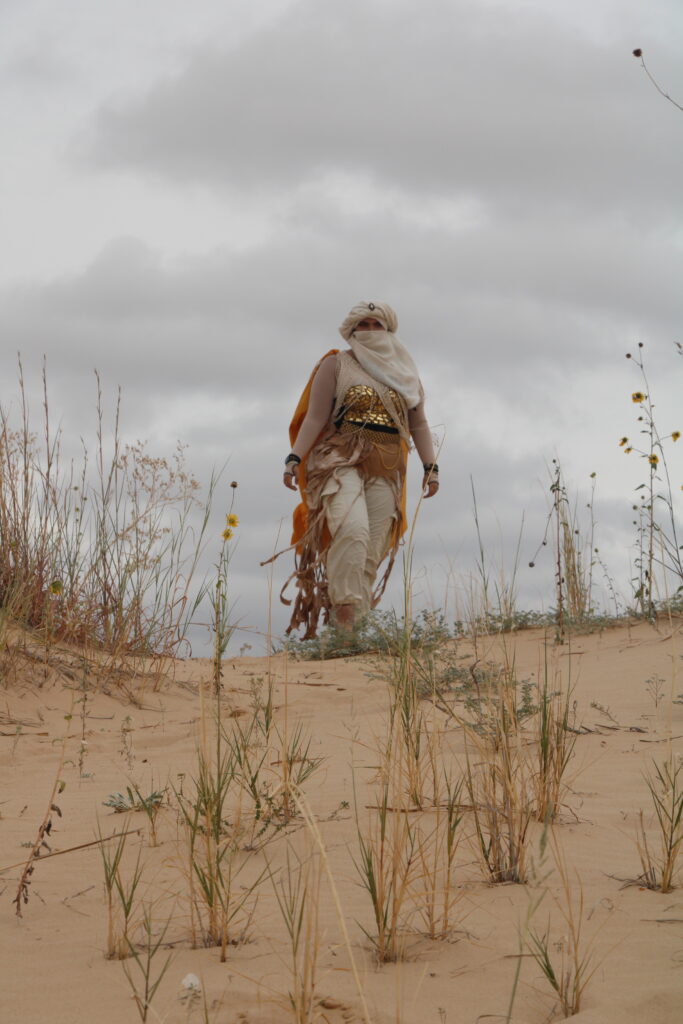
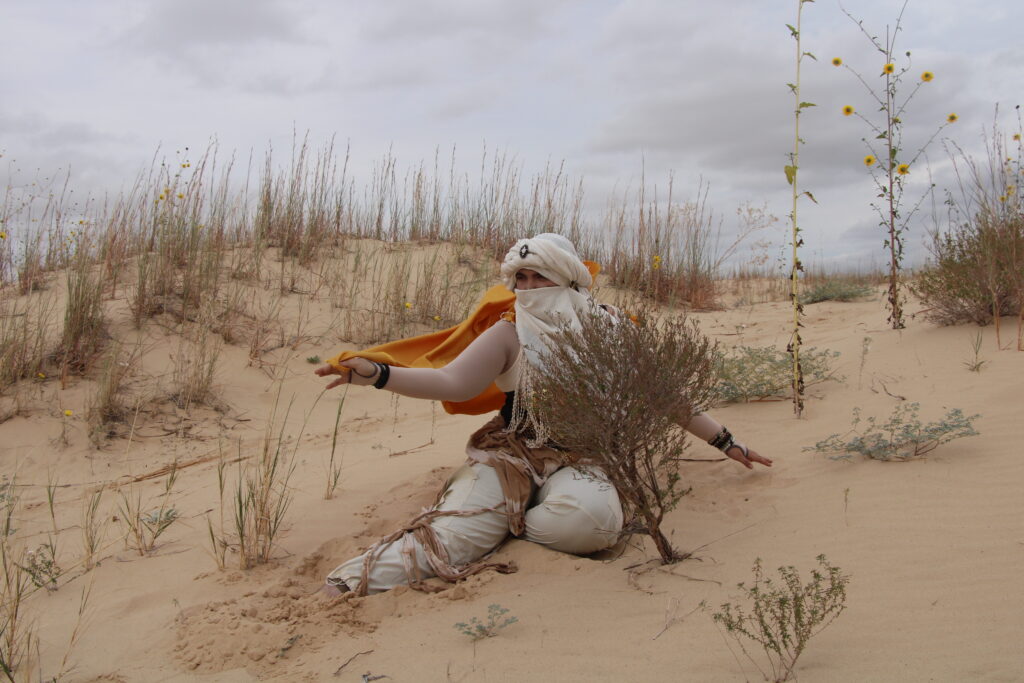
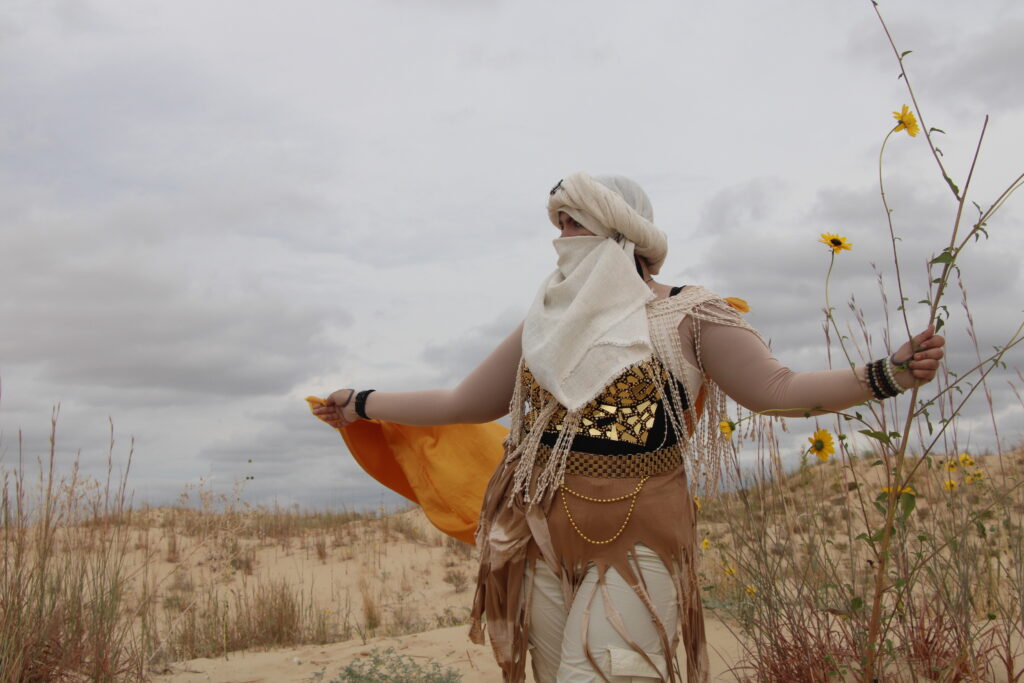
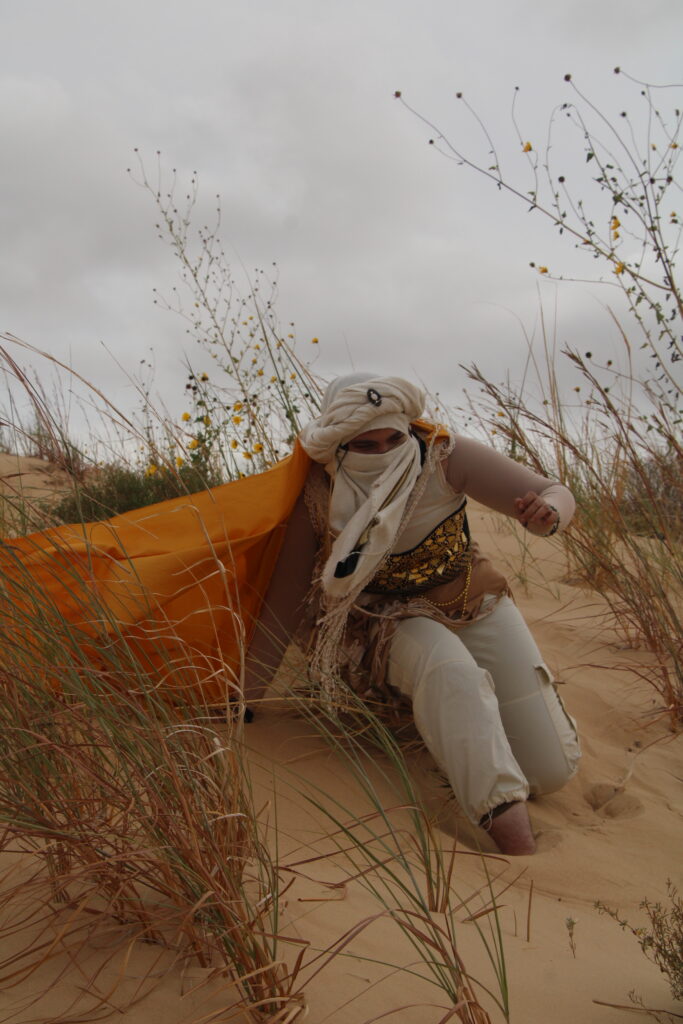
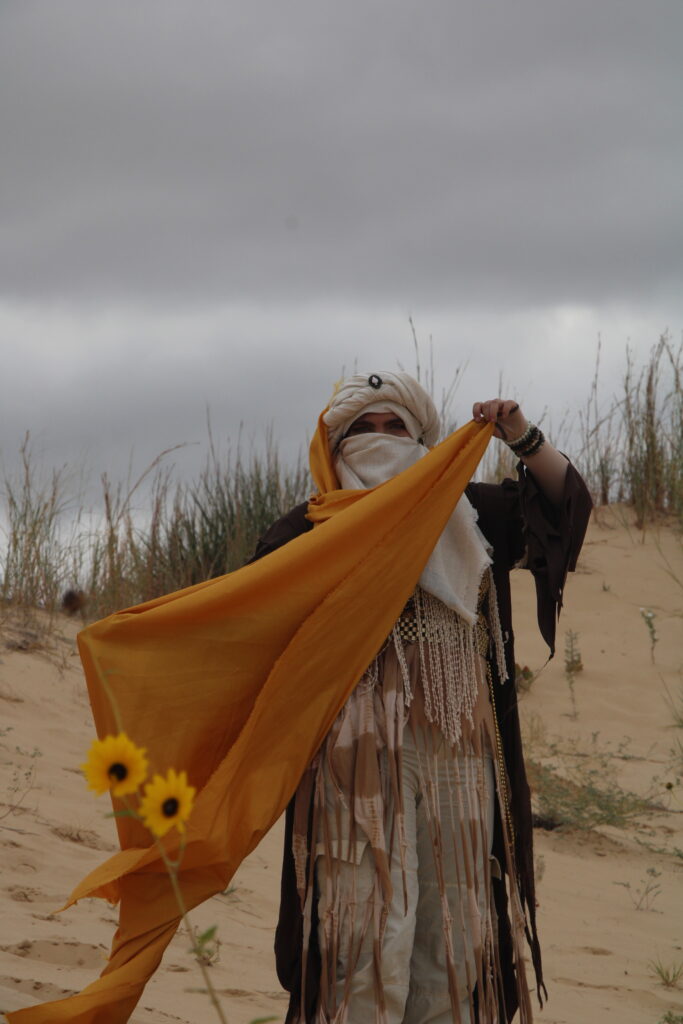
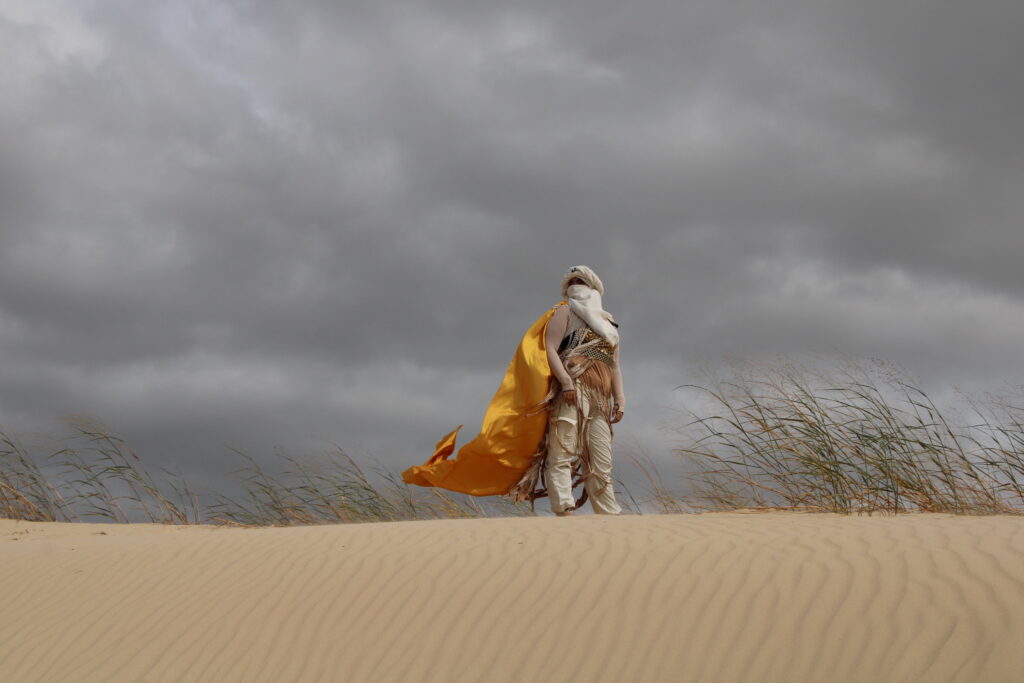
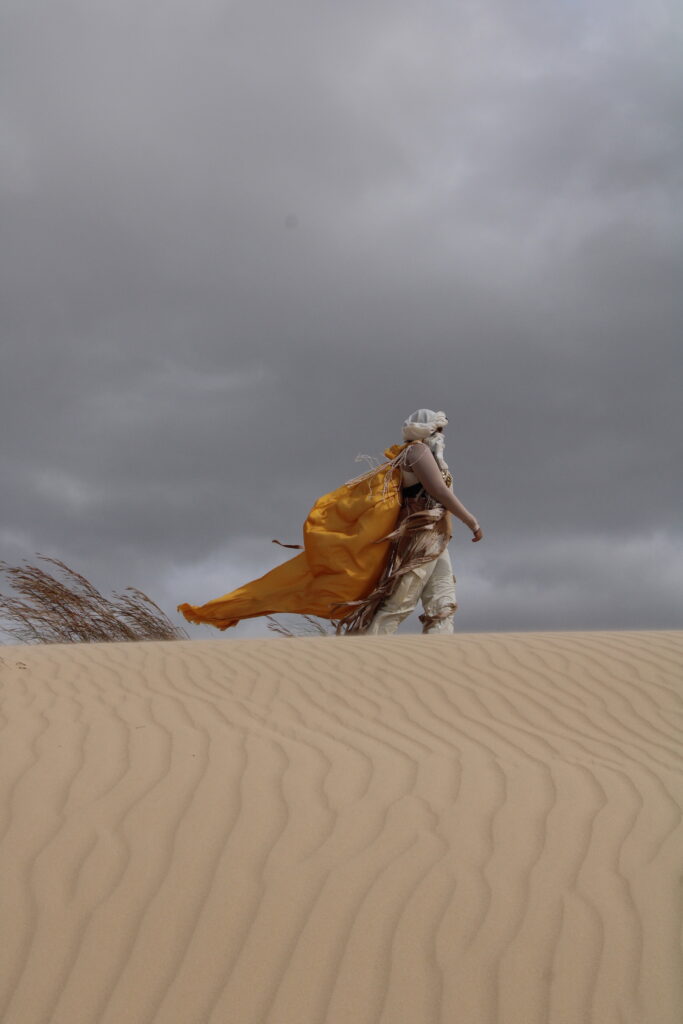
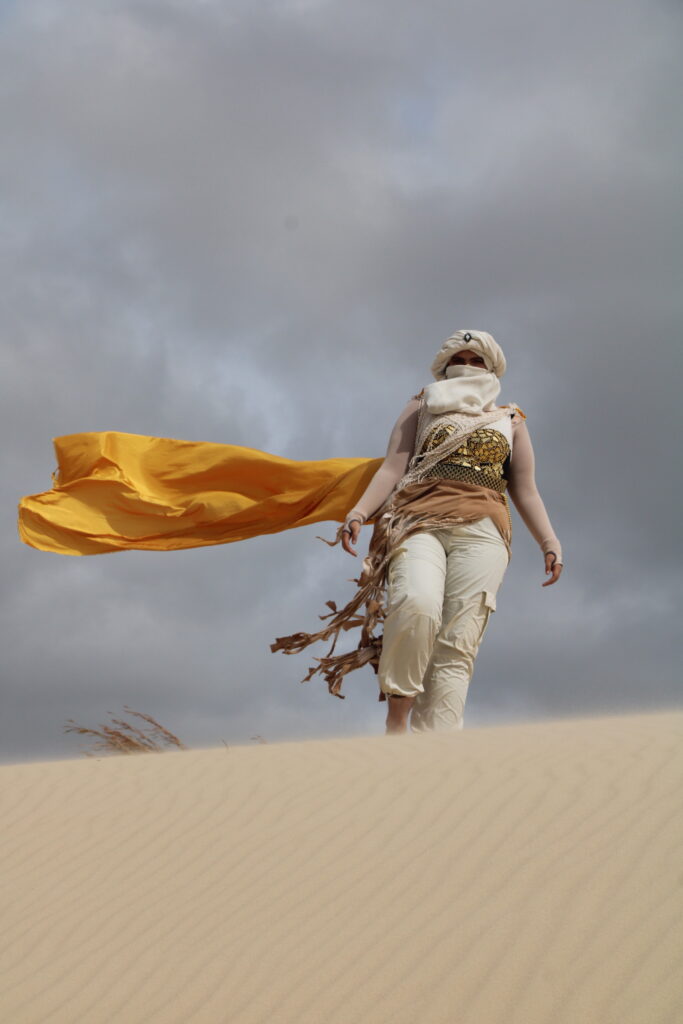
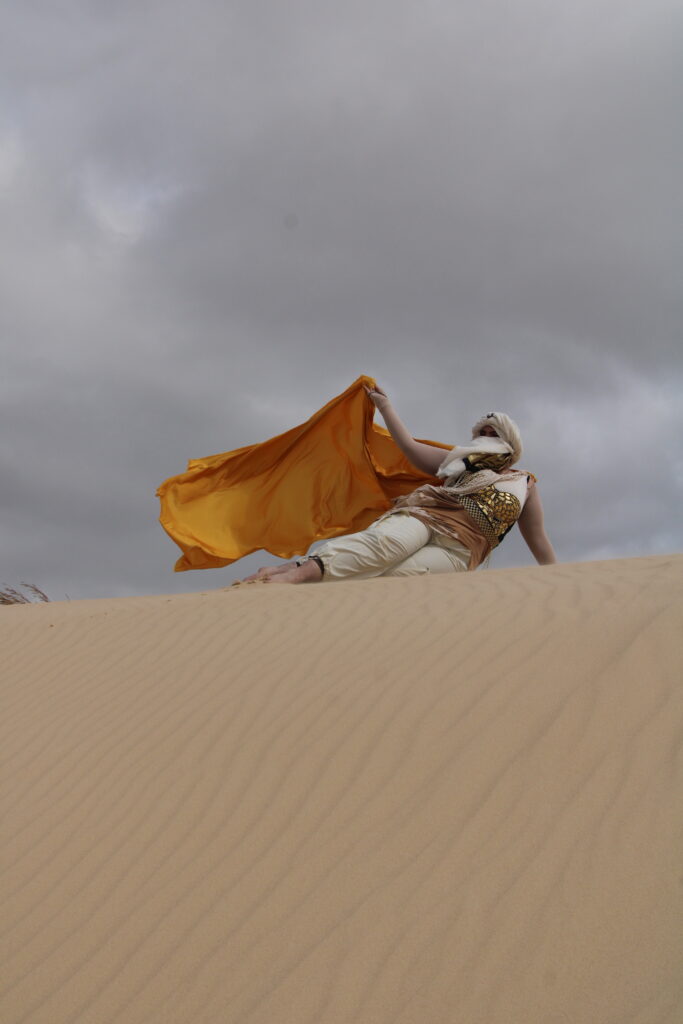
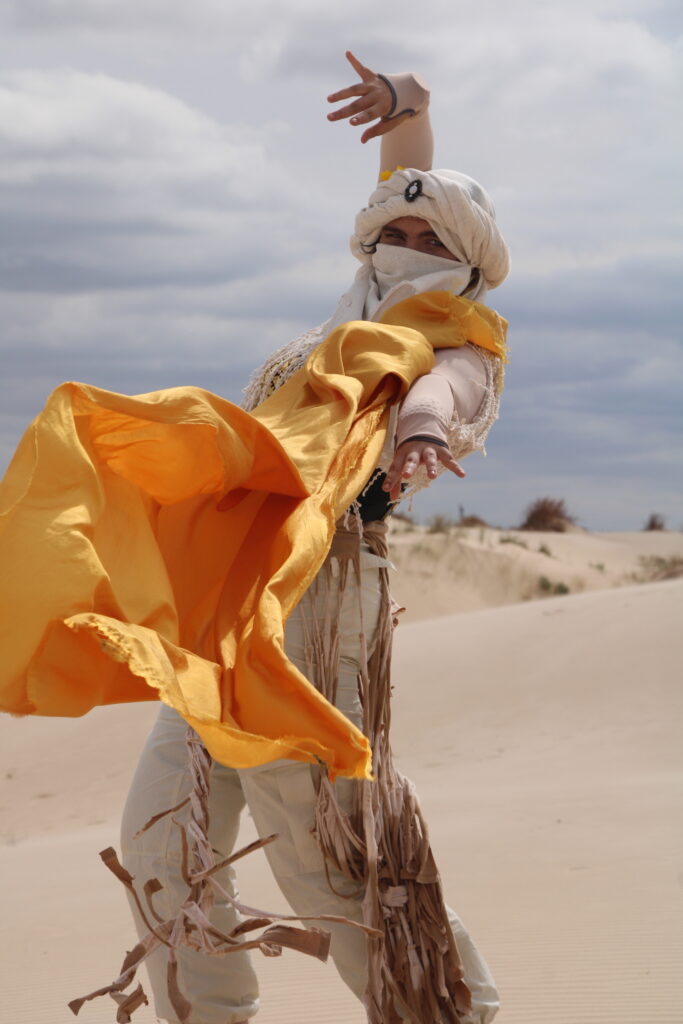
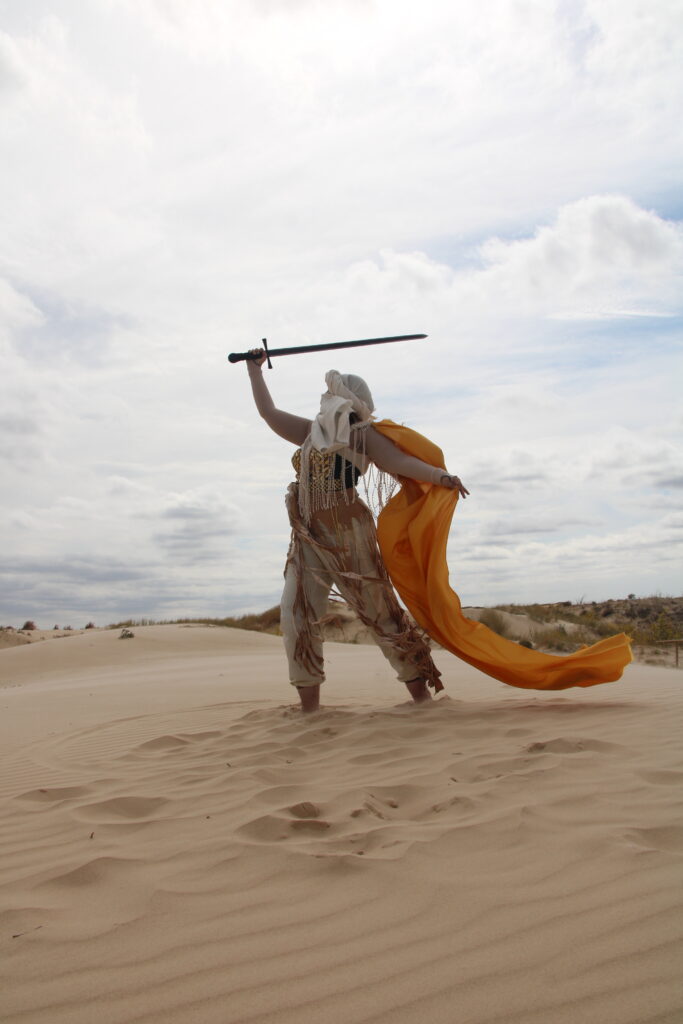
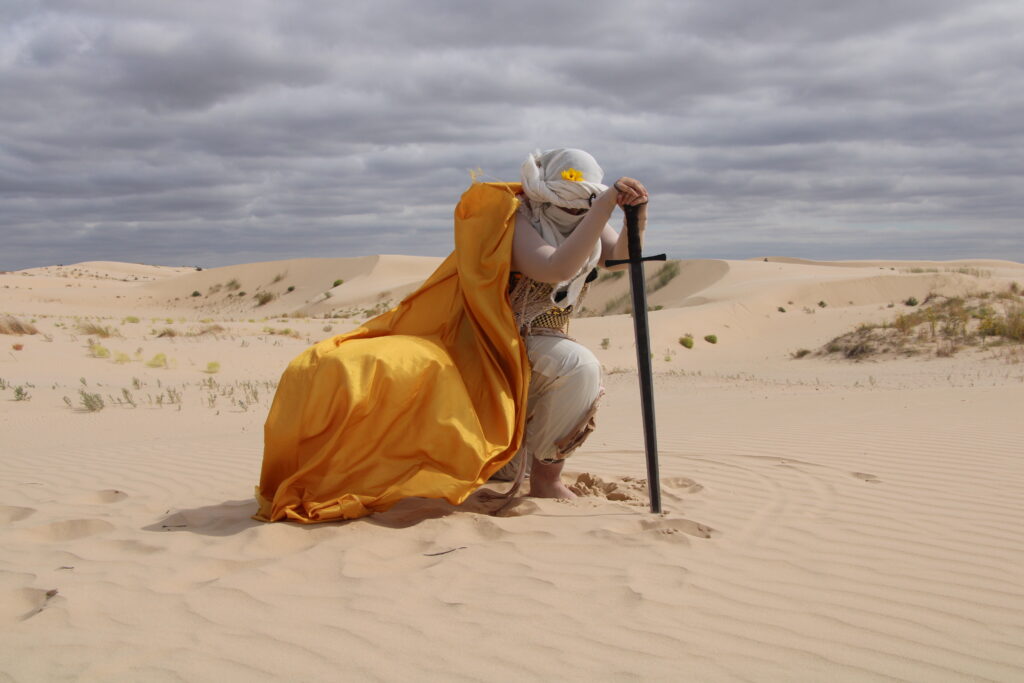
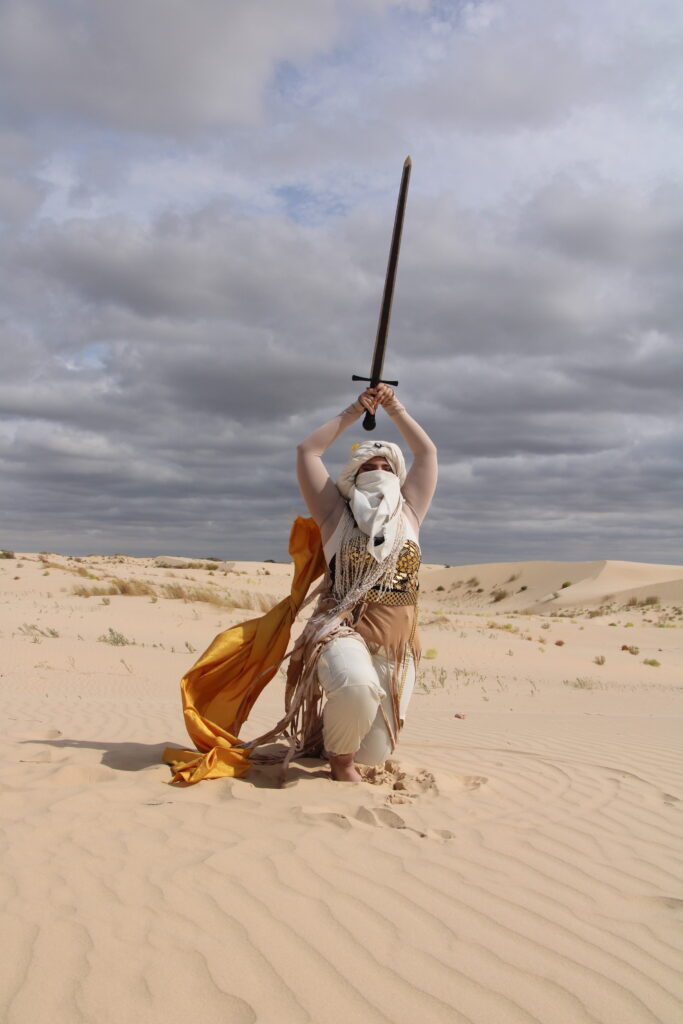
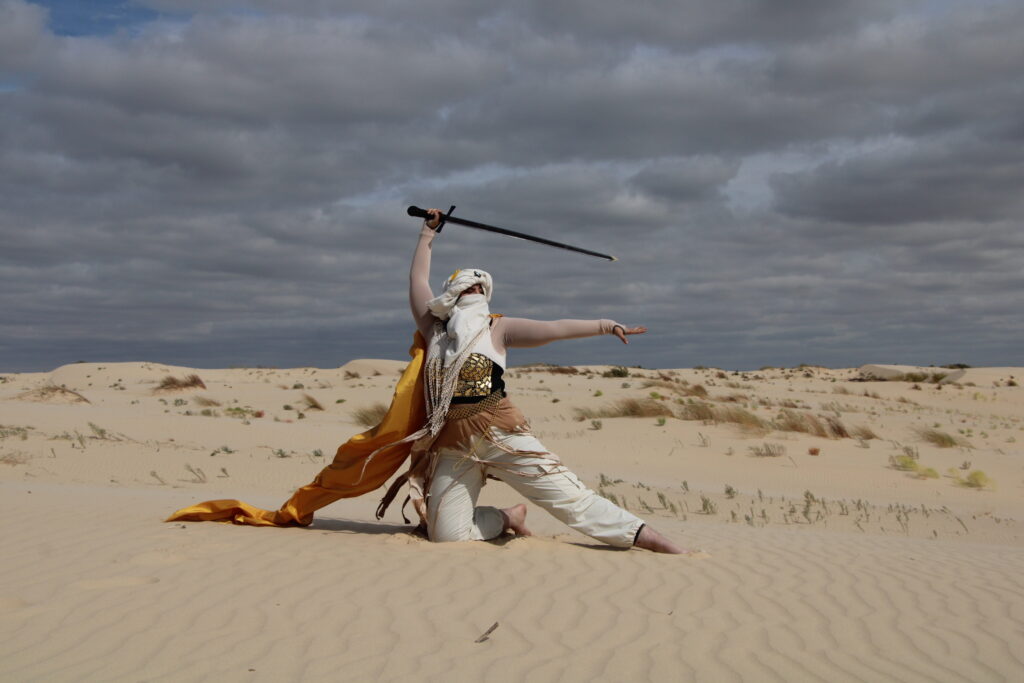
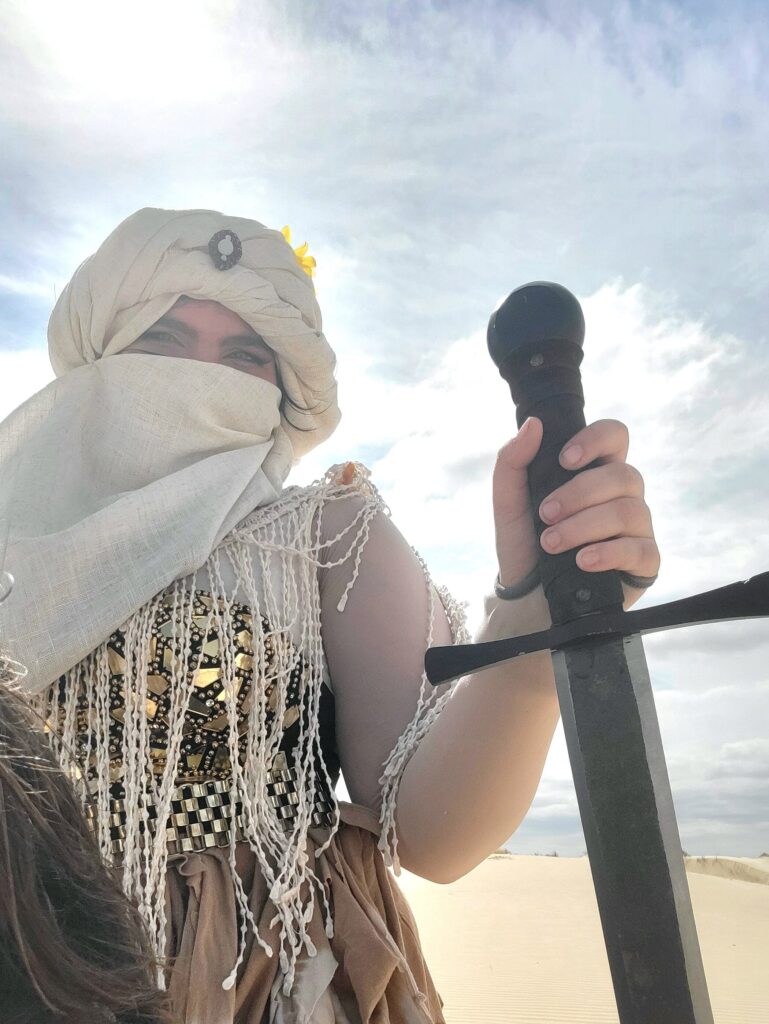
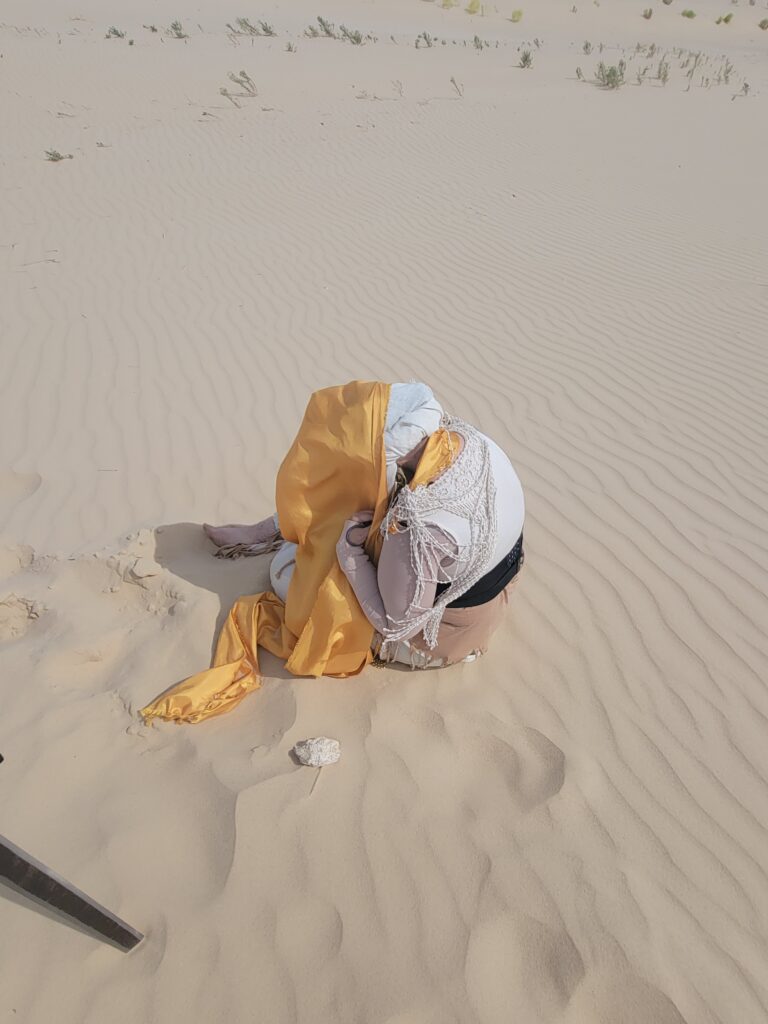
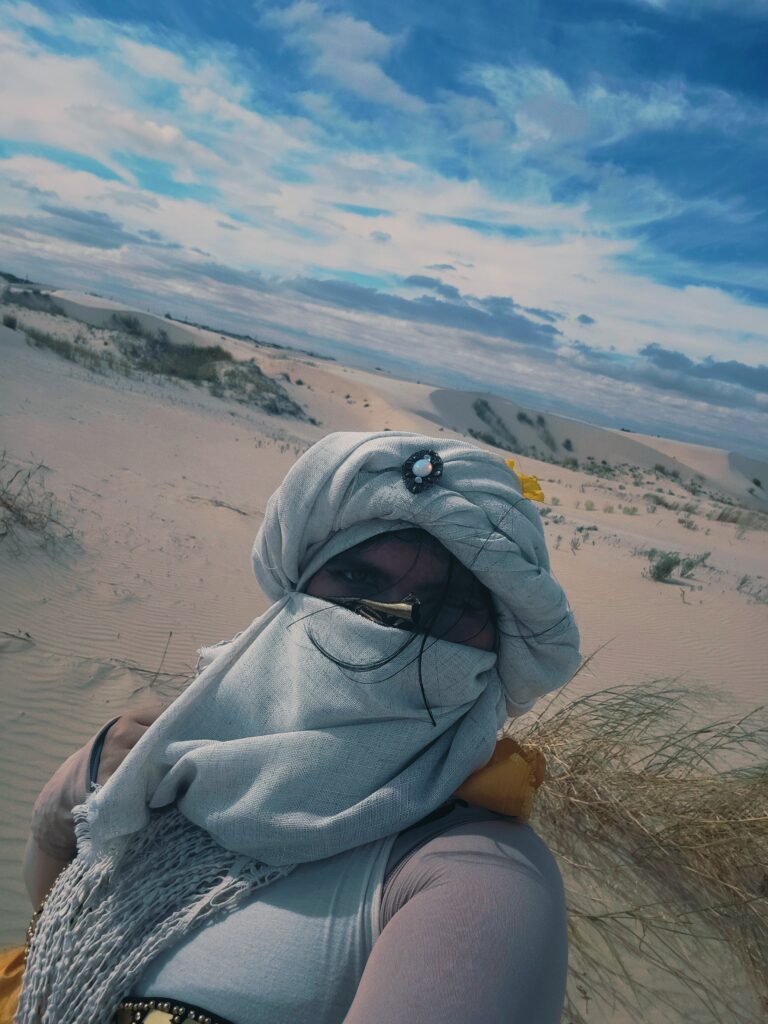
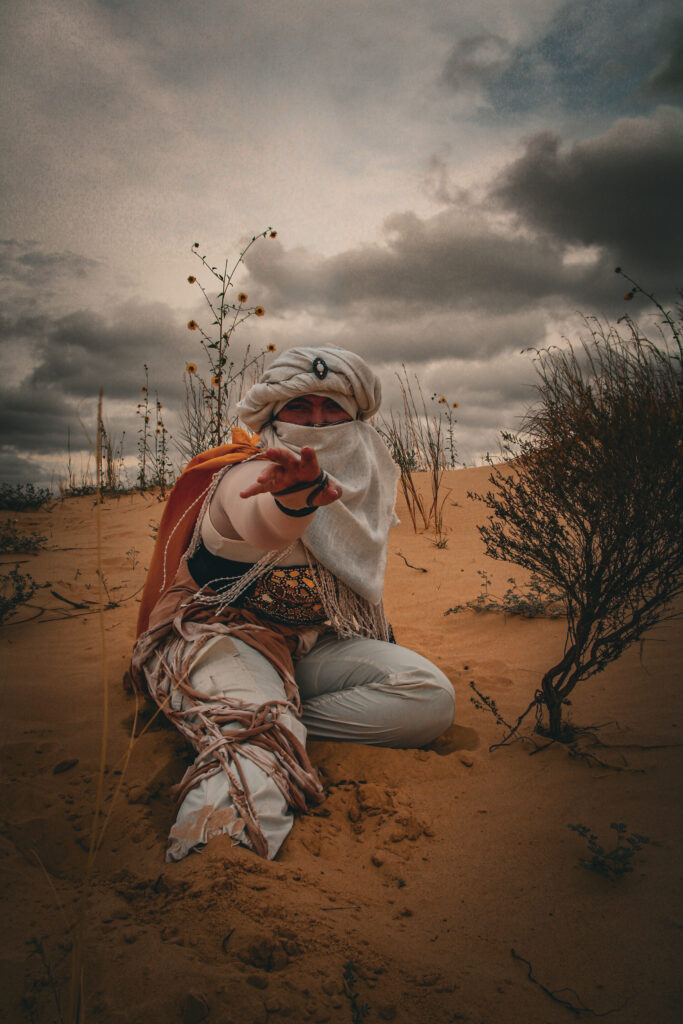
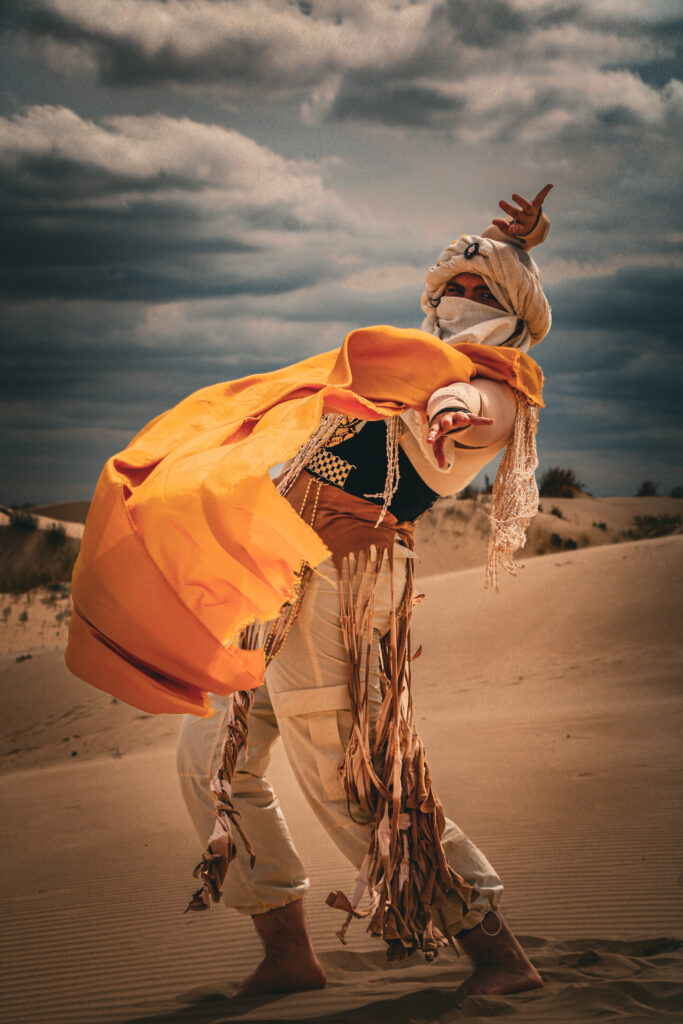
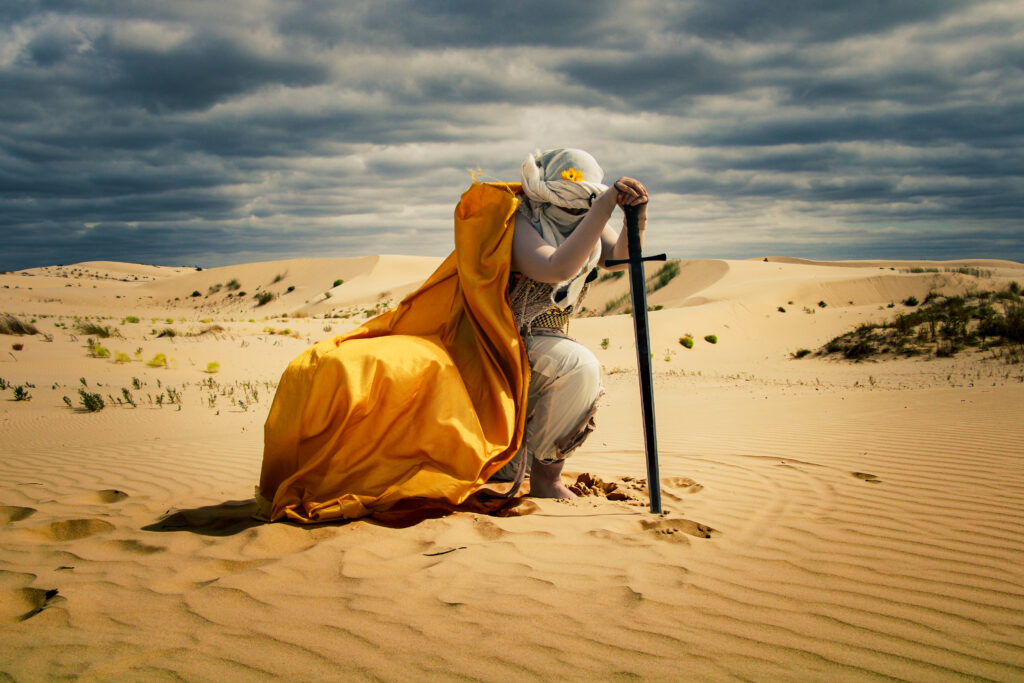
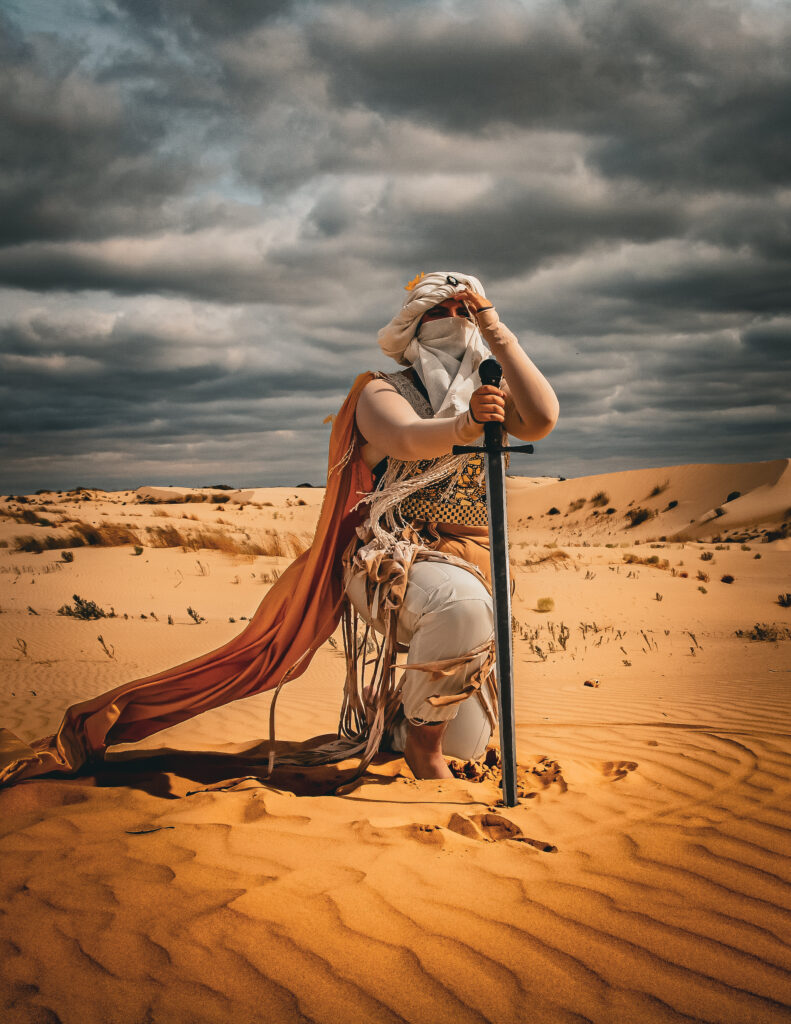
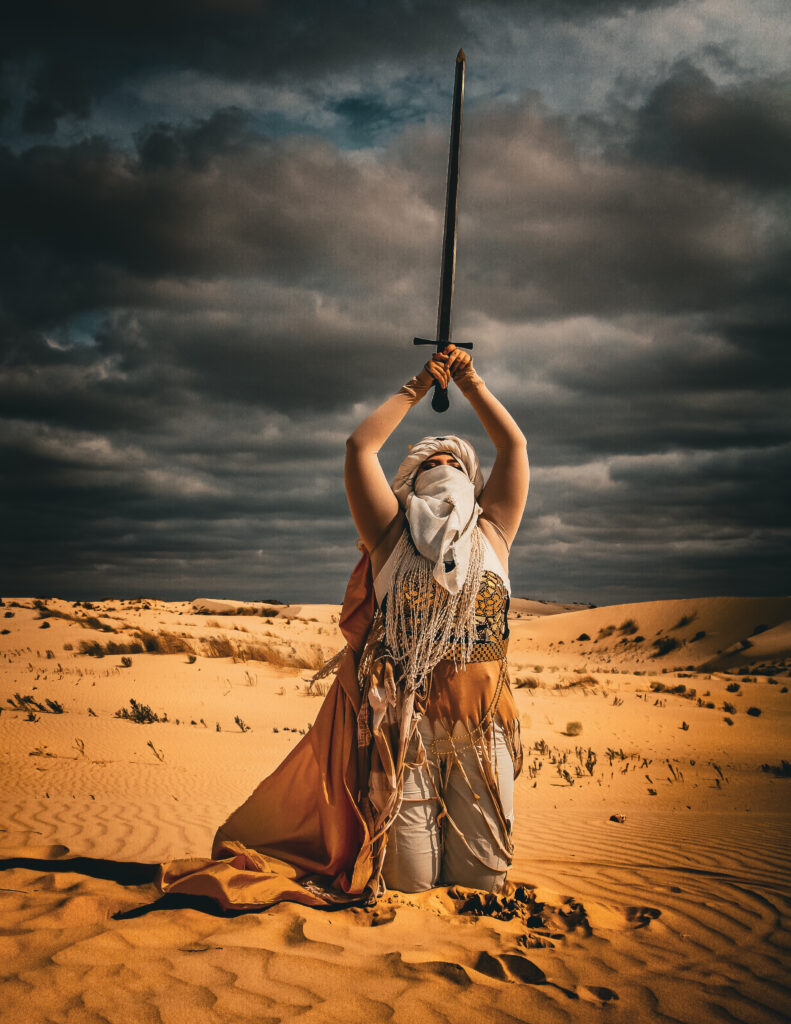
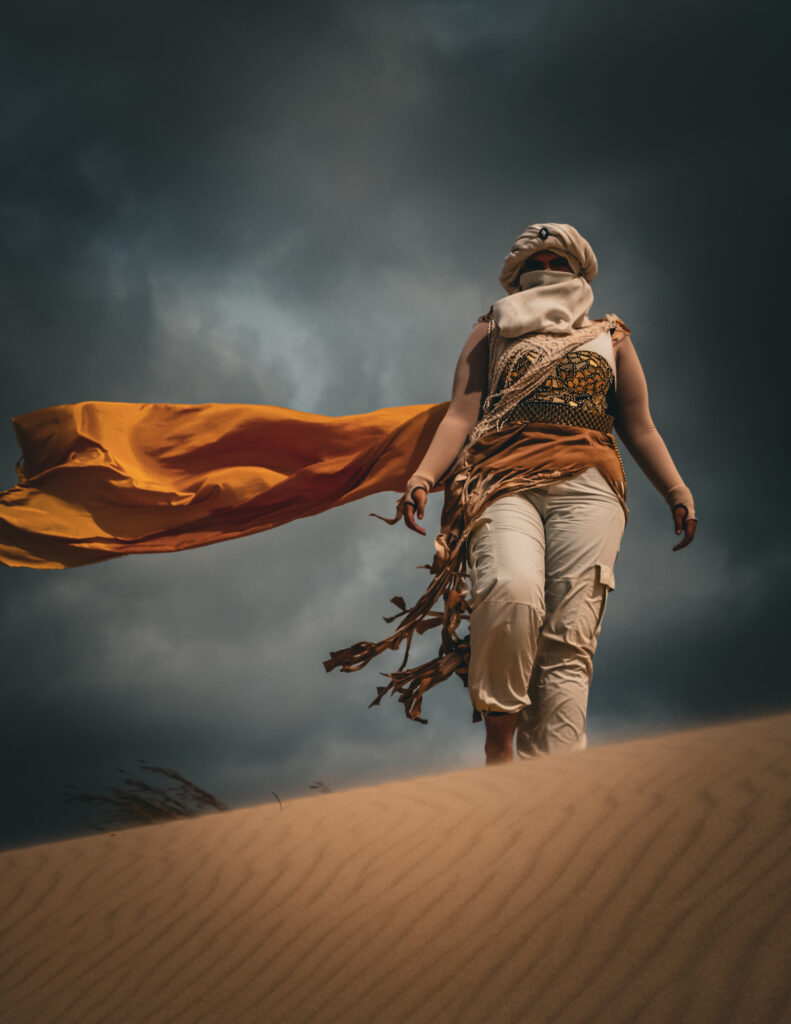
Image 2: Desert Image With Thrifted Clothing and Fabrics
The second photograph features a desert environment and clothing or fabrics sourced through thrifted materials.
This image connects recycled fashion with nature and landscape photography.
The desert environment introduces ideas involving transformation, isolation, the natural world, and the passage of time.
Both images provide a connection between the earlier and newer stages of the project.
Original image version #1
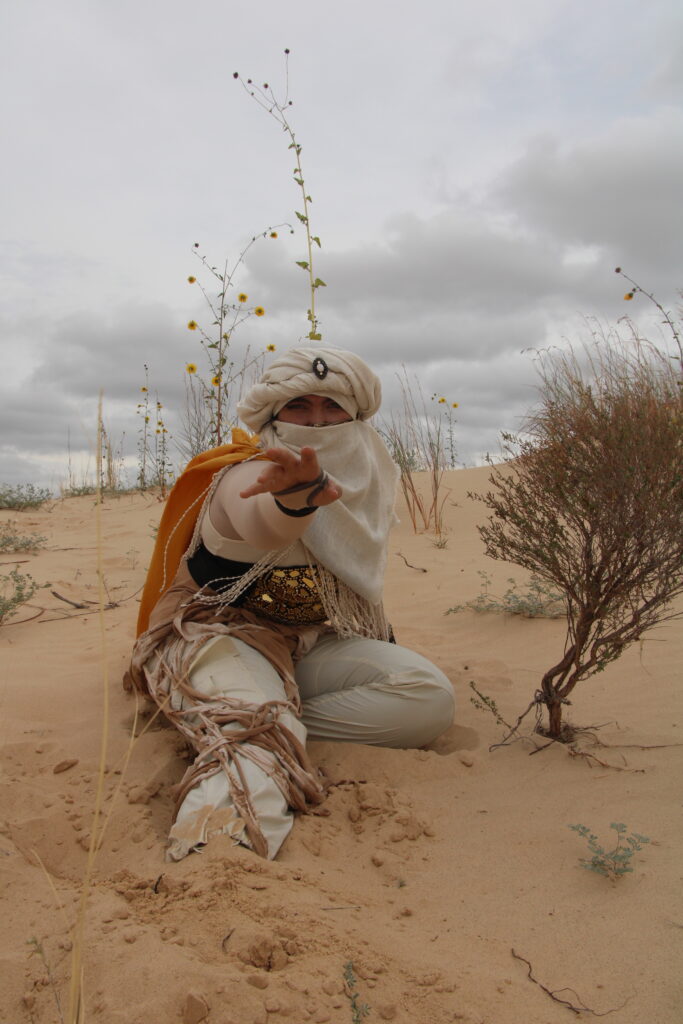
Original image version #2
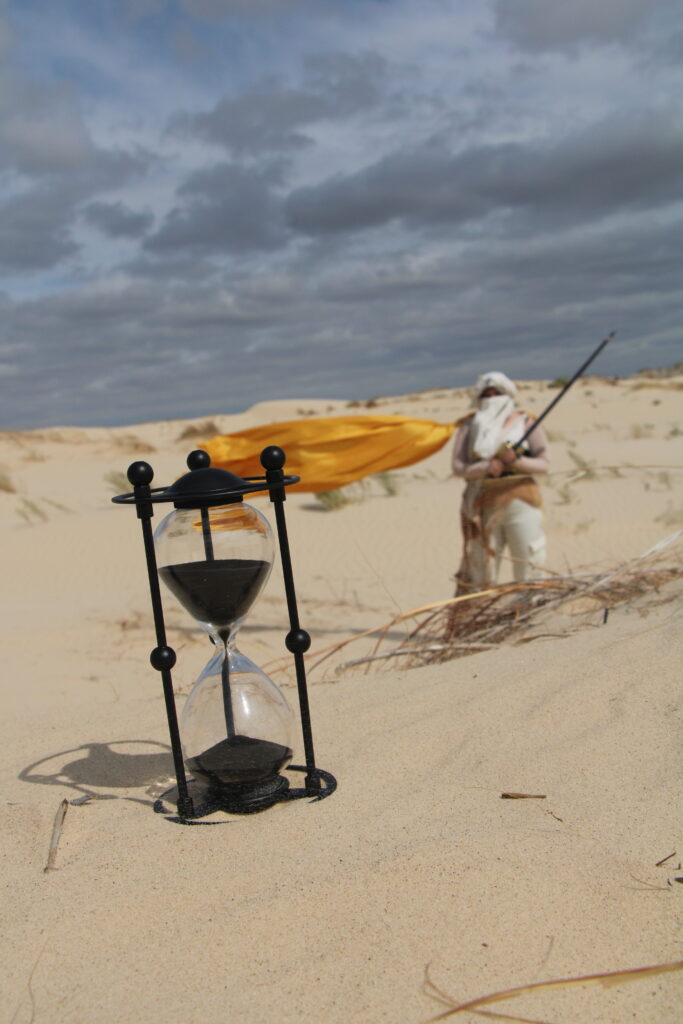
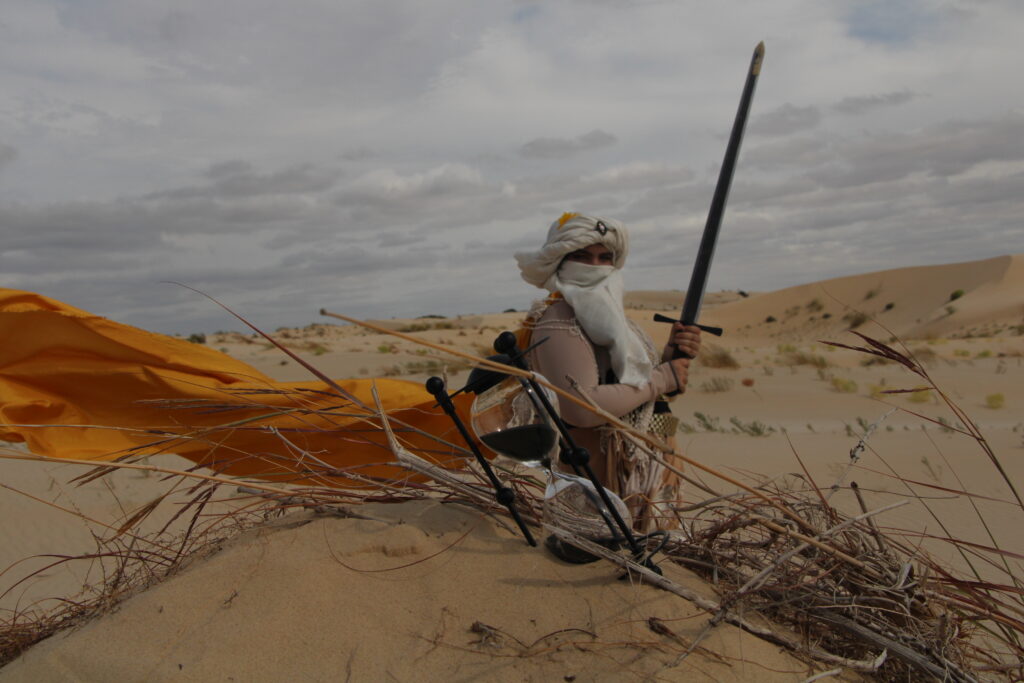

Behind the Scenes

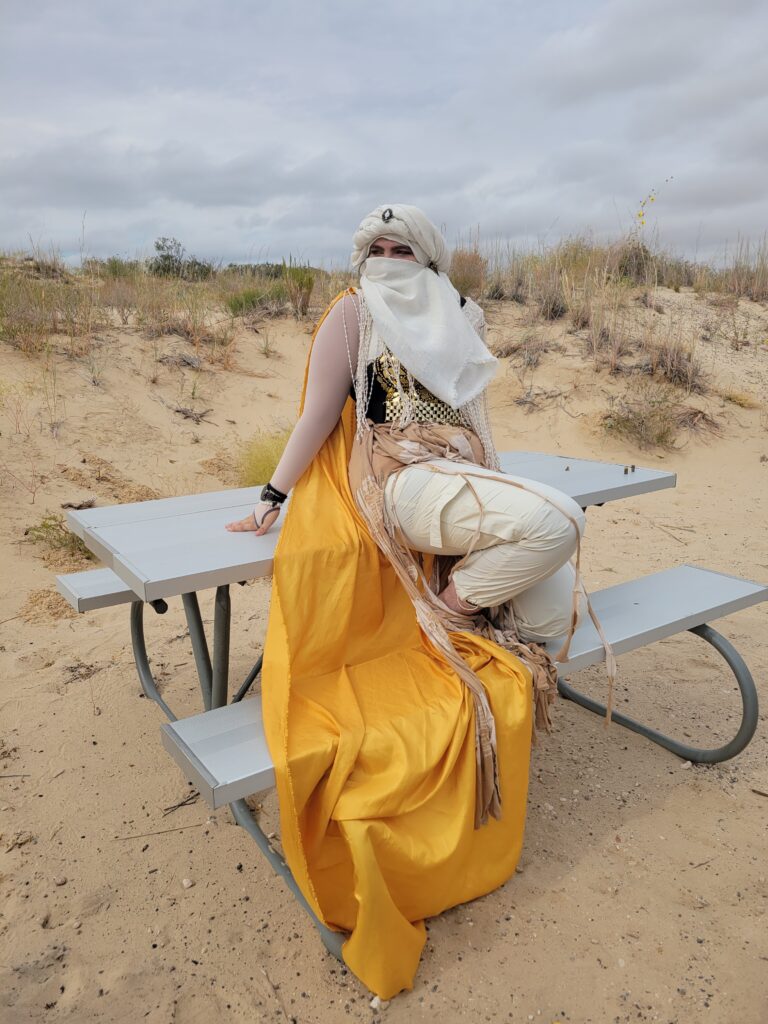
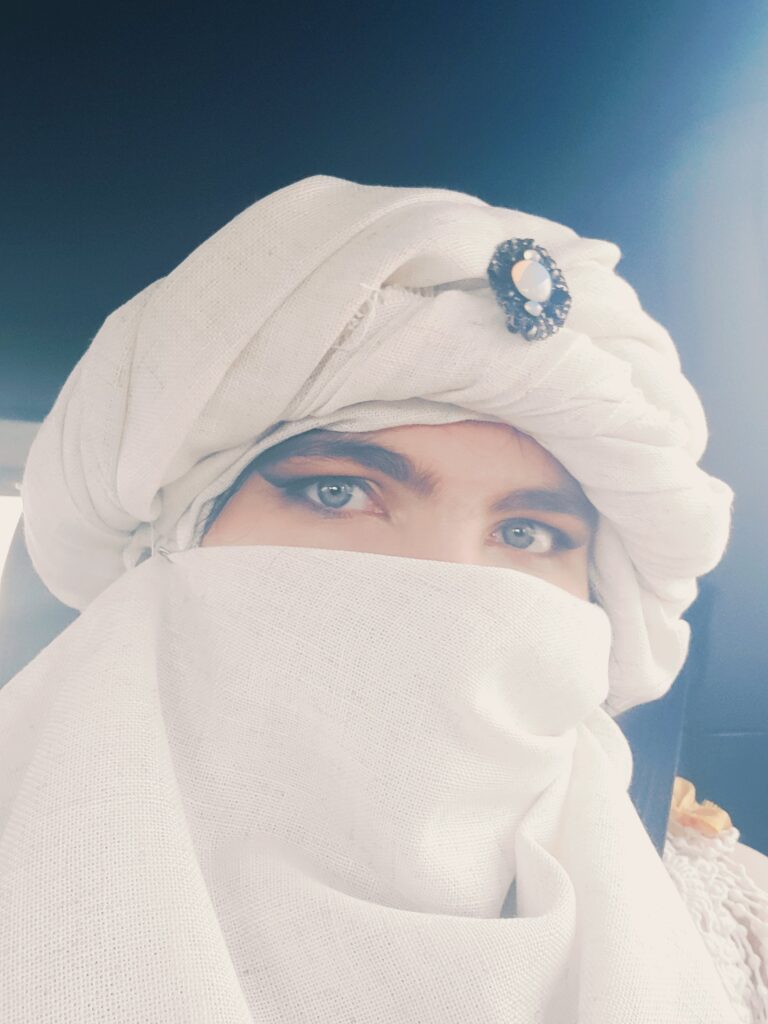
Edited Version
10. MASKED SELF-PORTRAITS AND IDENTITY
One of the newer directions involved incorporating masks and self-portraiture.
I became interested in using myself as the subject while concealing or altering my identity through masks, costume, and styling.
The mask introduces another conceptual layer.
It can represent:
- Concealment.
- Mystery.
- Transformation.
- Identity.
- Different characters or roles.
- The relationship between appearance and personal identity.
Using myself as the subject allows me to control the visual direction of the photographs.
I can make decisions about the pose, clothing, materials, composition, lighting, and atmosphere.
It also makes the project more personal.
The self-portrait becomes part of the artistic concept rather than simply a photograph of the artist.
11. TAROT AND THE FIVE ELEMENTS
I became interested in using symbolic systems to connect individual photographs into a larger series.
Instead of creating unrelated fashion images, I wanted each photograph to have a purpose within the collection.
The five elements provided a possible structure.
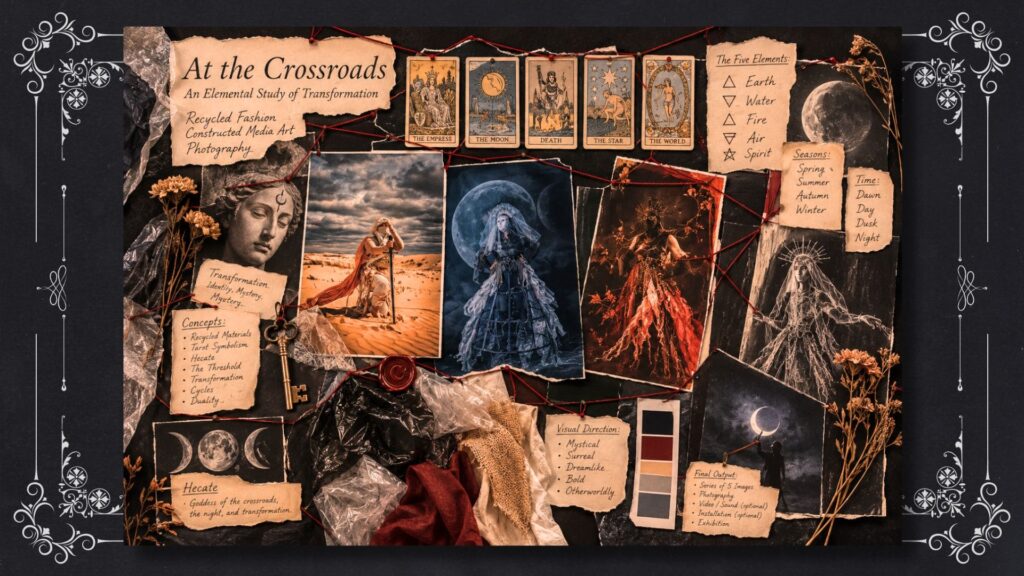
The five elements are:
- Earth.
- Water.
- Fire.
- Air.
- Spirit.
Each element can influence the color, costume, material, environment, lighting, pose, composition, and symbolism of its corresponding look.
For a long time i struggled to figure out how to combine all of the parts and ideas together so i used AI to help me build a mood board based on all of the ideas i had, which helped me to finally start visualizing what i wanted.
Earth
Earth connects with nature, landscape, physical materials, and grounding.
Water
Water introduces movement, fluidity, reflection, and transformation.
Fire
Fire connects with energy, change, destruction, renewal, and transformation.
Air
Air can explore movement, atmosphere, freedom, and the relationship between the figure and the surrounding environment.
Spirit
Spirit can represent identity, consciousness, connection, and the unseen.
It can function as the connection between the other four elements.
Tarot
Tarot became another possible symbolic reference.
I was interested in how tarot imagery and symbolism could contribute to the overall concept.
The cards could offer additional visual and conceptual references for the individual photographs.
The five-element structure and tarot are intended to support the project rather than restrict it.
12. HECATE AND THE CONCEPT OF AT THE CROSSROADS
A further development involved exploring Hecate as a conceptual foundation for the series.
Hecate is associated with:
- Crossroads.
- Keys.
- Torches.
- Night.
- Thresholds.
- Transitions.
These associations connected with several themes I was already exploring.
I was drawn to the idea of a crossroads because it represents a point of decision, change, uncertainty, or transformation.
It also creates a connection between different directions and stages of a journey.
This led to the working project title:
AT THE CROSSROADS
Central Concept
At the Crossroads explores transformation, identity, and the relationship between the human figure and the natural and symbolic world.
The photographs use constructed clothing, unconventional materials, masks, self-portraiture, and environmental settings to create images that suggest different states of being or moments of transition.
Drawing from Hecate, tarot, and the five elements, the series explores the relationship between physical appearance and symbolic identity.
Why Hecate Connects to the Project
Crossroads represent different paths and the possibility of change.
Transformation connects with the original idea of turning discarded materials into clothing and the newer idea of changing identity through costume.
Thresholds represent movement between one state and another.
Night and mystery create opportunities for dramatic lighting and atmospheric imagery.
Keys and torches provide additional symbolic references that can influence the photographs.
Hecate is not intended to become a literal subject in every photograph. Her symbolism provides an underlying conceptual framework.
13. THE FIVE ELEMENTAL LOOKS
The project has now developed into five individual looks, each representing one of the five elements.
The looks are connected through their conceptual framework but can have distinct visual identities.
The five elements provide a way to organize the series and create variation between the photographs.
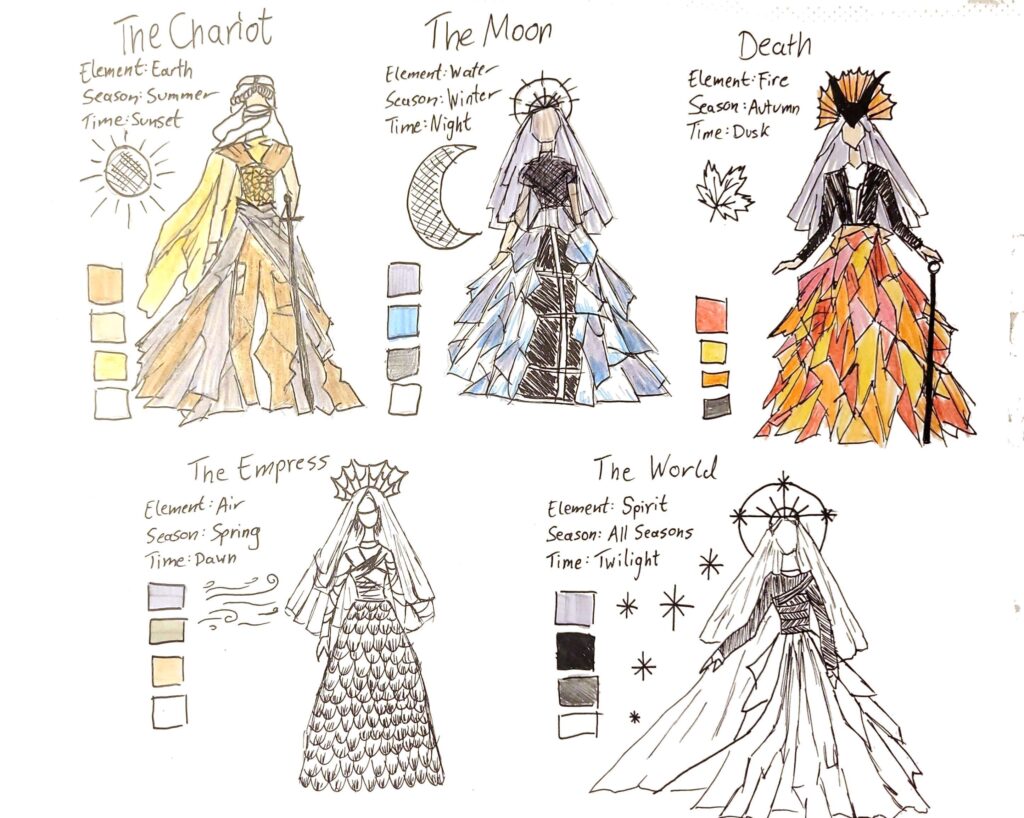
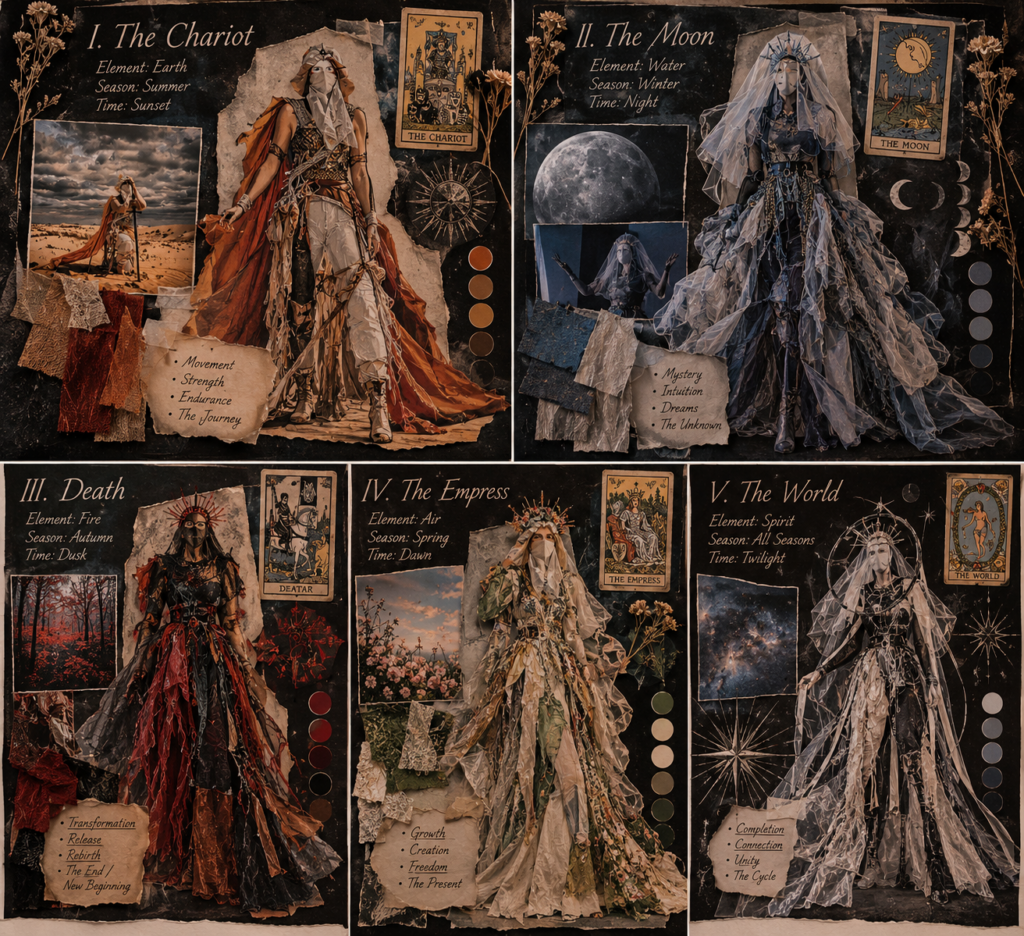
1. FIRE
Status: COMPLETED
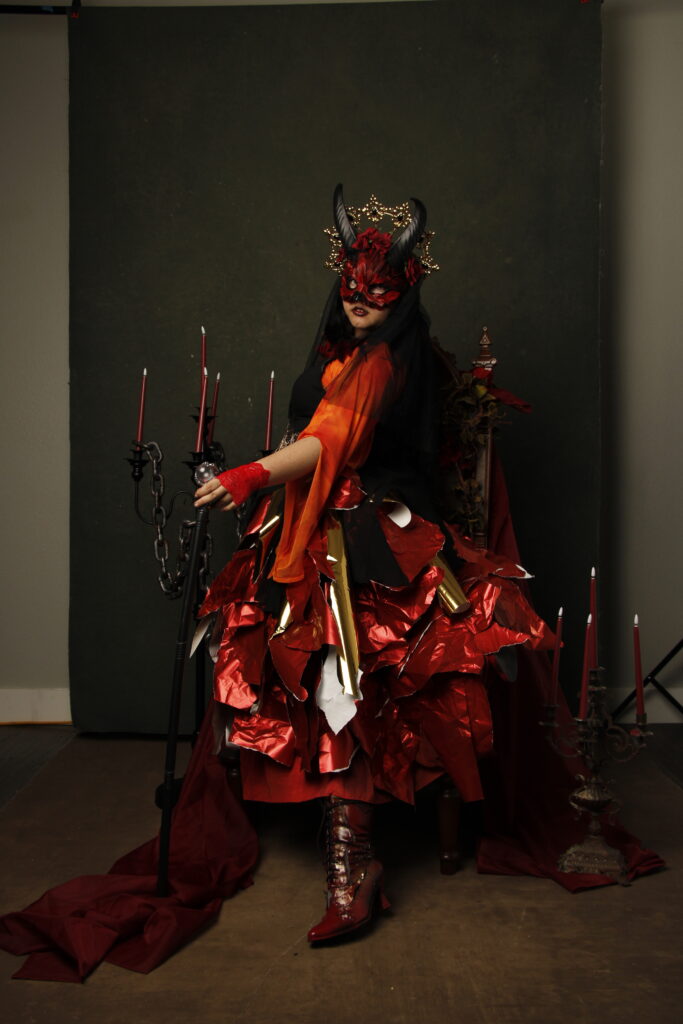
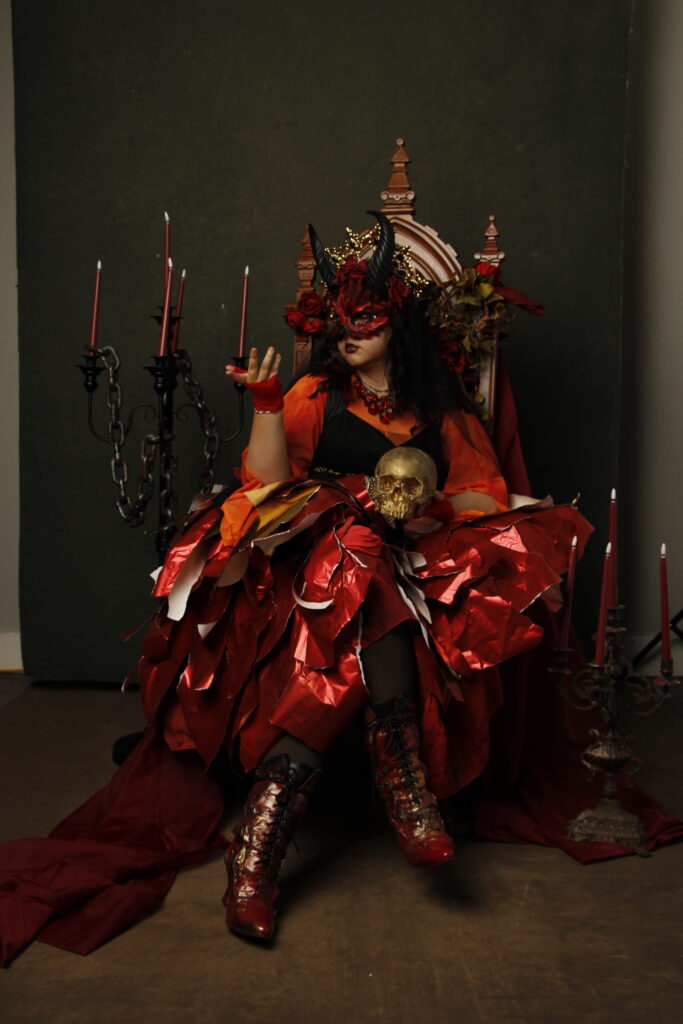
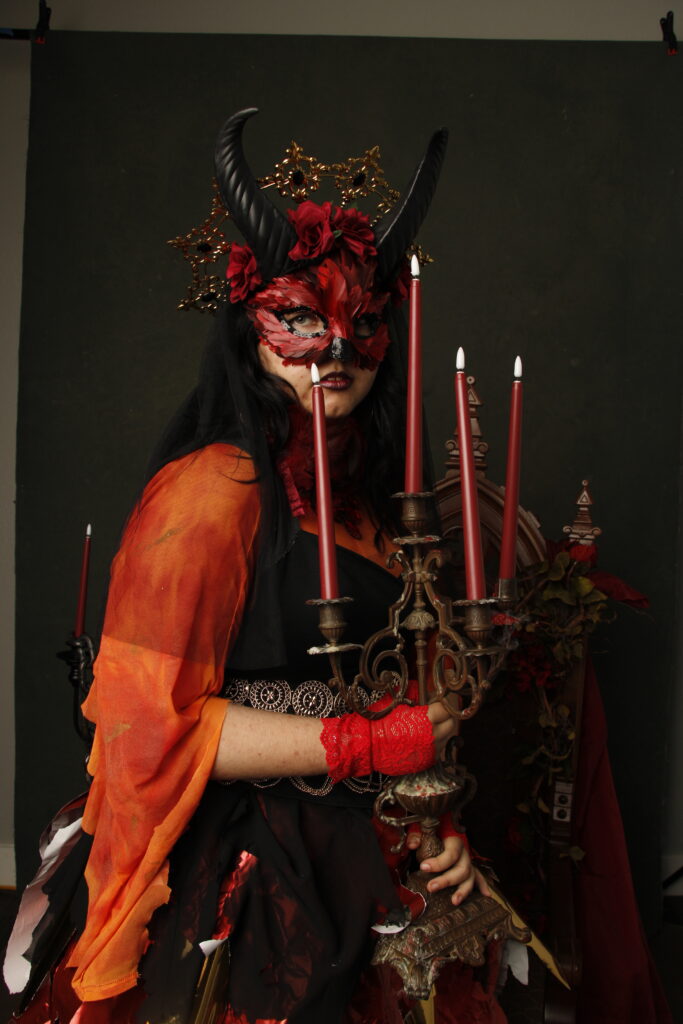
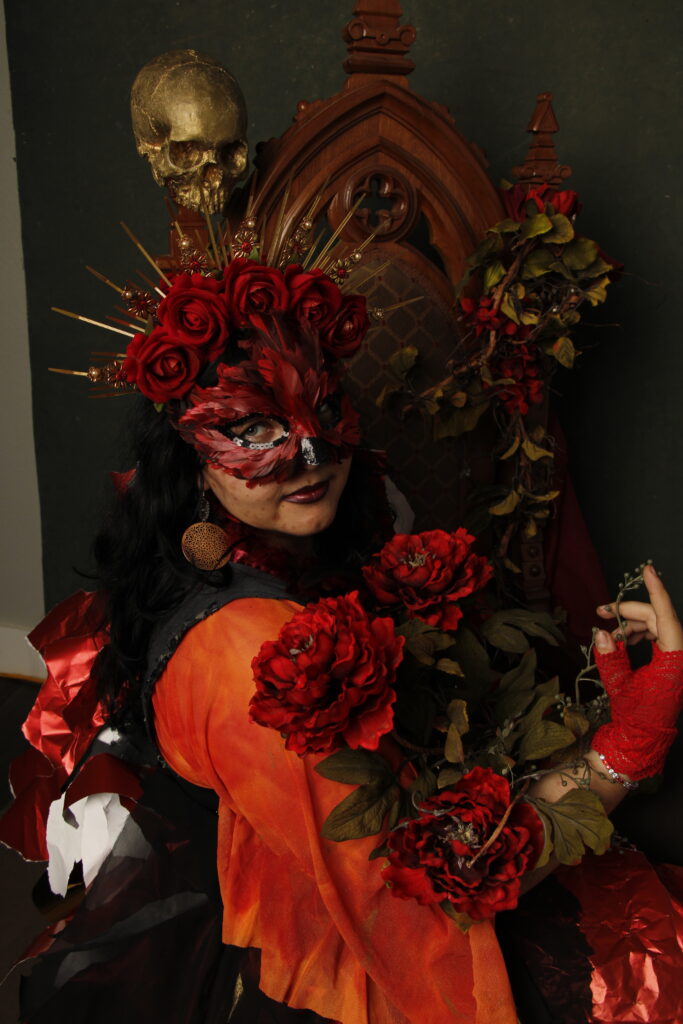
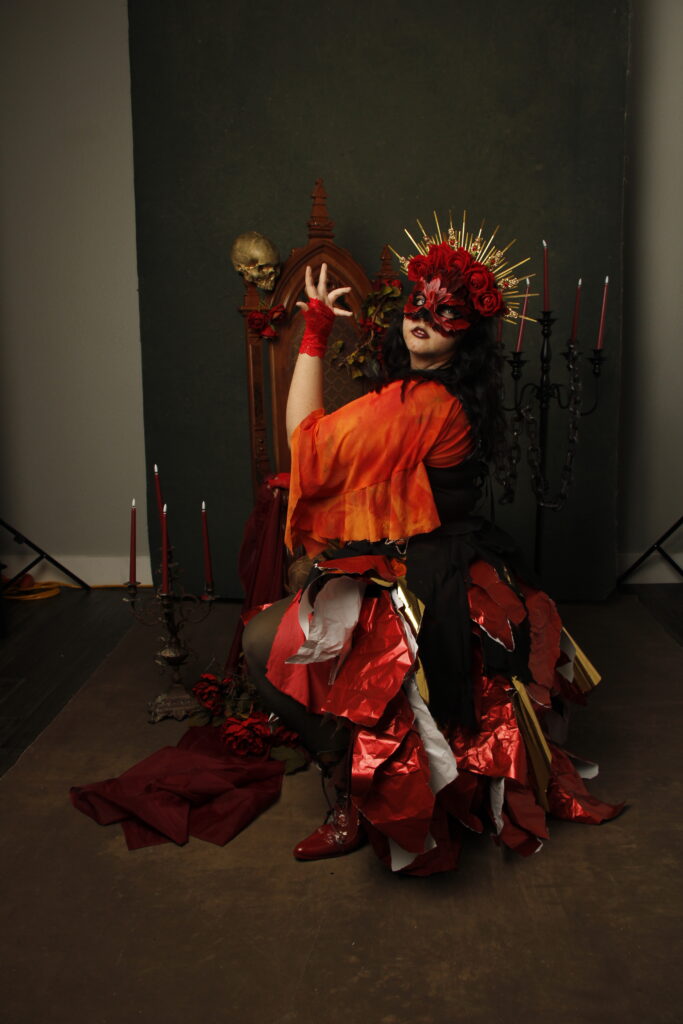
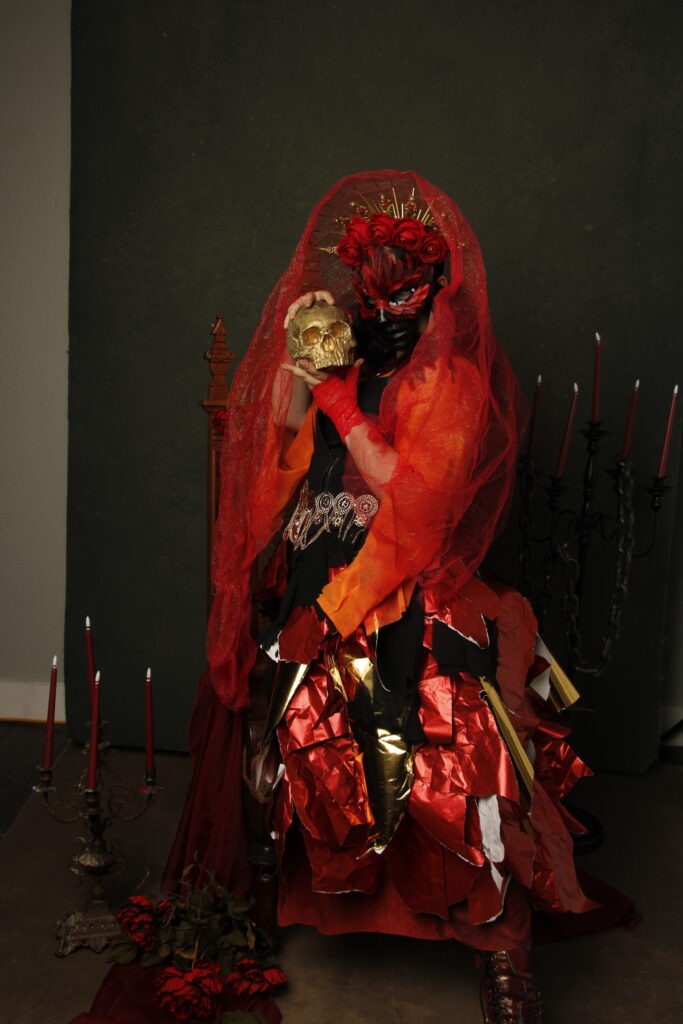
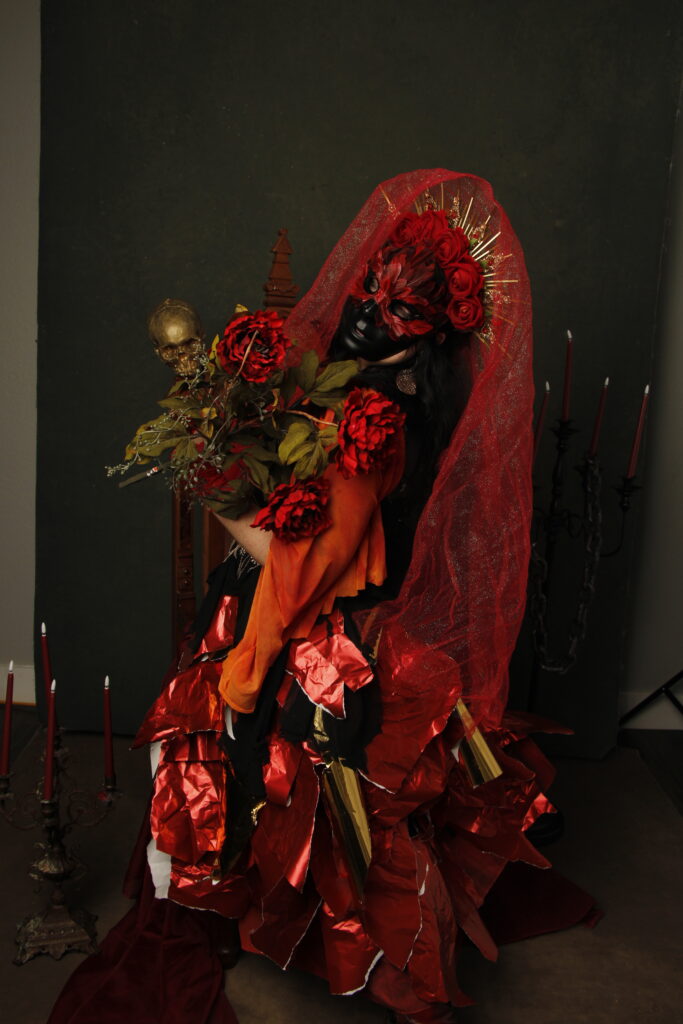
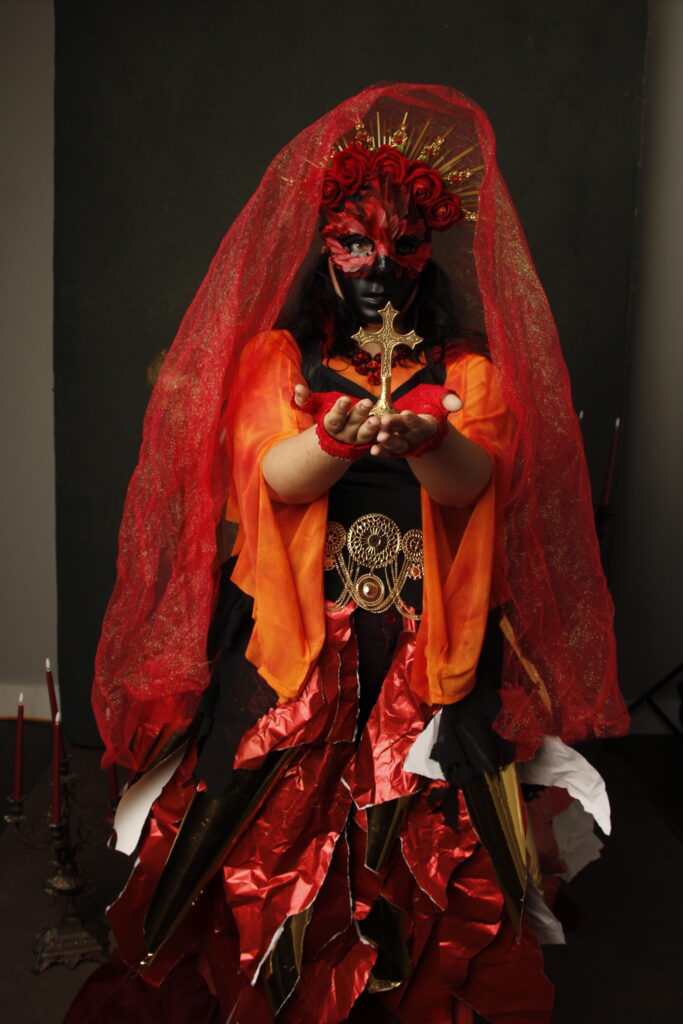
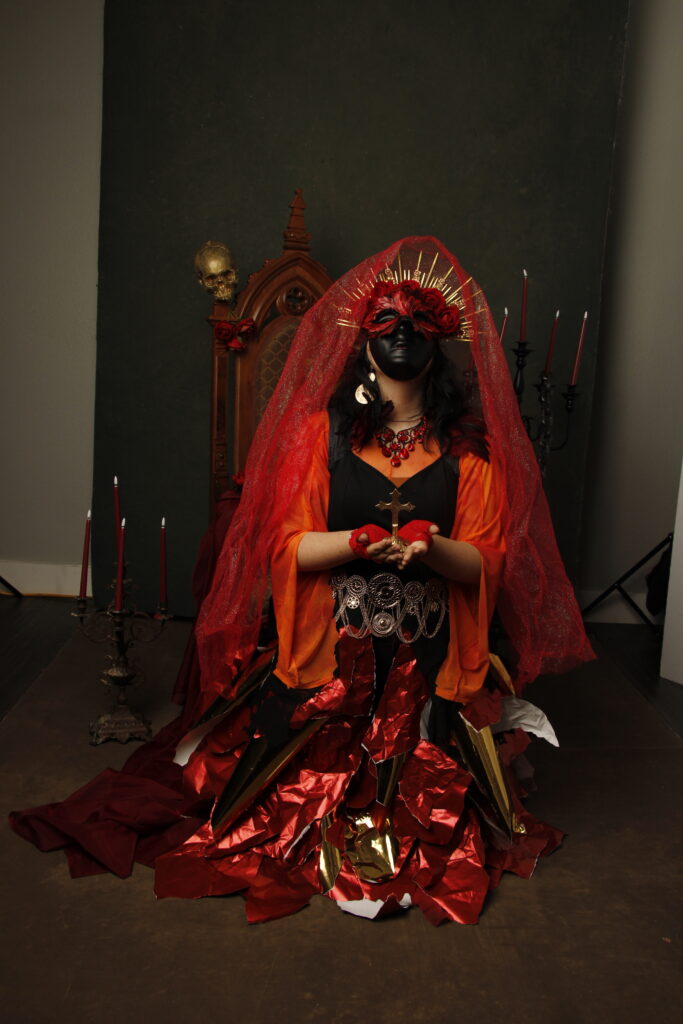
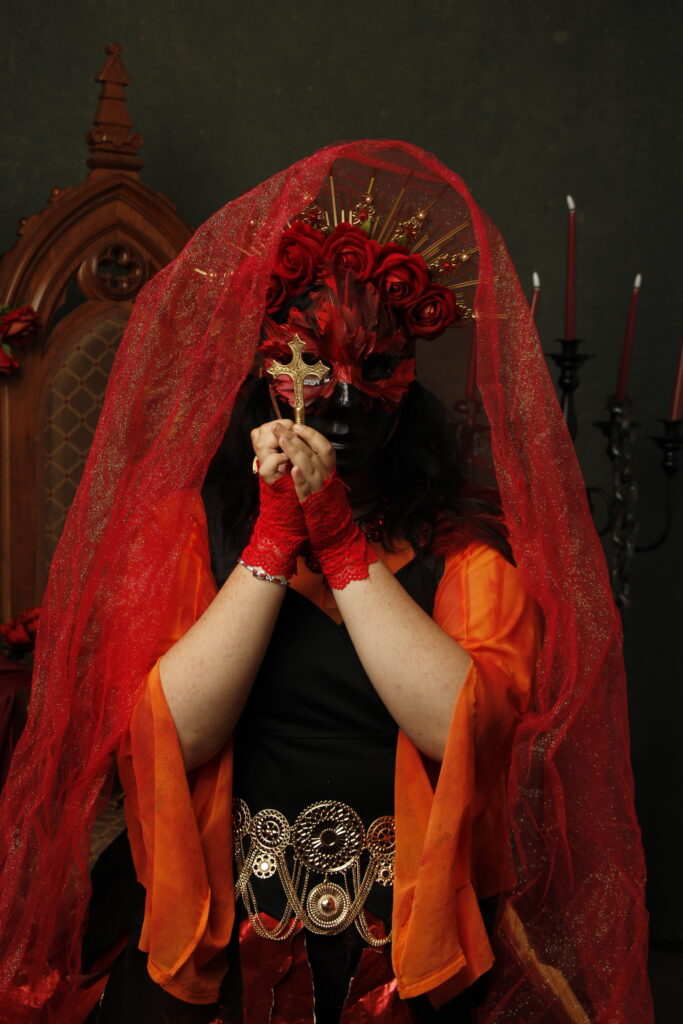
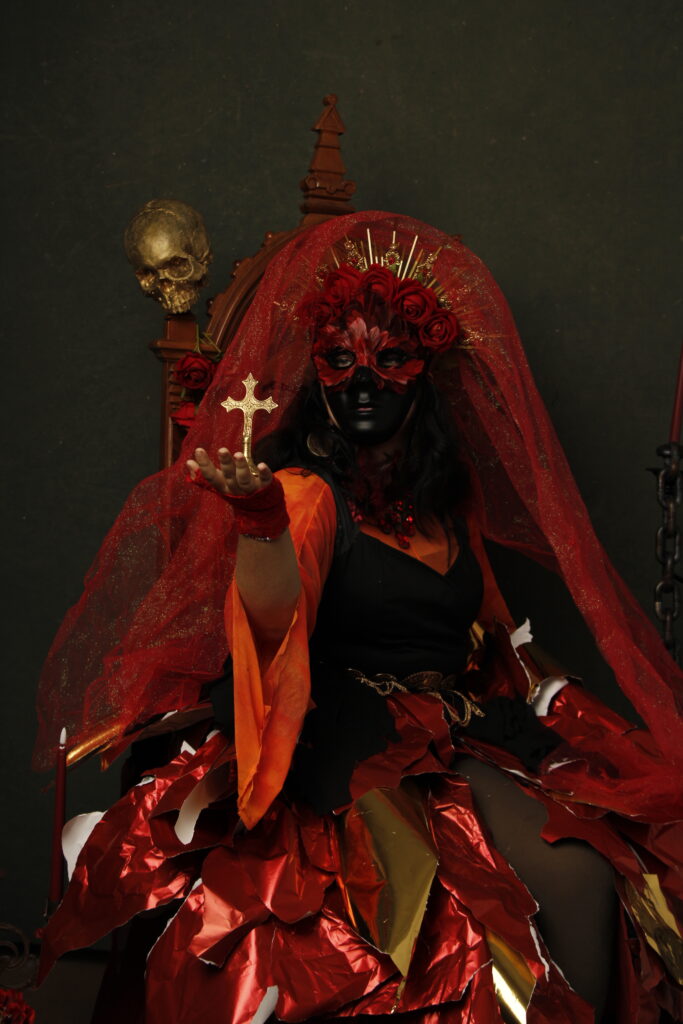
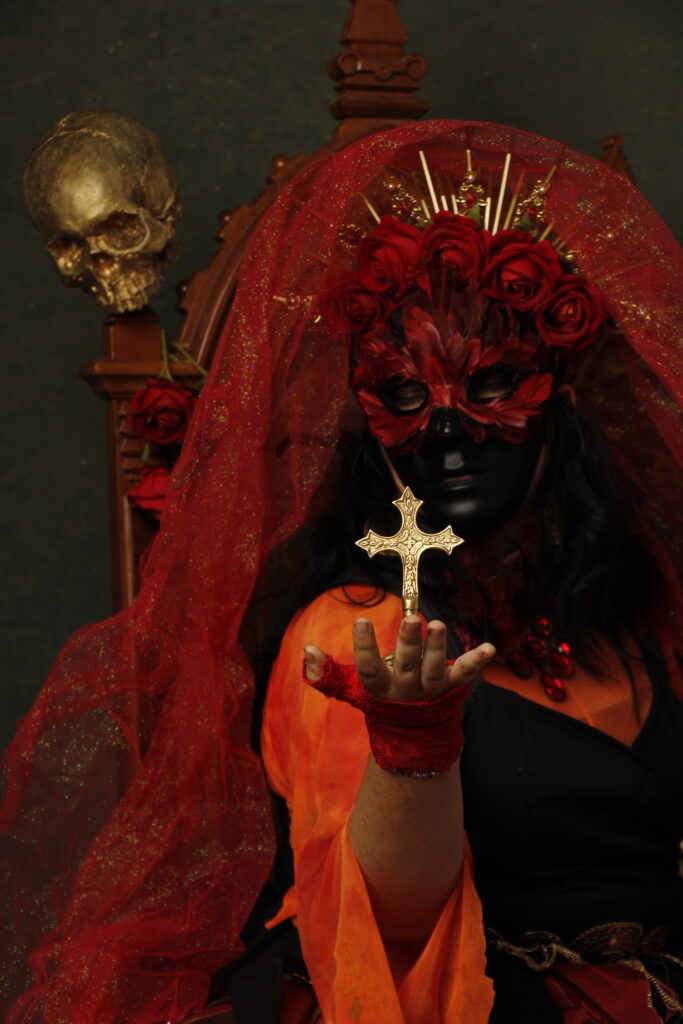
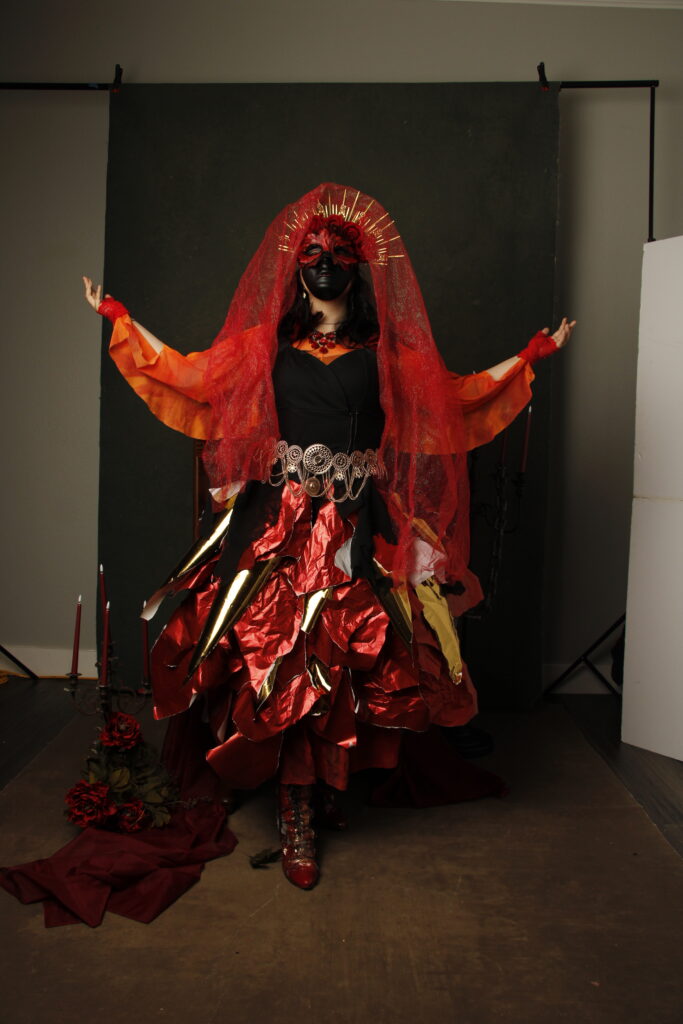
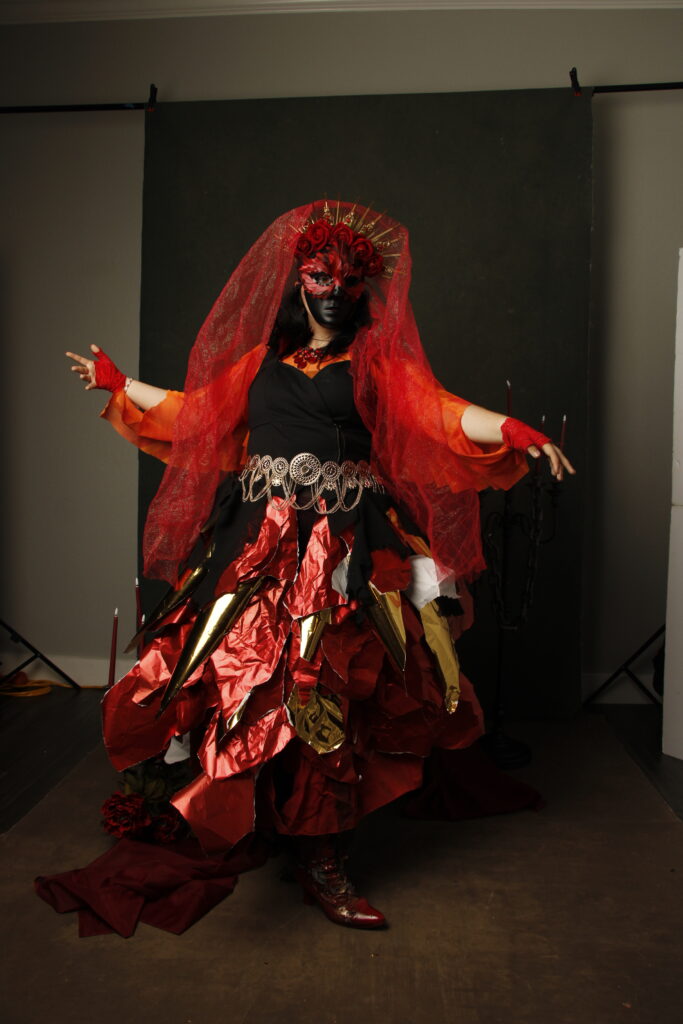
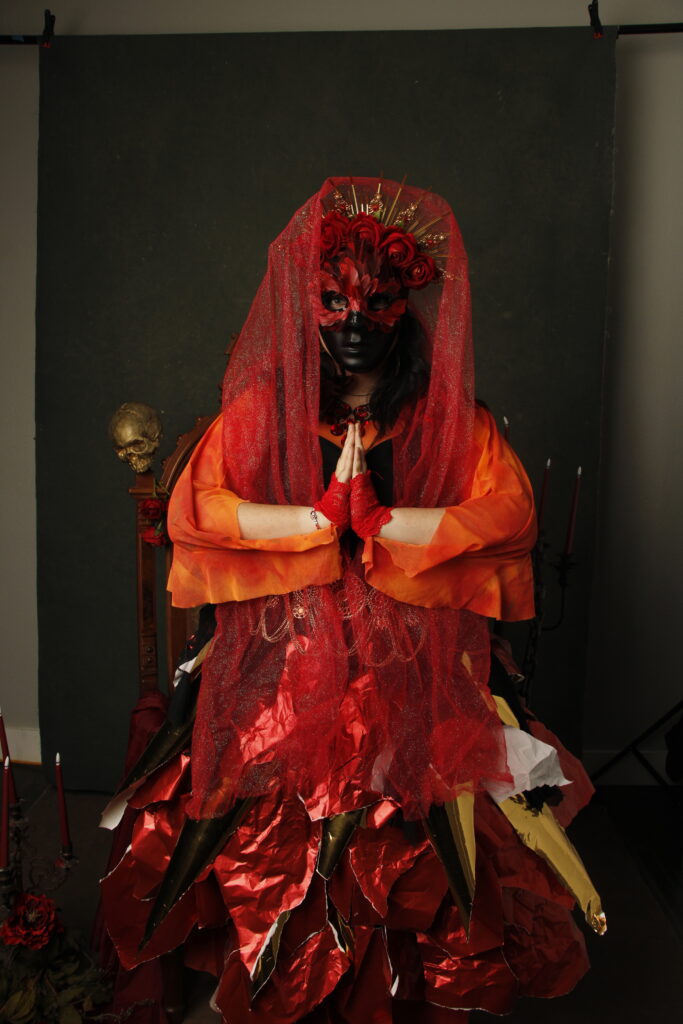
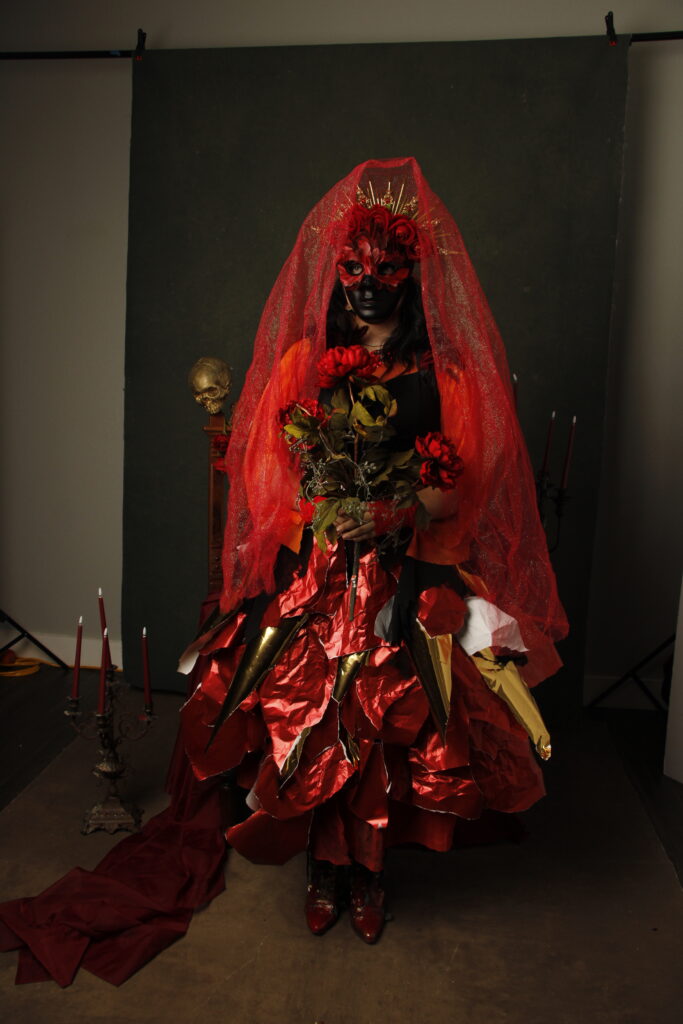
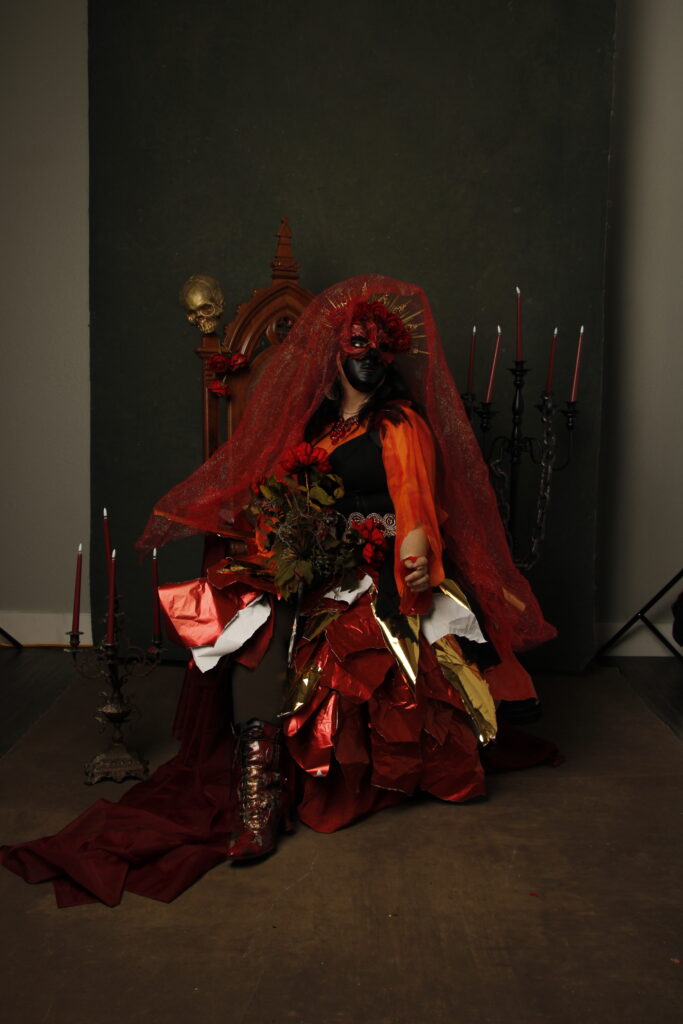
The Fire look is the most recently documented completed look in the current project archive.
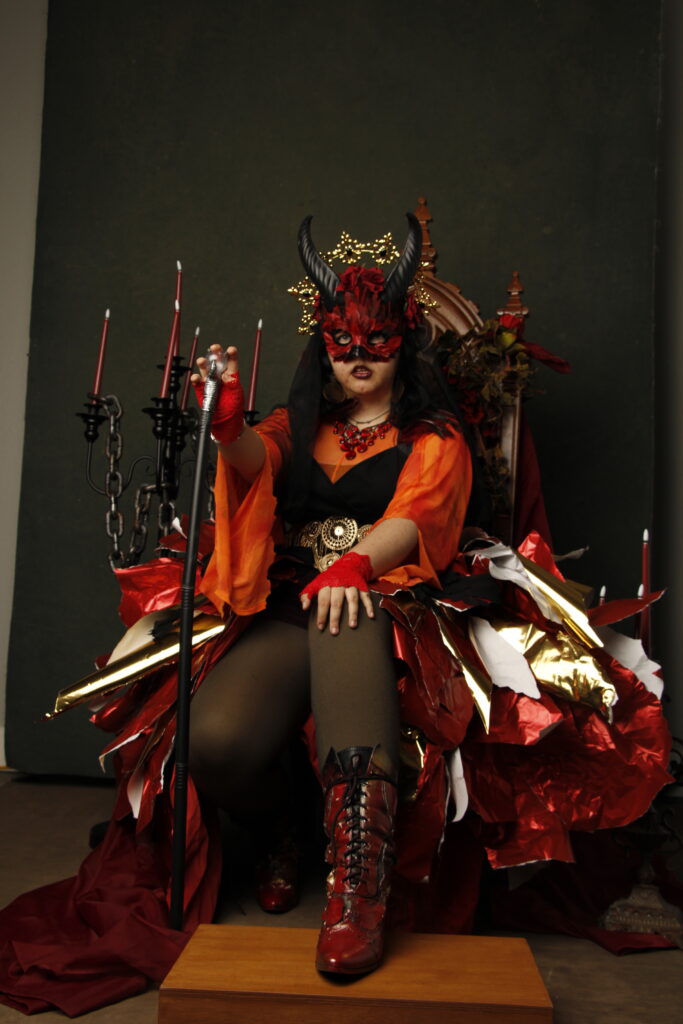
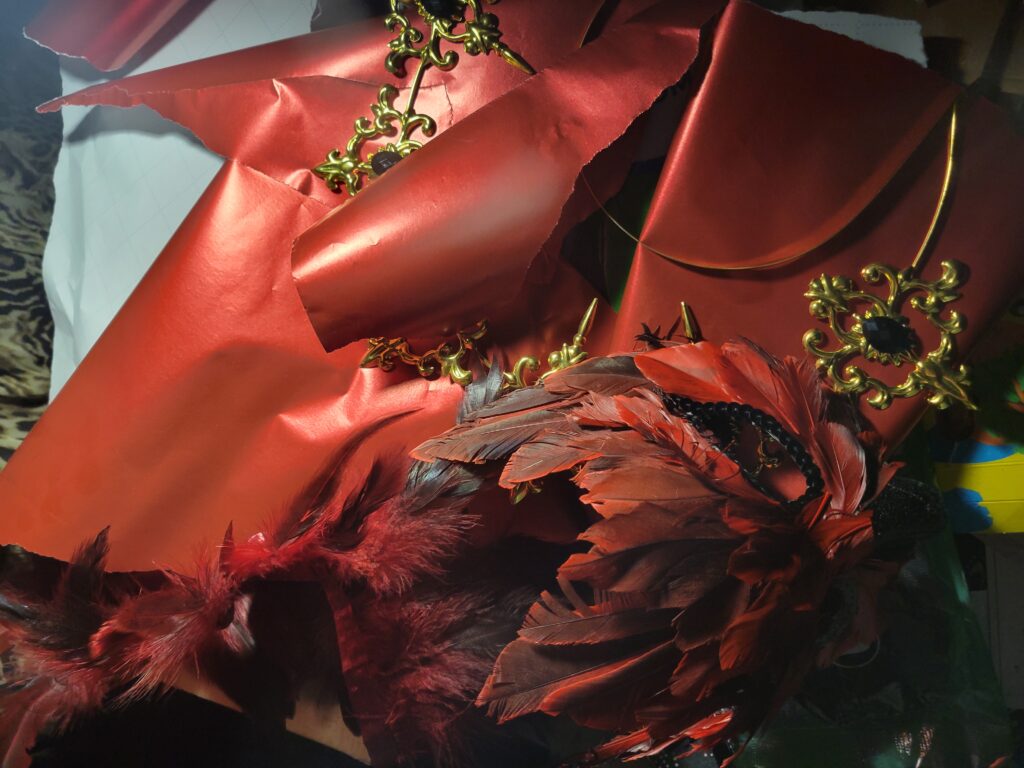
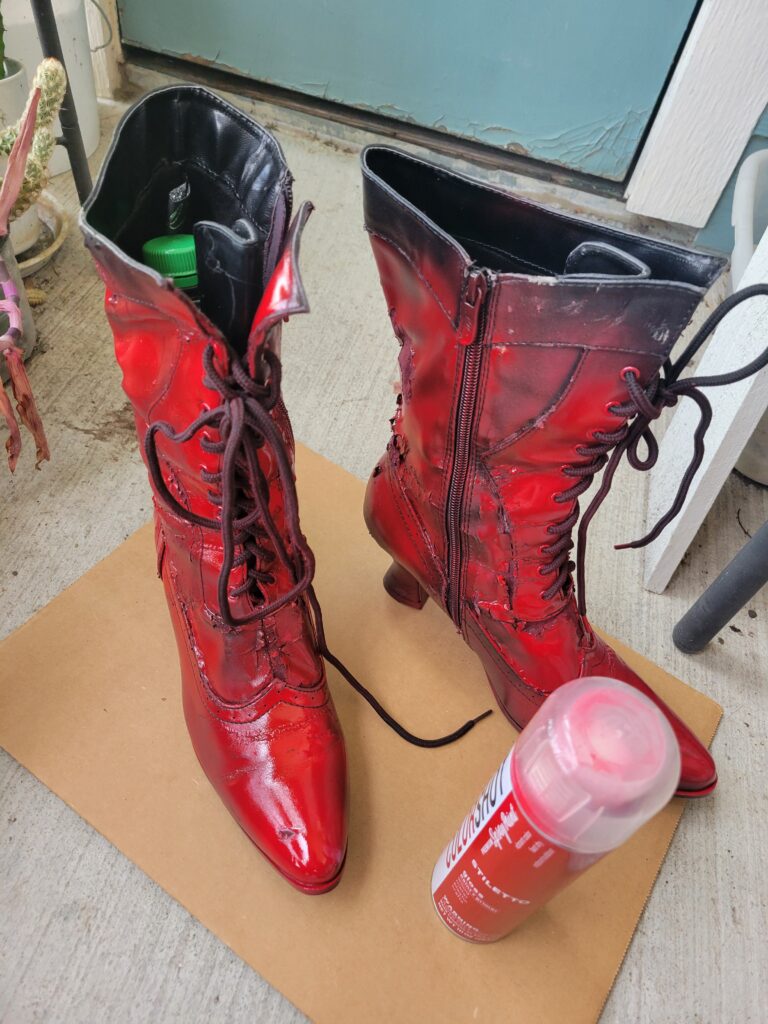
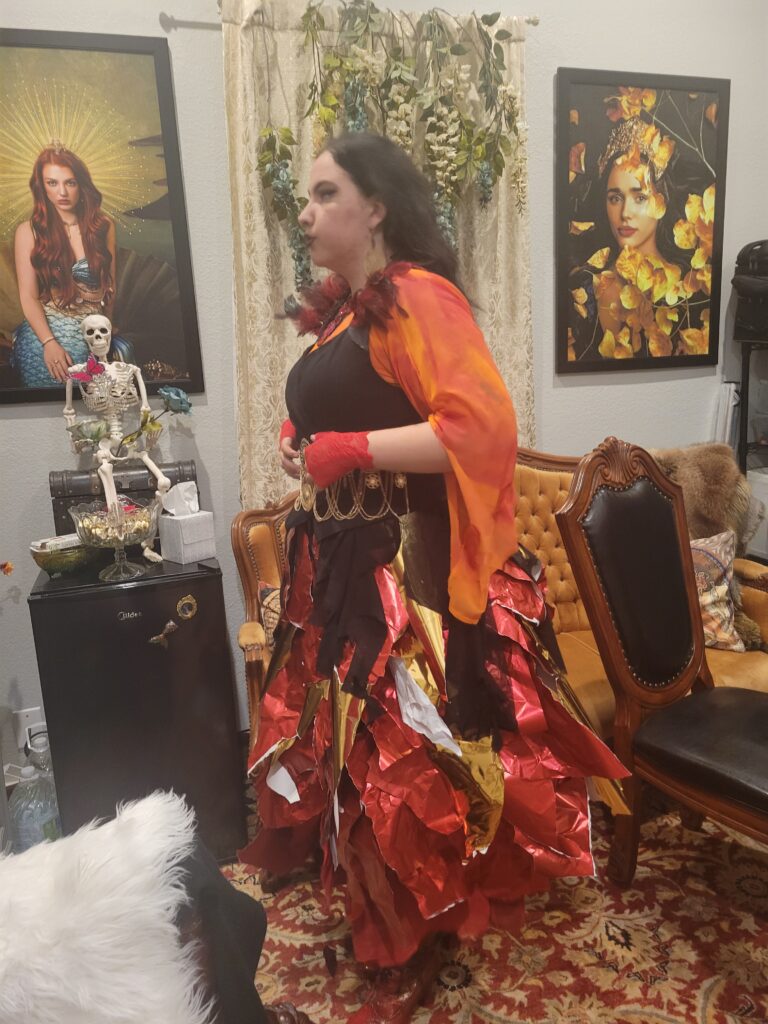
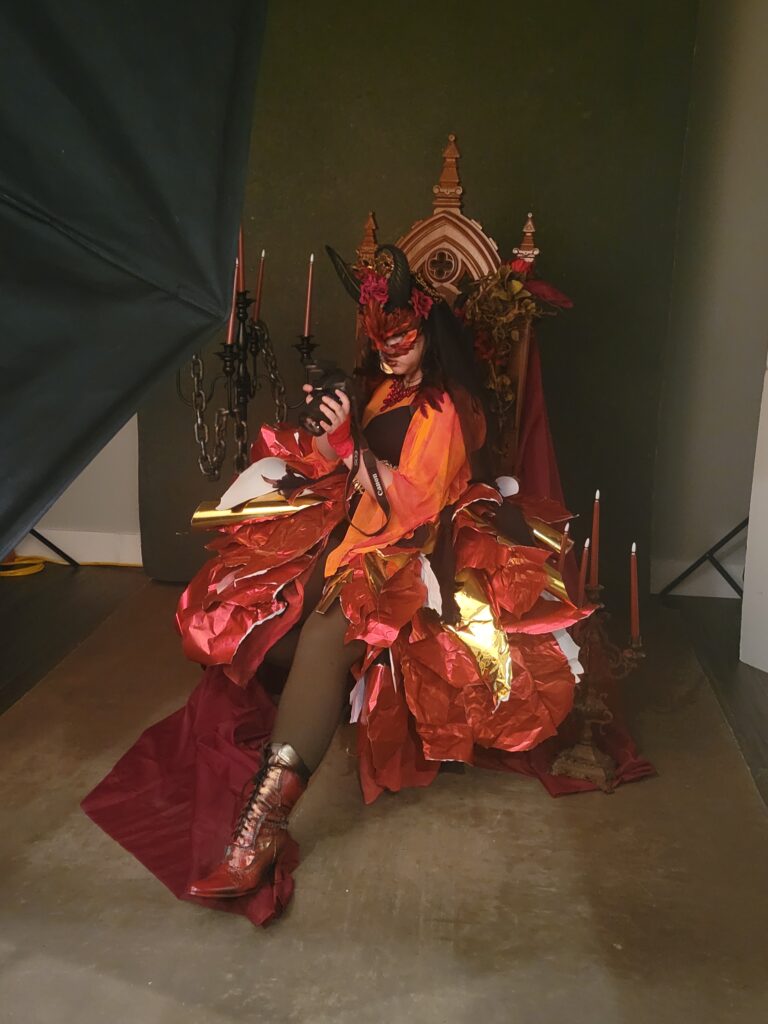
The Fire look uses a strong red, orange, gold, and black color palette.
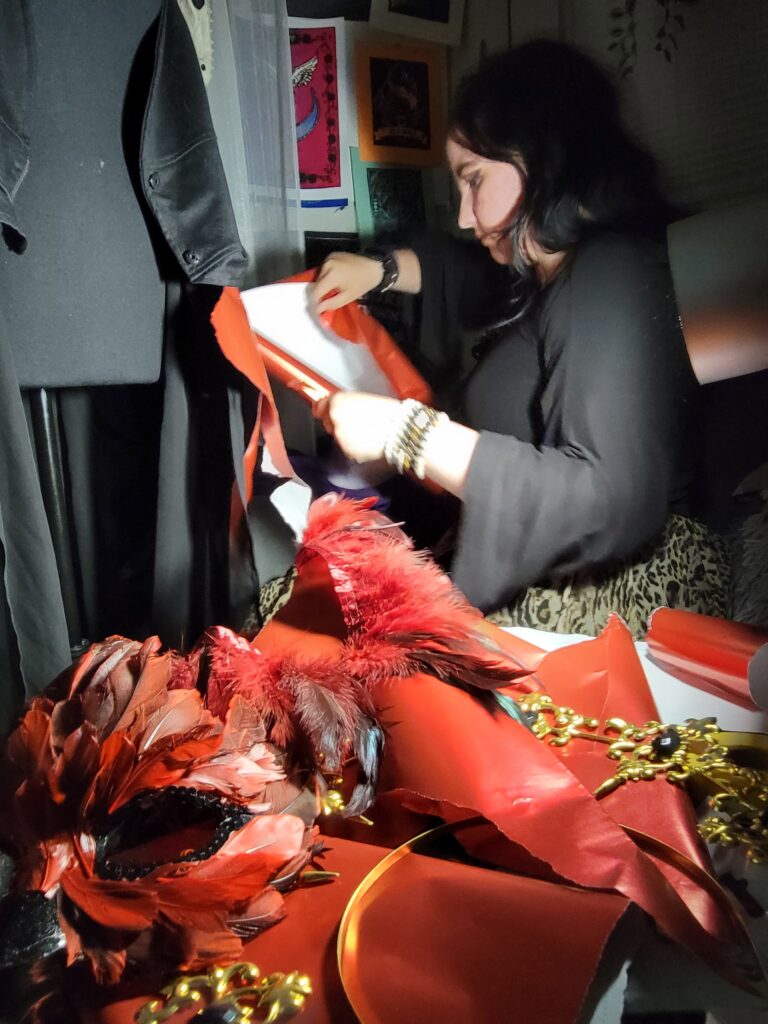
The costume combines layered materials, dramatic accessories, a constructed mask, and a theatrical veil.
Visual Characteristics
The completed look includes:
- Red glittering veil.
- Red floral headpiece.
- Decorative gold spikes or rays behind the head.
- Red and black feathered mask.
- Black face mask.
- Orange fabric sleeves and draping.
- Black bodice.
- Layered metallic red skirt.
- Gold and white material accents.
- Decorative belt.
- Red footwear.
- Red floral accessories.
Photographic Environment and Props
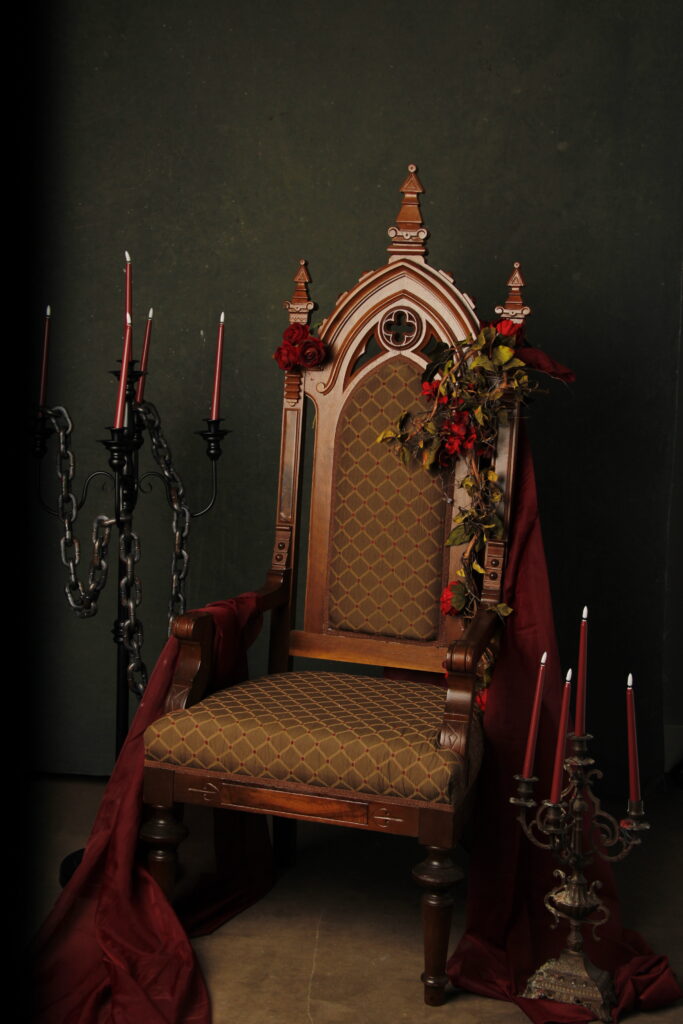
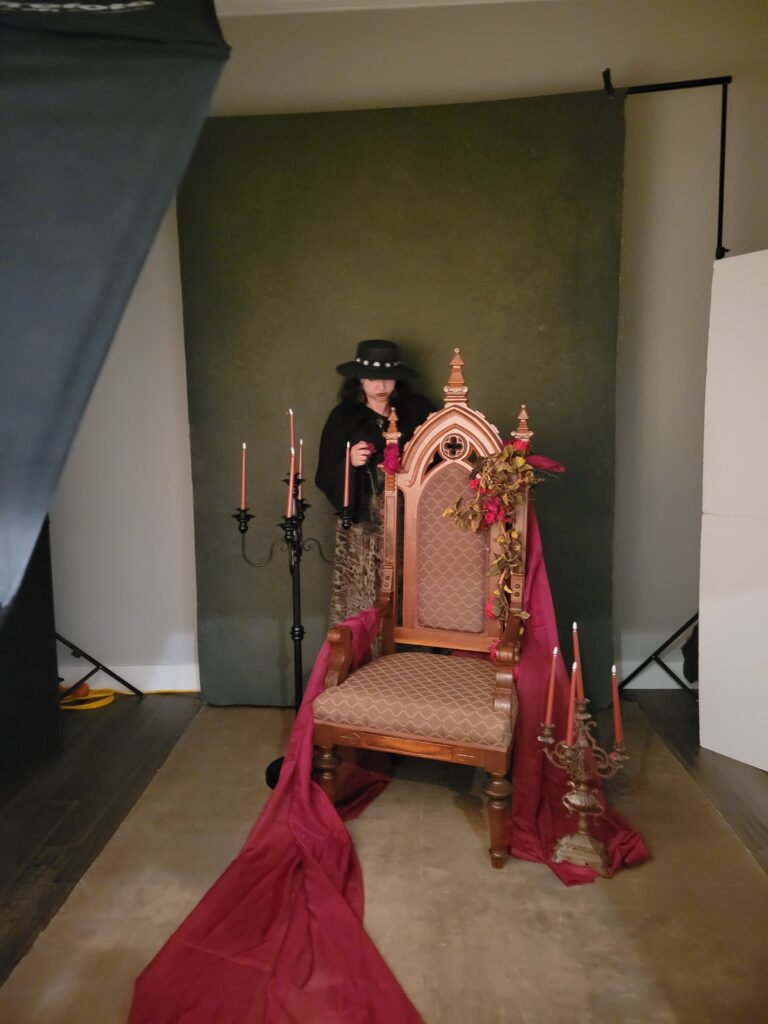
The photographed setup includes:
- Dark background.
- Ornate wooden furniture.
- Gold-colored skull.
- Red candles.
- Red roses.
- Cross.
- Dramatic dark styling.
These objects contribute to the overall atmosphere and create a connection with the project’s themes of mystery, transformation, and symbolism.
Fire can represent:
- Energy.
- Transformation.
- Destruction and renewal.
- Passion.
- Power.
- Change.
- Intensity.
The red and orange materials create a strong visual connection with fire.
The gold details add contrast and emphasize the constructed, symbolic appearance.
The Fire look demonstrates how the project combines fashion, mixed media, costume, props, and fine-art photography.
It also establishes a more theatrical visual direction for the series.
Original image version #1

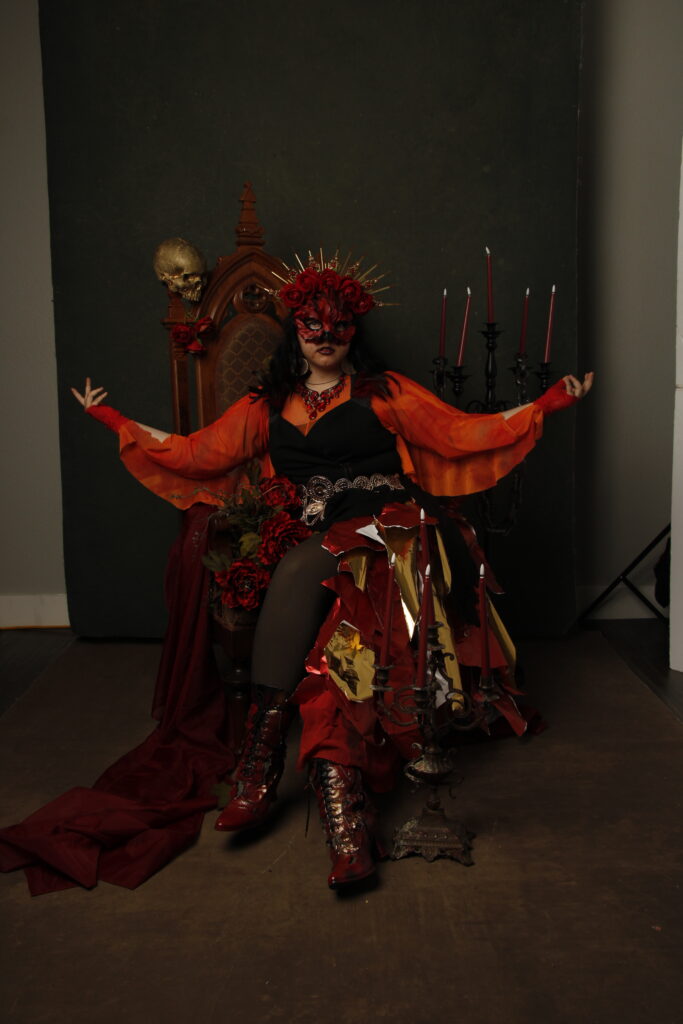
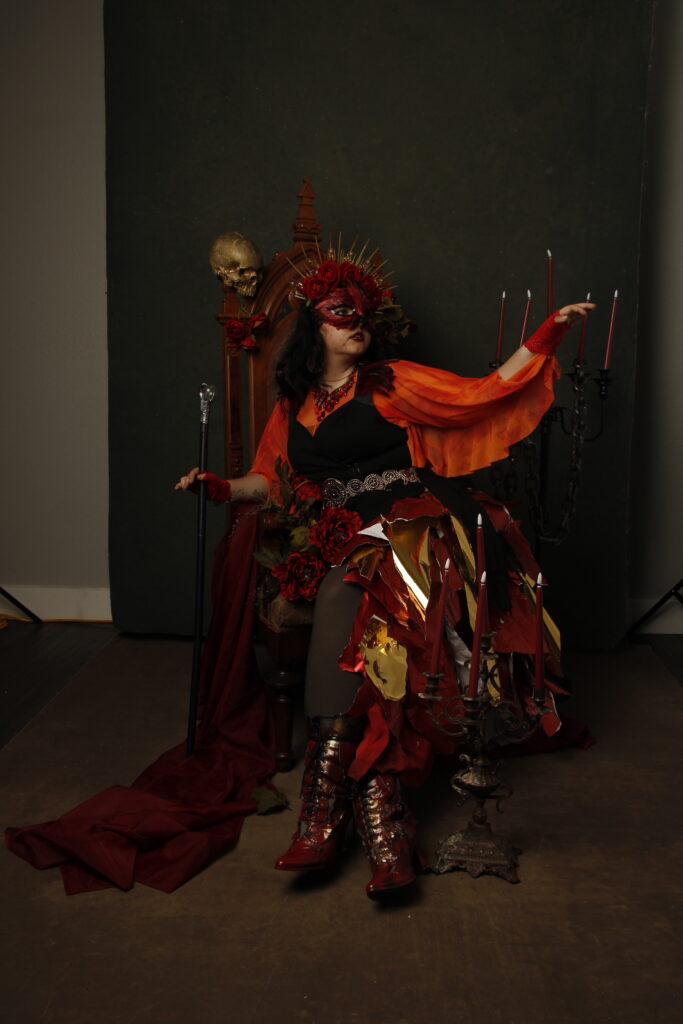
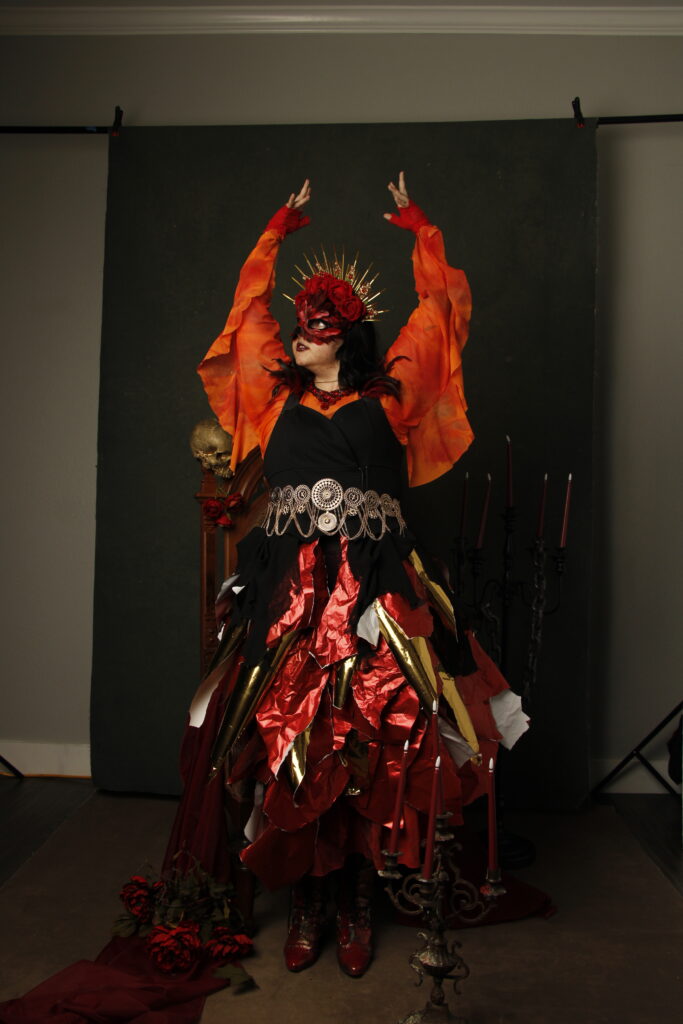
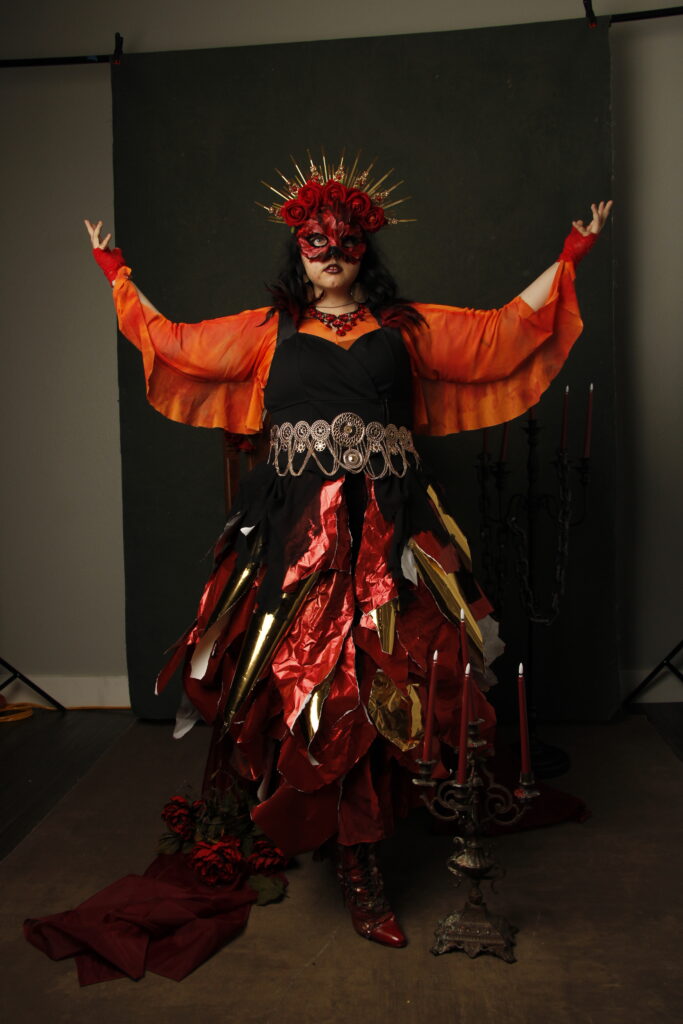

Original image version #2
Behind the Scenes
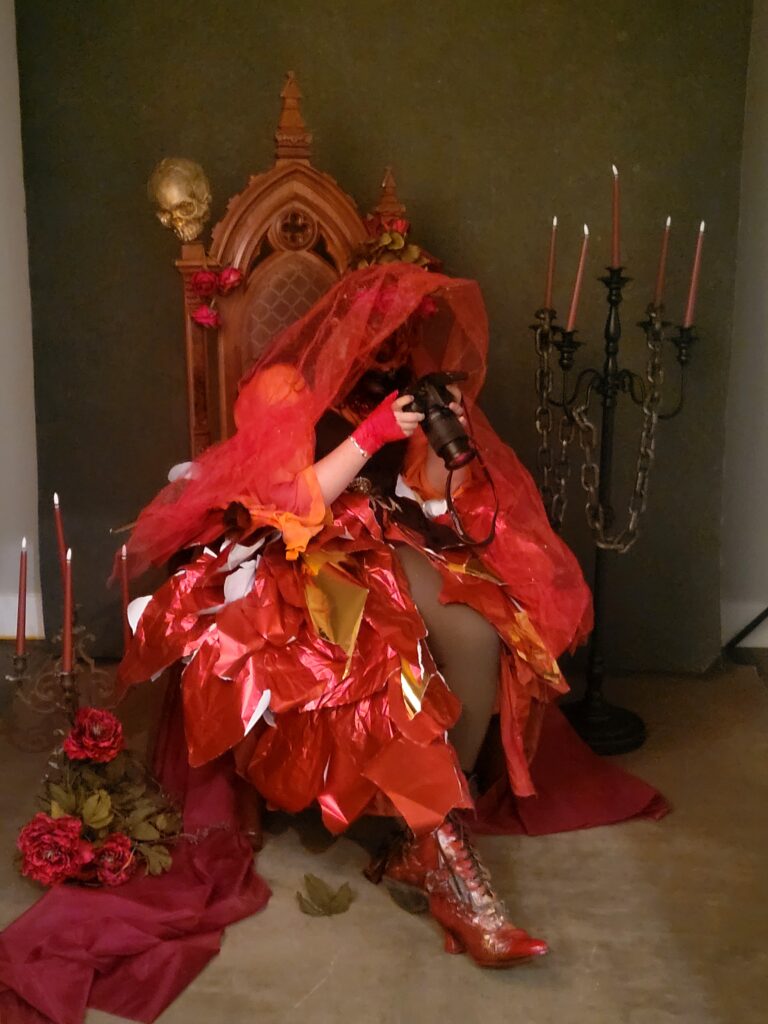
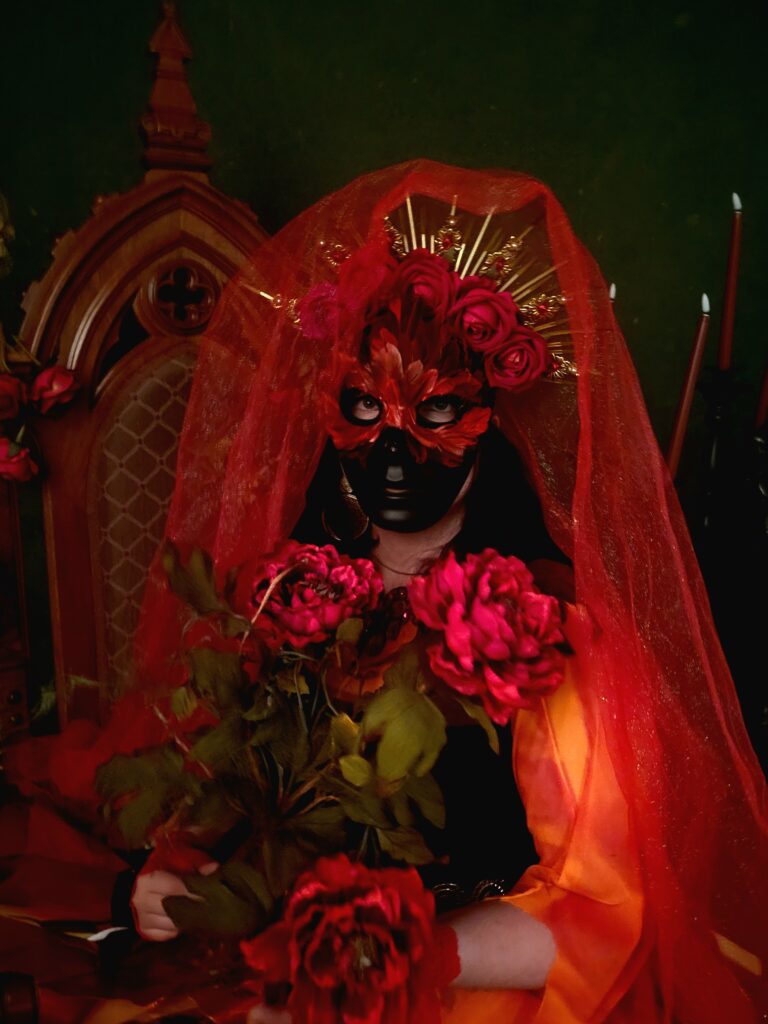
Edited Version – TBD
2. EARTH
Status: COMPLETED
The Earth look is one of the three completed elemental looks.
Its role in the series is to represent the Earth element and contribute a distinct visual interpretation of the overall concept.
The Earth look belongs to the same five-part structure as Fire and Water.
Its visual details, materials, colors, costume construction, props, and final photographic compositions should be documented separately in the production archive.
Conceptual associations include:
- Nature.
- Grounding.
- Physical materials.
- Landscape.
- Growth.
- Stability.
- Connection to the natural world.
The existing desert photograph featuring thrifted clothing and fabrics is also part of the project’s earlier visual development and connects with the Earth concept.
The completed Earth look should be distinguished from that earlier photograph in the final project archive.
3. WATER
Status: COMPLETED
The Water look is the third completed elemental look.
It represents the Water element within the five-part series.
Its visual details, materials, colors, costume construction, props, and final photographic compositions should be documented separately in the production archive.
Conceptual associations include:
- Fluidity.
- Movement.
- Reflection.
- Transformation.
- Adaptability.
- Emotion.
- Connection with the natural world.
The earlier blue trash-bag fashion portrait also has a potential conceptual relationship with Water because of its blue color and unconventional material.
This provides an interesting connection between the project’s original recycled-fashion experiments and the newer elemental framework.
4. AIR
Status: NOT YET COMPLETED
Air is one of the two remaining elemental looks.
Its conceptual direction can explore:
- Movement.
- Freedom.
- Atmosphere.
- Wind.
- Breath.
- Lightness.
- The relationship between the figure and the environment.
Potential visual considerations include fabric movement, layered materials, flowing shapes, and compositions that communicate motion.
The final visual approach remains in development.
5. SPIRIT
Status: NOT YET COMPLETED
Spirit is the fifth and final elemental look.
It can function as the connection between Earth, Water, Fire, and Air.
Its conceptual direction can explore:
- Identity.
- Consciousness.
- The unseen.
- Connection.
- Transformation.
- Spiritual symbolism.
- The relationship between the physical and symbolic worlds.
Spirit is particularly relevant to the broader concept of At the Crossroads because it can represent the internal or symbolic dimension of transformation.
The final costume, materials, and photographic approach remain in development.
14. CURRENT PRODUCTION PROGRESS
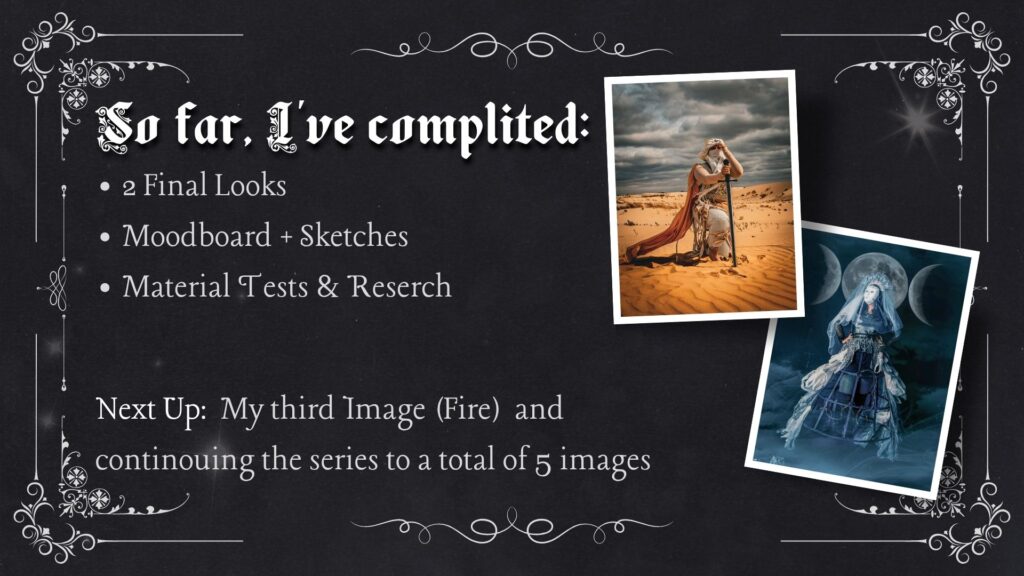
As of November 17, 2026, three of the five elemental looks are completed.
<The current project has reached 60% completion by number of completed looks.>
| Element | Production Status |
|---|---|
| Earth | Completed |
| Water | Completed |
| Fire | Completed |
| Air | Remaining |
| Spirit | Remaining |
The project has moved beyond the original brainstorming and material-testing stage.
Three complete looks now exist as physical creative outcomes.
The Fire photographs also demonstrate how the costumes can be translated into constructed fine-art compositions.
What This Means for the Project
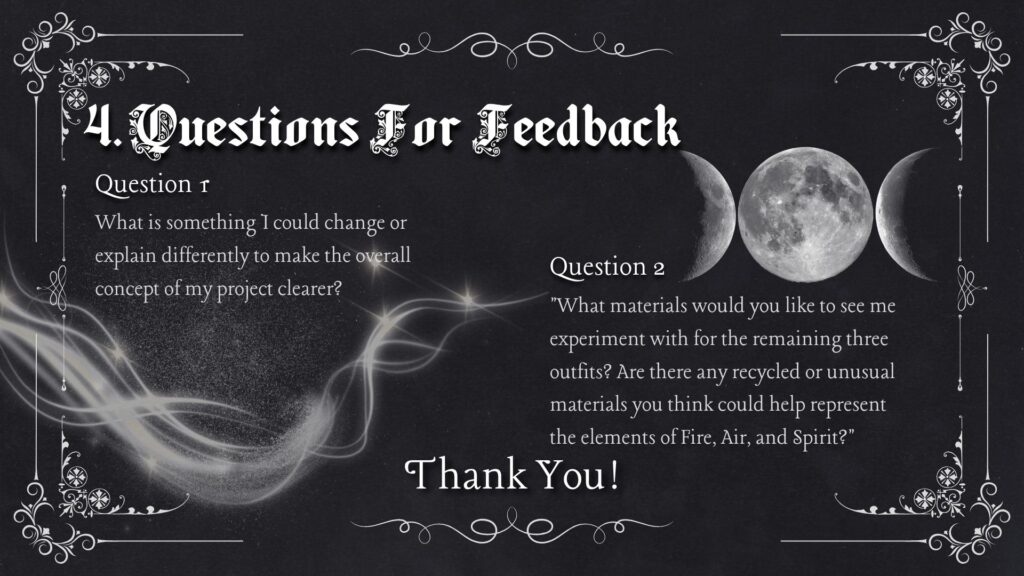
The next stage is to complete the remaining two looks while maintaining a connection between all five.
The focus should include:
- Finalizing the Air costume.
- Finalizing the Spirit costume.
- Photographing both looks.
- Reviewing the photographs from all five elements.
- Selecting the strongest images.
- Editing the final photographs.
- Establishing the final sequence of the series.
- Preparing the final presentation or exhibition.
The three completed looks establish a foundation for the final collection.
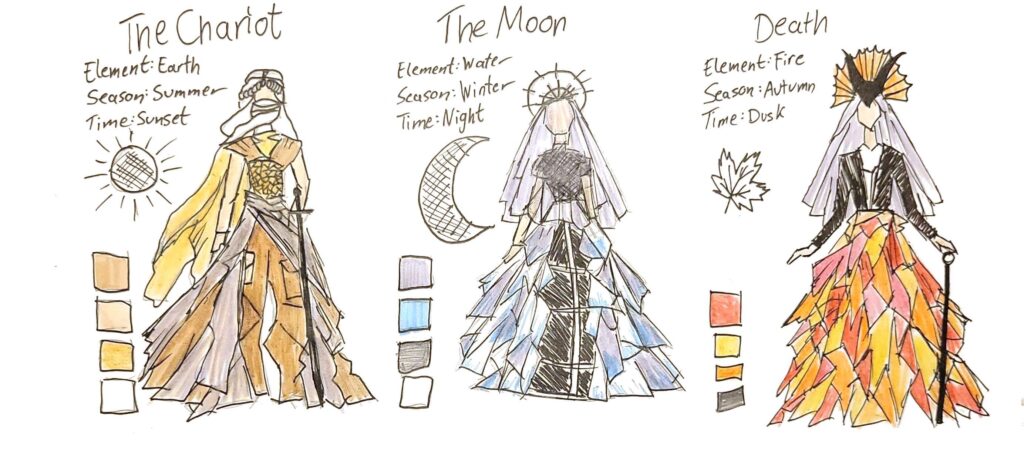
Slide Show as off November-02-2026
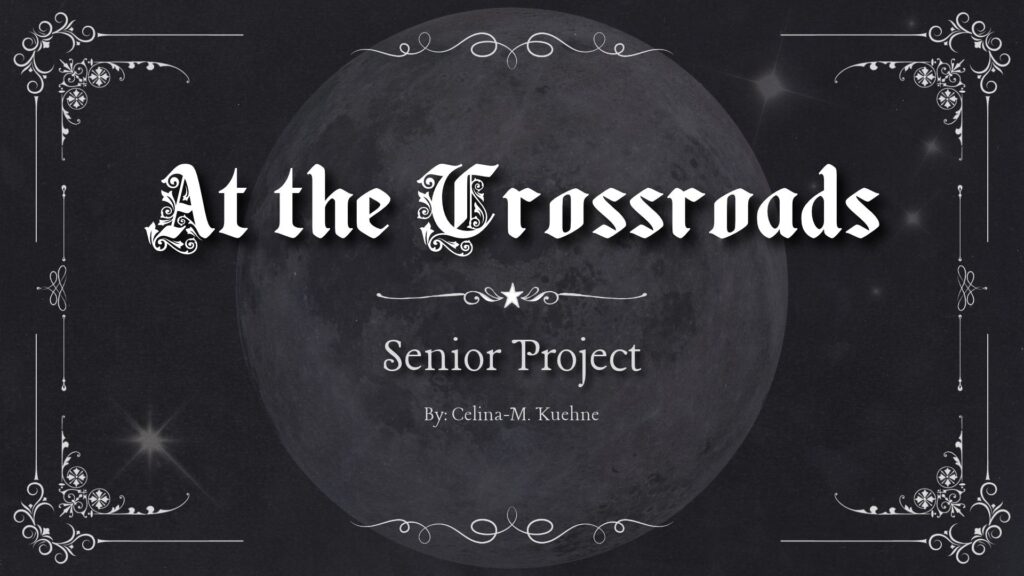
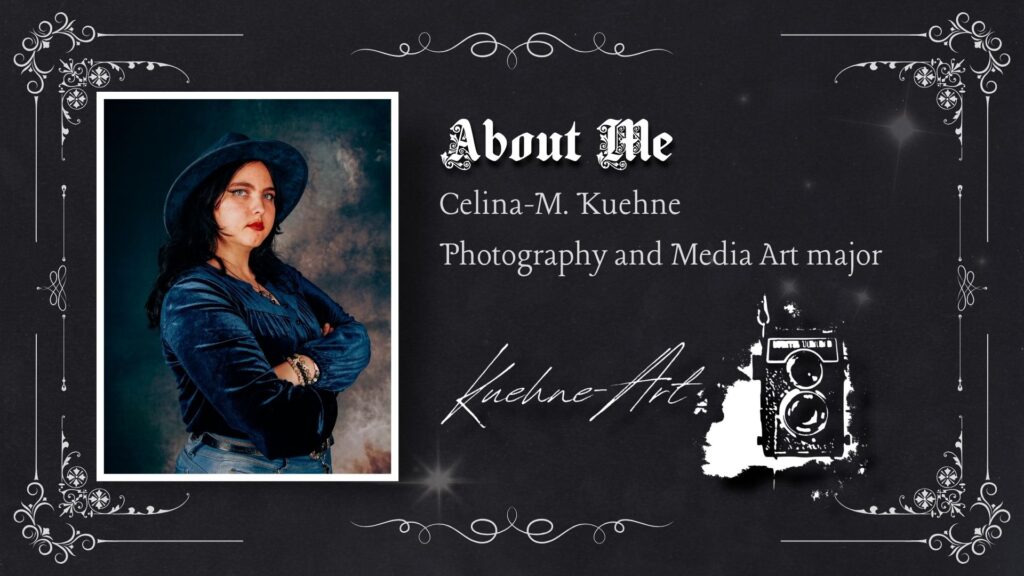
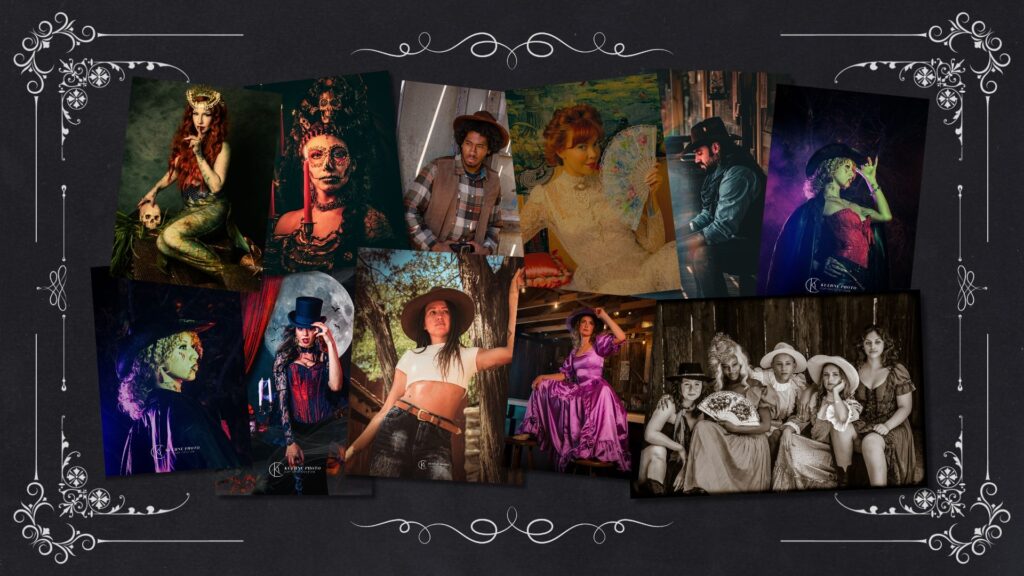
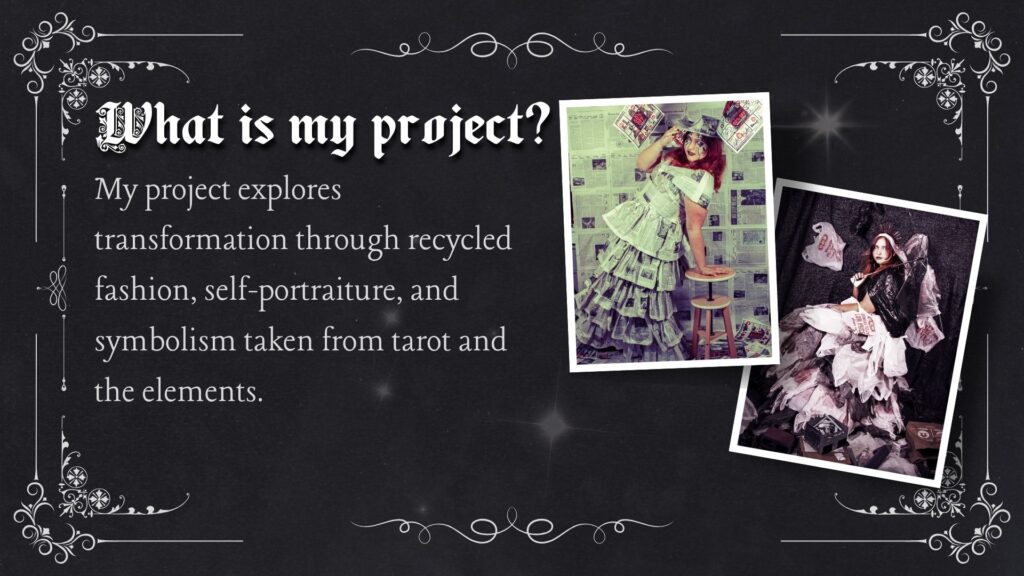
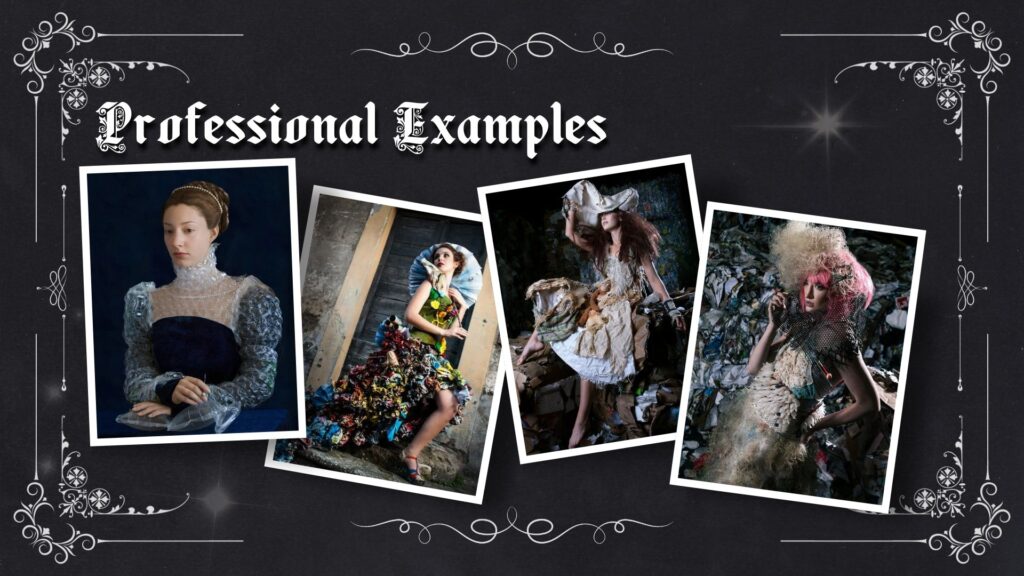


15. VISUAL LANGUAGE AND ARTISTIC APPROACH
Photography
Photography remains the central method through which the project will be experienced.
I want to create fine-art photographs rather than straightforward fashion documentation.
The images should feel carefully constructed.
The final photograph should communicate the interaction between the subject, clothing, materials, and environment.
Fashion and Costume
Fashion is an important part of the project’s visual identity.
The clothing is constructed using unconventional, recycled, thrifted, or otherwise repurposed materials.
The garments help establish the identity and character of each elemental look.
Mixed Media and Materials
Materials are an important part of the project’s artistic foundation.
The project began with plastic bags and newspapers and expanded toward fabric, textiles, metallic materials, decorative objects, and other unconventional materials.
These materials provide different textures, shapes, and construction possibilities.
The contrast between ordinary materials and carefully constructed clothing remains important to the original concept.
Masks and Self-Portraiture
Masks introduce a connection between the physical appearance of the subject and the identity being represented.
They create opportunities for mystery and symbolism.
Environment and Props
The environment helps establish the atmosphere of each photograph.
Objects and props can become part of the visual narrative.
The Fire look demonstrates this through its skull, candles, roses, cross, and ornate furniture.
Lighting
Lighting is one of the main tools for creating the intended atmosphere.
I am interested in dramatic lighting and the way it influences how viewers interpret a scene.
Different lighting conditions can also help distinguish the elements.
16. WHAT MAKES THIS PROJECT PERSONAL?
This project connects several interests that I have explored throughout my photography and art education.
I have consistently been interested in photography, fashion, and mixed media.
I enjoy creating visual stories through art.
I am also interested in nature, landscapes, animals, portraits, and atmospheric imagery.
The recycled-fashion concept allowed me to bring these interests together.
The later conceptual development gave me an opportunity to explore more personal ideas involving identity, transformation, and symbolism.
Using self-portraiture makes the project more personal because I become part of the constructed images.
The five elemental looks also allow me to experiment with different materials, colors, costumes, and photographic compositions while maintaining a shared conceptual foundation.
I want the viewer to experience the atmosphere and consider the possible meaning behind each image.
17. COMPLETE PROJECT DEVELOPMENT TIMELINE
| Period | Development | Main Focus |
|---|---|---|
| Before Senior Studio | Trash Bag Dress inspired by Cruella (2021) | Recycled materials and fashion |
| Previous semesters | Personal final project for 4×5 analog film class | Photographing constructed clothing |
| August 2026 | Initial Senior Studio brainstorming | Recycling, newspaper dresses, photography history, fine art, fantasy |
| Late August 2026 | Topic identification | Recycled fashion and fine-art photography |
| September 2026 | Phase 1 research | Primary experiments and secondary research |
| September 16, 2026 | Project brief and presentation | Research, professional references, existing work, contribution |
| September 2026 | Media Art connection | Photography, textiles, materials, and mixed media |
| October 2026 | Conceptual expansion | Identity, transformation, mystery, and nature |
| October 31, 2026 | Existing image review | Blue trash-bag portrait and desert image |
| October 31, 2026 | New conceptual framework | Masks, self-portraiture, tarot, five elements, Hecate |
| November 2026 | Working title established | At the Crossroads |
| November 2026 | Production development | Five elemental looks |
| November 17, 2026 | Three looks completed | Earth, Water, and Fire |
18. CURRENT PROJECT STATEMENT
At the Crossroads is a fine-art photography and mixed-media project exploring identity, transformation, and symbolism through five elemental looks inspired by Earth, Water, Fire, Air, and Spirit.
Beginning with recycled fashion and the transformation of discarded materials into wearable art, the project has developed into a series of constructed photographic self-portraits incorporating unconventional clothing, textiles, masks, and symbolic objects.
Drawing from ideas associated with Hecate, tarot, crossroads, and the five elements, the work explores different states of being and moments of transition.
Through costume construction, material experimentation, lighting, composition, and visual storytelling, I aim to create atmospheric photographs that encourage viewers to consider the relationship between appearance, identity, and transformation.
19. CURRENT STATUS AND NEXT STEPS
Current documentation date: November 17, 2026.
Completed
- Original recycled-fashion concept established.
- Previous Trash Bag Dress work developed.
- Earlier 4×5 analog film project identified as a foundation.
- Fine-art photographic direction established.
- Professional artistic references collected.
- Media Art and mixed-media connection developed.
- Conceptual direction expanded toward identity and transformation.
- Hecate identified as an important conceptual reference.
- At the Crossroads established as the working title.
- Five-element structure established.
- Earth look completed.
- Water look completed.
- Fire look completed.
- Fire photographs documented through three different compositions.
Remaining
- Complete Air look.
- Complete Spirit look.
- Photograph the remaining looks.
- Review and select the strongest photographs.
- Establish a consistent visual presentation.
- Edit the final images.
- Decide the final sequence of the five elements.
- Prepare the final project presentation.
20. IMPORTANT ARTISTIC DECISIONS AND PROJECT BOUNDARIES
Several decisions are important to preserving the direction of the project.
- Keep the recycled-fashion foundation. The project should retain its connection to the original Trash Bag Dress and 4×5 analog film work.
- Do not limit the project to fashion photography. The clothing is part of a larger fine-art and conceptual photographic practice.
- Maintain the Photography and Media Art connection. Physical materials, textiles, constructed objects, and photographic processes all contribute to the project.
- Preserve the existing photographs. The blue trash-bag image and desert image are important parts of the project’s development.
- Maintain the five-element structure. Earth, Water, Fire, Air, and Spirit provide the overall organization of the series.
- Allow the conceptual direction to develop naturally. Hecate, tarot, and elemental symbolism should support the photographs rather than restrict them.
- Maintain the mystery. The masks and atmospheric compositions should leave room for interpretation.
- Prioritize visual consistency. The five looks should feel like parts of one collection while maintaining individual identities.
- Develop an individual artistic identity. Professional artists can inform the project, but the final work should reflect my own ideas and creative decisions.
21. PROJECT REFERENCE AND RESEARCH ARCHIVE
Original Inspiration
- Cruella (2021), trash-inspired costume design.
- Original Trash Bag Dress experiment.
- Previous 4×5 analog film class personal final project.
Photographic and Artistic References
- Candice Ghai.
- Natalia Le Fay.
- Dani Venen.
- Suzanne Jongmans.
Recycled Fashion and Wearable Art
- Prazzle Arts, recycled materials and wearable artistry.
- Nina Syc Artwear.
- Alessandro Zingone, upcycled artwear.
- Suzanne Jongmans, “Recycling Renaissance Portraits.”
Conceptual References
- Hecate.
- Crossroads and thresholds.
- Keys and torches.
- Tarot symbolism.
- Earth.
- Water.
- Fire.
- Air.
- Spirit.
- Pentagram symbolism.
- Seasonal transitions.
- Changes in time of day.
- Identity and transformation.
22. OVERALL PROJECT SIGNIFICANCE
The most important development in my Senior Studio project is the change in how I understand the relationship between materials, fashion, photography, and meaning.
At the beginning, I was interested in creating clothing from recycled materials.
I wanted to experiment with plastic bags, newspapers, and other unconventional materials and photograph the results.
As the project developed, I realized that the clothing could become part of a larger artistic language.
It could represent identity, transformation, and the relationship between the individual and the environment.
The photographs could communicate these ideas through more than the appearance of the clothing.
They could use masks, poses, lighting, landscape, color, and symbolism to construct a visual narrative.
The introduction of Hecate and the concept of At the Crossroads gave the project a conceptual foundation that connects these interests.
The five elemental looks provide a structure for bringing the different visual and symbolic ideas together.
The completion of Earth, Water, and Fire marks an important stage in the project. Three distinct looks have now been physically developed, and the remaining Air and Spirit looks will complete the five-part structure.
Ultimately, I want to create a cohesive collection of fine-art photographs that demonstrates how unconventional materials, constructed clothing, and symbolic identities can become part of a larger artistic narrative.
The project began with the idea of transforming trash into clothing. It has developed into an exploration of transformation itself, through materials, appearance, identity, and the relationship between the human figure and the world around it.
FINAL PROJECT SUMMARY
My Senior Studio project, At the Crossroads, is a fine-art photography and mixed-media exploration of identity, transformation, and symbolism.
The project originated from my interest in recycled fashion, particularly transforming discarded materials such as trash bags and newspapers into wearable art. It developed from my earlier Trash Bag Dress experiment and a personal final project for my 4×5 analog film class.
Throughout the semester, I expanded the project beyond fashion photography to explore constructed images, self-portraiture, masks, textiles, environmental settings, and symbolic storytelling.
The current project is organized around five elemental looks: Earth, Water, Fire, Air, and Spirit.
Three looks, Earth, Water, and Fire, are now completed. Air and Spirit remain in production.
Drawing from Hecate, tarot, elemental symbolism, and the concept of crossroads, the series explores different forms of identity and transformation.
Through photography, costume, unconventional materials, lighting, and composition, I aim to create a cohesive collection of fine-art images that connects my interests in fashion, photography, and Media Art.
The central idea is transformation. Materials are transformed into clothing, clothing helps construct identity, and photography transforms these physical creations into symbolic visual stories.